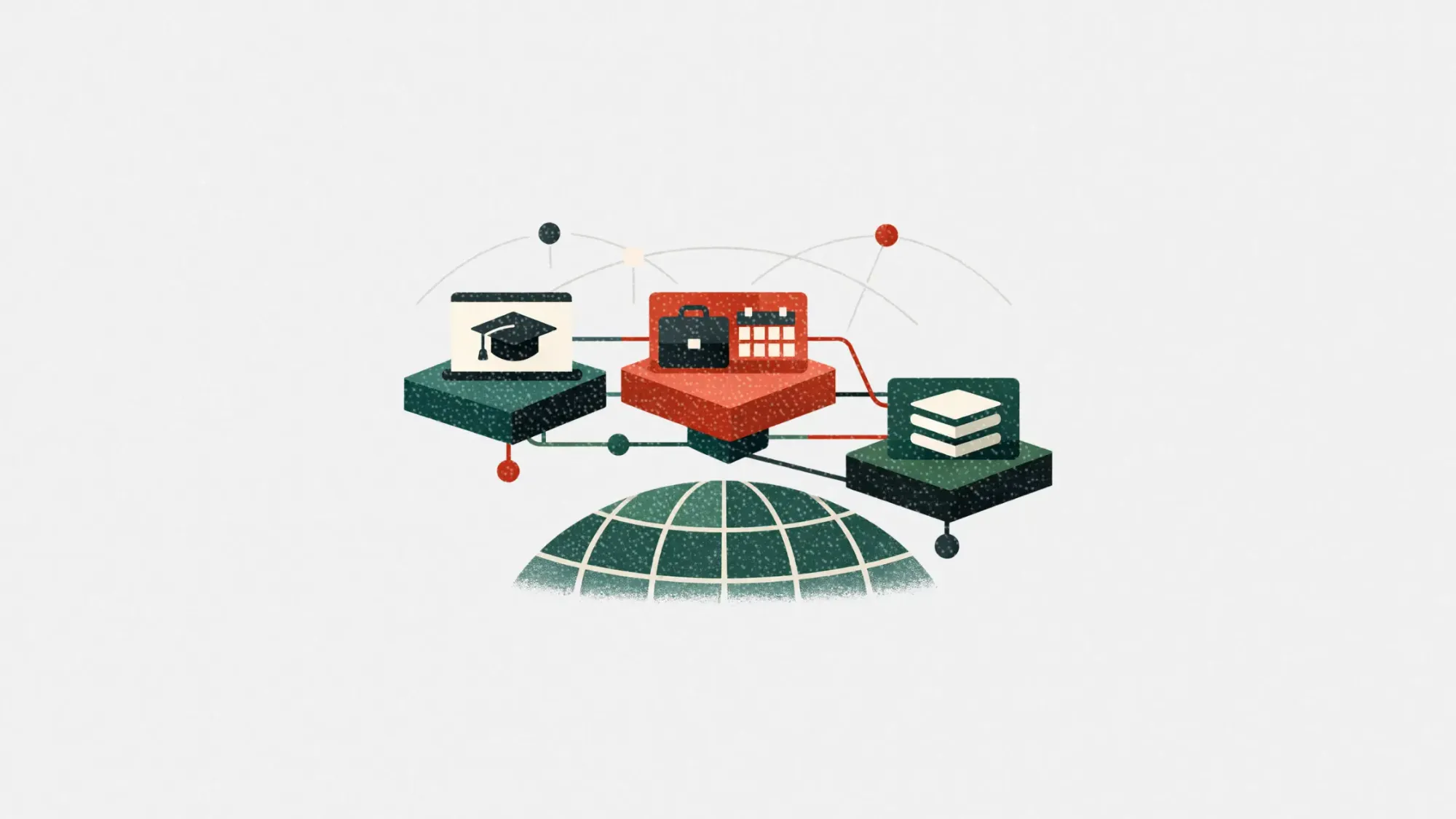
Online platforms are no longer supporting systems in the background. They are becoming the backbone of how people learn, work, and share information at scale.
What used to require physical presence, manual coordination, or specialized technical skills can now be done through focused digital tools designed to remove friction from everyday processes. These platforms are not replacing human effort. They are reshaping how effort is organized and delivered.
This shift is not theoretical. It is visible in how quickly people have adopted online learning, remote work tools, and content platforms that simplify tasks that once felt complex or time-consuming. From education to operations to content management, platforms are setting new expectations for speed, accessibility, and flexibility.
Short on time?
Here is a table of content for quick access:
- Education is moving beyond classrooms and borders
- Work is becoming structured around digital systems
- Content delivery is becoming simpler and more modular
- Why focused platforms are winning
Education is moving beyond classrooms and borders
Education is one of the clearest examples of how platforms have changed expectations. Learning is no longer tied to a physical classroom or a fixed schedule. Instead, it is increasingly flexible, on demand, and global.
The growth of online learning reflects this change in behavior. The global eLearning market is projected to reach around US$325 billion, driven by demand for accessible and self-paced education. Over the past two decades alone, the same report finds that online learning has grown by roughly 900 percent, showing how quickly digital formats have become mainstream rather than experimental.
Language learning illustrates this transition particularly well. Platforms such as FindTutors enable students to access online English as a foreign language tuition from qualified tutors regardless of location. For learners, this removes geographic and scheduling barriers. For tutors, it opens access to a broader student base without relying on traditional classroom infrastructure.
This platform-based approach is also gaining traction beyond individual learners. Schools, training providers, and companies are increasingly incorporating online learning into their core programs rather than treating it as a backup option. Education is becoming a continuous, platform-enabled experience that adapts to real-world schedules and evolving skill demands.
Work is becoming structured around digital systems
The way people work has evolved alongside education. As hybrid and remote work models become more common, businesses are relying on software platforms to keep teams aligned, productive, and engaged.
A growing share of the workforce now operates in hybrid or fully remote setups. Many professionals report that digital work environments help them focus better and reclaim time that was previously lost to commuting or inefficient coordination. These changes have forced organizations to rethink how they manage people, time, and resources.
This is where operational platforms play a critical role. Businesses with shift-based or distributed teams increasingly depend on top staff scheduling softwares like Agendrix to manage availability, reduce scheduling conflicts, and control labor costs. Instead of reacting to problems as they arise, managers can plan more effectively using real-time data.
The benefits go beyond efficiency. Clearer schedules, better communication, and predictable workflows tend to improve employee experience as well. In competitive labor markets, this clarity and structure can become a meaningful advantage for both retention and performance.
Content delivery is becoming simpler and more modular
Content creation has also changed in volume and pace. Teams are producing more reports, guides, presentations, and educational materials than ever before. As output increases, efficiency in preparation and delivery becomes just as important as creativity.
This is where simple, task-focused platforms are gaining momentum. Tools like Smallpdf, which allow users to combine multiple PDFs, compress, or reorganize documents, may seem minor at first glance. In practice, they remove friction from everyday workflows. Marketers assembling campaign reports, educators compiling learning materials, and sales teams preparing client proposals all benefit from being able to package information quickly without technical complexity.
When these small efficiencies stack up across teams and projects, the impact becomes significant. Less time spent on formatting and file management means more time available for strategy, storytelling, and distribution. Content workflows become lighter, faster, and easier to scale.
Why focused platforms are winning
Across education, work, and content delivery, one pattern stands out. The platforms seeing the strongest adoption are not trying to solve every problem at once. They focus on solving a specific problem clearly, reliably, and efficiently.
This specialization makes them easier to adopt and easier to integrate into existing workflows. It also makes their value easier to measure, whether that value comes in the form of time saved, costs reduced, or outcomes improved. Platform adoption today is less about novelty and more about practical impact.
Online platforms are quietly reshaping how modern systems function. They reduce barriers to entry, replace manual processes, and allow individuals and teams to operate with greater flexibility and precision.
The advantage today does not come from using more tools. It comes from choosing the right ones and embedding them thoughtfully into daily work. As education, work, and content delivery continue to evolve, platform-driven models are no longer optional. They are becoming the default.

Leave a Reply