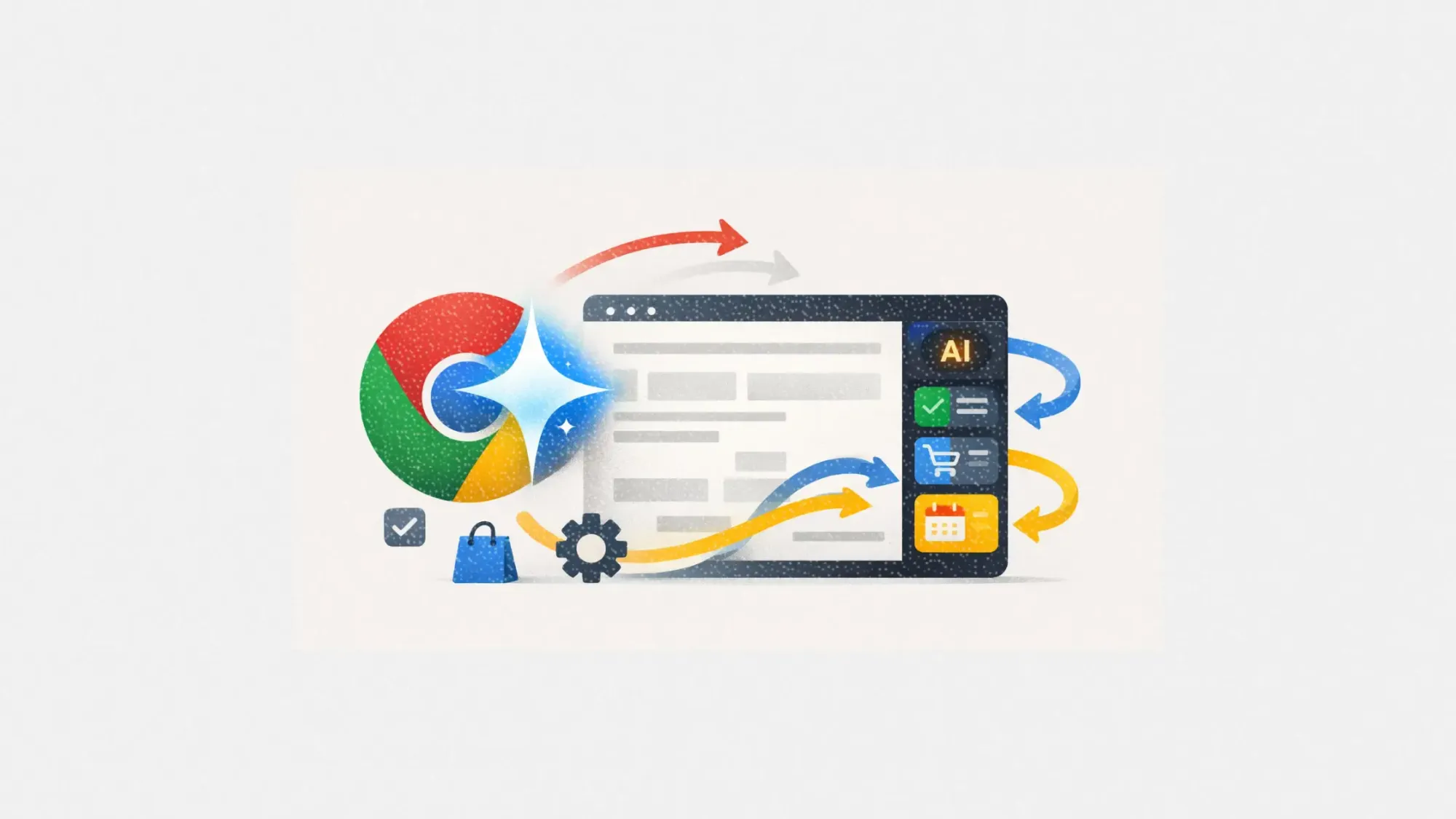
Google just dropped its most significant Chrome update in years, and it’s powered by AI. In response to rising competition from AI-first browsers like Arc, Perplexity, and Opera, Google is rolling out a revamped Gemini assistant that transforms Chrome into more than just a web viewer.
With AI taking center stage, the world’s most popular browser is positioning itself as an active participant in your daily tasks, from planning a trip to buying a lamp.
This article explores how the new Gemini sidebar, personal intelligence tools, and Chrome’s “auto browse” feature will impact user experience and what it means for marketers looking to stay ahead of changing digital behaviors.
Short on time?
Here’s a table of contents for quick access:
- What’s new in Chrome’s Gemini update
- Gemini as a side panel assistant
- Auto browse and agentic browsing explained
- Personal intelligence and connected apps
- What marketers should know
 Patrecia Meliana
What’s new in Chrome’s Gemini update
Google’s updated Gemini integration in Chrome is a full-scale upgrade, moving from a floating window to a persistent sidebar. Now available on macOS, Windows, and Chromebook Plus, the AI assistant can analyze open tabs, understand browsing context, and perform specific actions on your behalf.
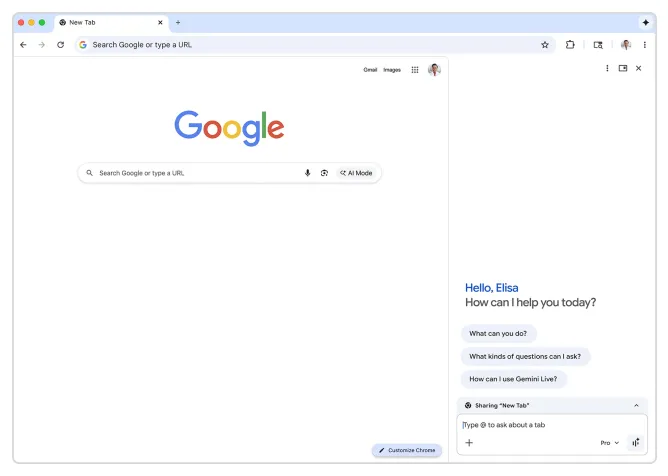
Alongside the sidebar rollout, Chrome is adding several key features:
- Nano Banana, a tool that modifies images in-browser using prompts
- Connected Apps, which integrates Gemini with Gmail, Calendar, Maps, YouTube, and more
- Personal Intelligence, an opt-in feature that lets Gemini understand your habits, preferences, and data to offer better help
- Auto browse, a standout agentic tool that performs multi-step tasks across the web using personal data and saved credentials (available to AI Pro and Ultra subscribers in the U.S.)
These tools aim to streamline digital workflows while redefining what browsers can do. Chrome is no longer just a place to consume content but a tool that can take action.
Gemini as a side panel assistant
With its new sidebar format, Gemini becomes a real-time research and productivity assistant.
It can summarize the content of the tab you’re on, compare data across multiple tabs, and help with everything from finding a good deal to managing a hectic calendar. The assistant groups tabs by context, which is particularly helpful for research-heavy workflows like product comparison or event planning.
Unlike extensions or floating chatbots, Gemini’s sidebar is built directly into the browsing experience. It is now part of Chrome’s core interface.
Auto browse and agentic browsing explained
The most radical addition is Chrome auto browse, which introduces agentic behavior to the browser. Users can delegate complex, multistep tasks such as finding a product, comparing prices, applying a discount code, and completing a purchase to the AI. It builds on Chrome’s autofill feature but takes things much further.
Google says the agent will always pause to ask for confirmation when a task involves sensitive actions like logging in or making payments. Real-world use cases tested so far include:
- Filing expense reports
- Booking flights using connected Gmail data
- Scheduling service appointments
- Renewing licenses or handling government forms
Chrome will also support the Universal Commerce Protocol (UCP), co-developed with Shopify, Etsy, Target, and Wayfair. This open standard allows AI agents to act on a user’s behalf across supported ecommerce platforms.
Personal intelligence and connected apps
Google is also bringing personal intelligence to Chrome. This feature connects Gemini to your Gmail, Calendar, Google Photos, and YouTube history, allowing for more contextual assistance. You can ask things like “When is my next family event?” or “Draft and send an email to my team.”
These capabilities, set to roll out in the coming months, make Chrome feel more like an active digital partner. Importantly, this is opt-in. Users control what apps are connected and can revoke access at any time.
This opens up new pathways for automation, but it also places greater emphasis on ethical AI design, consent, and user trust.
What marketers should know
Chrome’s shift from passive tool to AI-powered agent is not just a UX upgrade. It will likely reshape how users discover, engage with, and transact on the web. Here’s what savvy marketers should consider:
1. Search behavior is shifting
As Gemini takes on more of the research and summarization process, traditional SEO may lose ground to AI-optimized content. Brands should consider how their content can be easily parsed, summarized, and used by AI systems.
2. Conversion paths are getting compressed
If users let Gemini browse and buy for them, product pages need to cater to agents as much as humans. This means clean markup, structured data, and clear value propositions that an AI assistant can detect and act on.
3. AI-friendly commerce is the next battleground
With UCP and auto browse, ecommerce is becoming a space where AI makes decisions. Marketers will need to monitor how these tools handle brand visibility, price comparisons, and checkout flows.
4. Content personalization expectations will grow
Gemini’s integration with personal data creates higher expectations for relevance. Static campaigns may start to feel outdated. Brands should invest in tools that enable real-time personalization and audience segmentation.
5. Transparency and consent matter
As automation gets more personal, users will want to know how their data is being used. Brands that are upfront and respectful with data usage will earn more trust in an AI-mediated environment.
Chrome’s new AI features mark the beginning of a new era in browsing. With Gemini, the browser is no longer just a window to the internet but an assistant that acts, automates, and personalizes.
Marketers who understand this shift and optimize for AI-powered workflows will gain a strategic edge. Those who stick to old models of engagement may find their content filtered out before a human ever sees it.
Now is the time to experiment, learn how AI interacts with your content, and rethink how your digital presence shows up when the assistant—not the user—is doing the work.


Leave a Reply