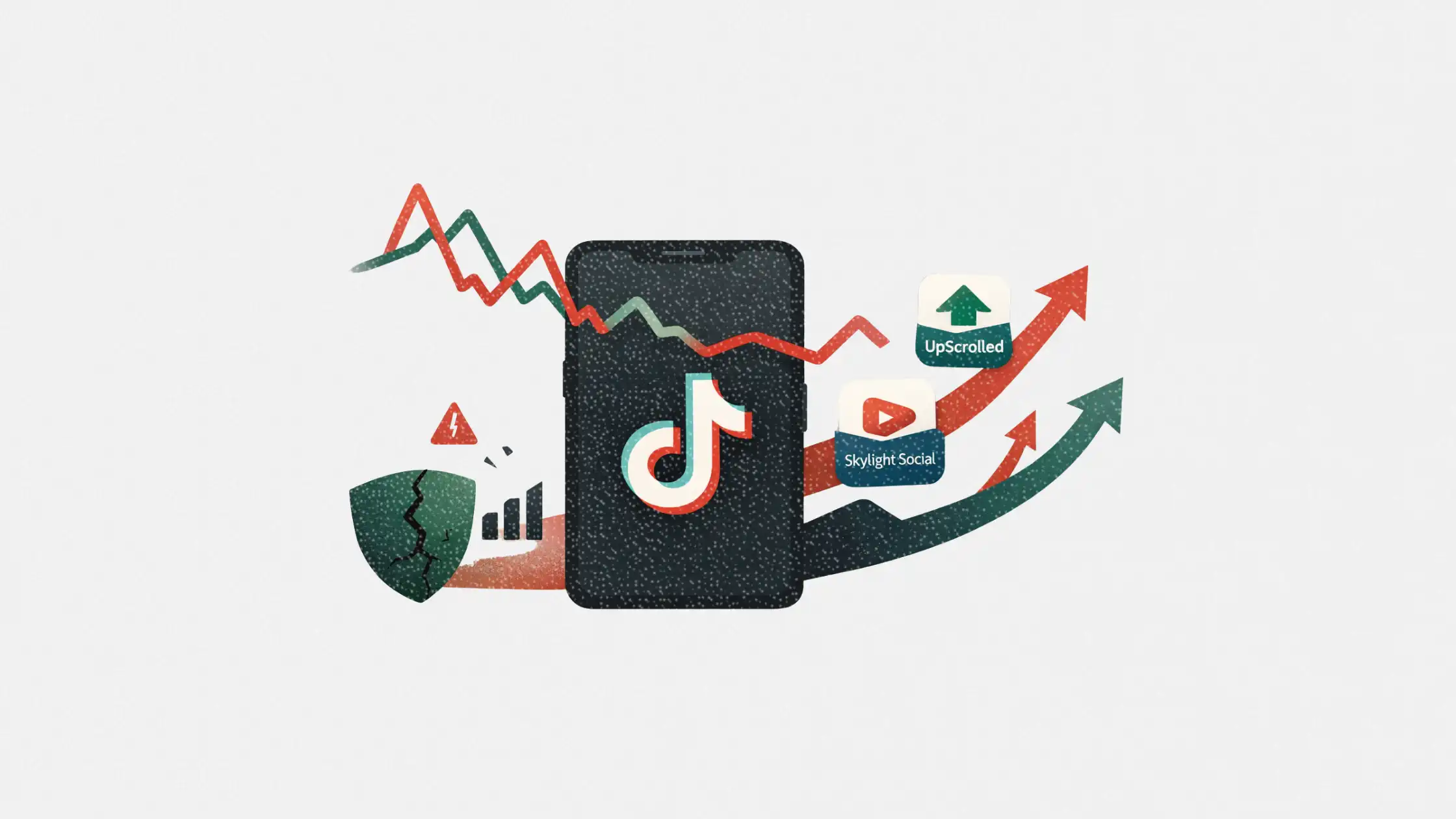
TikTok has regained much of its daily user base in the US after a brief drop tied to privacy concerns and a data center outage. But the episode highlights lingering platform risks — and fresh opportunities for rivals like UpScrolled and Skylight Social.
This article explores how TikTok’s post-ownership turbulence impacted user behavior, what it tells us about platform trust, and what marketers can learn from the way emerging apps captured (and lost) attention.
Short on time?
Here’s a table of contents for quick access:
- What happened with TikTok’s US usage dip
- Why UpScrolled and Skylight Social saw short-term gains
- What marketers should know about platform trust and audience drift
 Patrecia Meliana
What happened with TikTok’s US usage dip
TikTok experienced a short-lived dip in US daily active users after a group of American investors took over its US operations. Daily users fell from the platform’s usual 92 million to a range of 86–88 million, according to Similarweb.
The decline wasn’t directly caused by the ownership shift, but by how users perceived it. Two main triggers sparked concern:
- Privacy policy changes, including language that allowed TikTok to track precise GPS location — likely connected to a “Nearby” content feed. Some users also flagged vague terms about collecting sensitive data like immigration status, which was later clarified as a legal disclosure under California privacy laws.
- Technical instability, with a multi-day data center outage that broke search, likes, comments, and in-app messaging. The disruption, caused by a winter storm, led some to wrongly assume content was being censored or shadowbanned.
TikTok addressed the outage and clarified its privacy stance. As a result, usage has since rebounded to over 90 million daily active users, though still below its peak of 100 million in late 2025.
Why UpScrolled and Skylight Social saw short-term gains
The brief drop in TikTok traffic created an opening for lesser-known apps to capture attention. Video-sharing alternatives UpScrolled and Skylight Social both saw surges in daily active users as audiences explored new platforms.
- UpScrolled peaked at 138,500 daily users on January 28 before falling back to 68,000.
- Skylight Social reached 81,200 daily users, with total sign-ups growing to 380,000 by late January. It has since settled at 56,300 users.
Both apps are still tiny compared to TikTok, but their brief success shows how fast user behavior can shift — especially when a dominant platform stumbles.
The user acquisition spikes were largely reactionary. As TikTok stabilized and clarified its policies, many users returned. Still, the exposure may help Skylight and UpScrolled refine their positioning, improve product stickiness, and prepare for future disruptions.
What marketers should know about platform trust and audience drift
TikTok’s recovery suggests users are willing to forgive — but not forget. The platform’s brief dip and fast rebound offer a few key takeaways for marketers navigating volatile platforms:
- Platform trust is fragile
Even non-material changes (like reworded policies or temporary outages) can trigger backlash. Marketers should monitor platform sentiment closely — especially around privacy or control.
- Emerging players can grow fast — but fade faster’
TikTok alternatives saw explosive short-term growth, driven by user anxiety. But without a strong brand hook or clear differentiation, those users returned to the status quo. This reinforces the importance of building loyalty, not just traffic spikes.
- Audience behavior reflects perceived control
Users assumed outages were censorship. This reveals a deep sensitivity to algorithmic fairness and content transparency. Marketers should consider how trust factors into engagement — and invest in creator partnerships that can weather platform swings.
- Content diversification is still critical
Even as TikTok bounces back, its long-term trend shows slight decline. Brands that rely heavily on a single platform should prioritize diversifying across formats and channels to stay resilient.
TikTok’s US user dip was a blip — but the underlying tensions aren’t going away. Privacy, performance, and public perception remain powerful levers in platform loyalty.
Marketers would be wise to watch TikTok’s policy evolution closely, test emerging channels while they’re hot, and prepare for more volatility ahead.


Leave a Reply