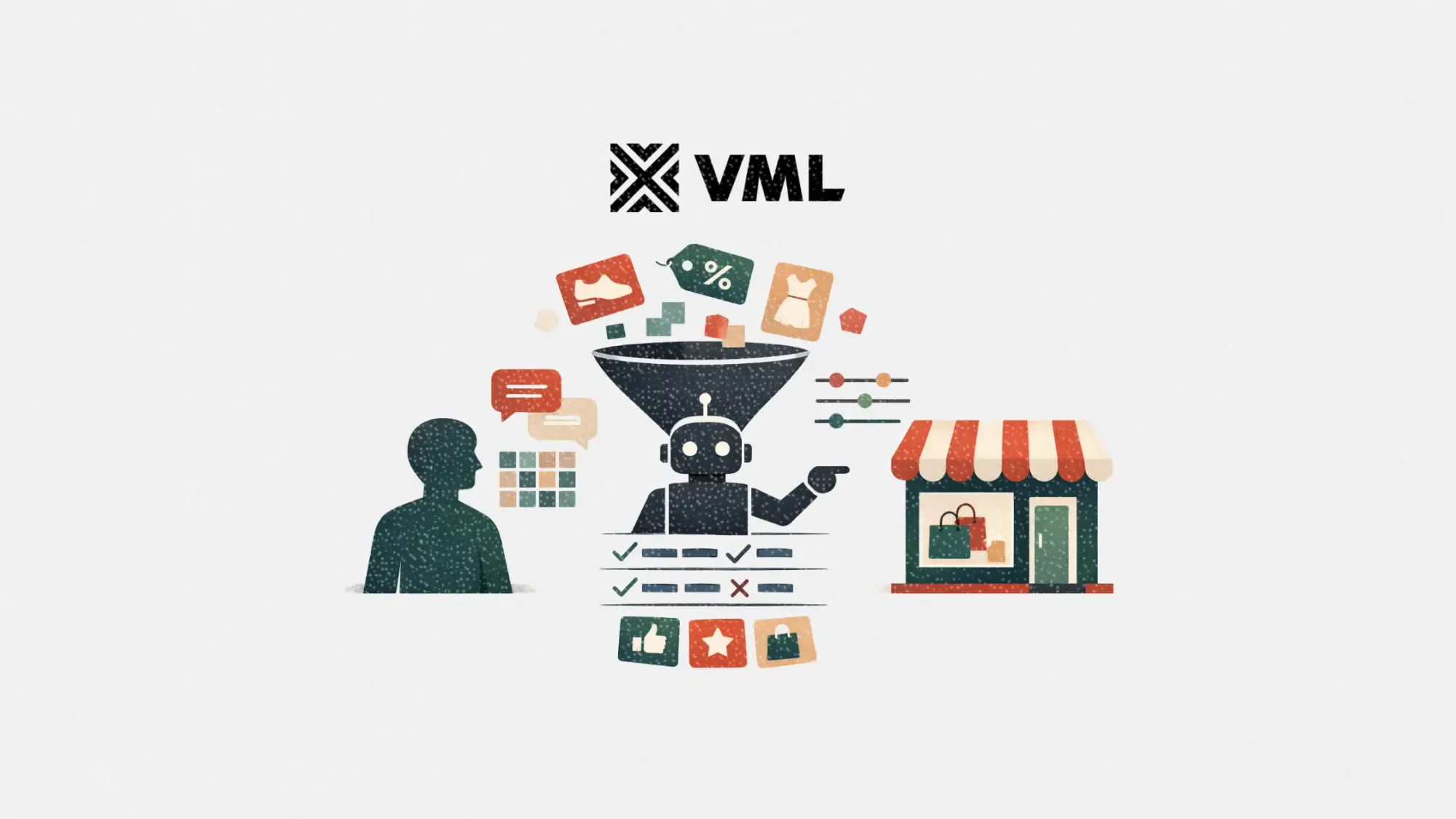
While generative tools like ChatGPT have captured headlines, the bigger story in VML’s Future Shopper 2025 report is that shoppers aren’t just passively using AI — they’re beginning to delegate decisions to it.
For marketers and retail decision-makers, it’s no longer enough to treat AI as an internal efficiency tool. It’s time to think of it as a new kind of customer — one that’s logic-driven, algorithmic, and immune to brand storytelling.
This article explores how AI is quietly shifting from a utility tool to an “agentic” force that could soon shape (or block) purchase decisions altogether.
Short on time?
Here’s a table of contents for quick access:
- Why AI matters more to shoppers than you think
- From practical tools to agentic assistants: the shift in AI use
- What marketers should know about AI expectations and fears
- How to build trust and win in an AI-driven path to purchase
 Patrecia Meliana
Why AI matters more to shoppers than you think
AI is already part of the shopping journey for many consumers — just not always in ways marketers expect.
According to VML’s global survey of over 25,000 shoppers, 68% of respondents have used AI platforms like ChatGPT, Bing Chat, or Gemini. While most use cases are practical (e.g., translation, writing help), shopping-related applications are creeping up: 18% of consumers use AI for product recommendations, and 16% to find the best place to buy something.
More importantly, consumers aren’t just using AI to explore options — they’re starting to trust it. Nearly half (47%) say they like how retailers are beginning to use AI, and 46% don’t mind if content is AI-generated. There’s even an emerging appetite for agentic AI — systems that can independently negotiate purchases on a consumer’s behalf.
From practical tools to agentic assistants: the shift in AI use
VML flags a key shift: AI is no longer just augmenting the customer journey — it’s on track to lead it. Agentic AI, defined as AI that can receive a task and execute it independently, is gaining appeal. Half of all respondents say they’re excited about having their own AI assistant that can interact with brand AIs to find the best product at the best price.
This fundamentally rewrites how marketers need to think about loyalty, conversion, and discovery.
Traditional CX strategies that rely on emotion, urgency, or aesthetic appeal may fall flat when the gatekeeper is an algorithm programmed to prioritize value, efficiency, and trust. The battle is no longer about winning hearts — it’s about making the AI’s shortlist.
What marketers should know about AI expectations and fears
Here’s where things get tricky. While many consumers embrace AI, a significant percentage also feel confused or overwhelmed by it. Key takeaways from the report:
- 57% are worried about AI’s broader impact
- 45% say they don’t understand what brands mean when they claim to use AI
- 40% are unsure how AI will shape the world overall
This gap between adoption and understanding puts marketers in a tough spot. AI trust is conditional. It’s easy to lose if brands misuse generative content, over-automate customer service, or fail to explain how AI benefits the buyer. Communication matters.
So what should marketers do?
Here are a few strategic moves to consider:
- Design for the AI, not just the human
Optimize product data, pricing, and discoverability to appeal to AI agents crawling for the “best” option.
- Balance automation with transparency
If AI is shaping the buyer experience, brands must be explicit about how and why — especially in customer-facing content.
- Pilot agentic commerce use cases now
Start testing AI-managed subscriptions, shopping assistants, or integrations with platforms like ChatGPT. Use learnings to refine CX.
- Focus on utility, not novelty
Consumers want AI that makes their life easier — not gimmicks. Streamline returns, surface relevant products, and simplify decision-making.
How to build trust and win in an AI-driven path to purchase
Winning in the age of AI-enhanced shopping requires two things: algorithmic compatibility and human empathy. VML’s report is clear — consumers love convenience, speed, and smart suggestions. But they also want control, reassurance, and support when the system falls short.
Brands that succeed will combine:
- Precise, structured data that AIs can index and interpret
- Customer experiences that feel intelligent, not robotic
- Personalization that respects privacy and avoids manipulation
- Educational content that demystifies AI tools and builds trust
If AI is becoming the new front door to your funnel, you can’t afford to leave it unsupervised. The brands that train, test, and tune their AI integrations with empathy and transparency will stand out — to both humans and machines.


Leave a Reply