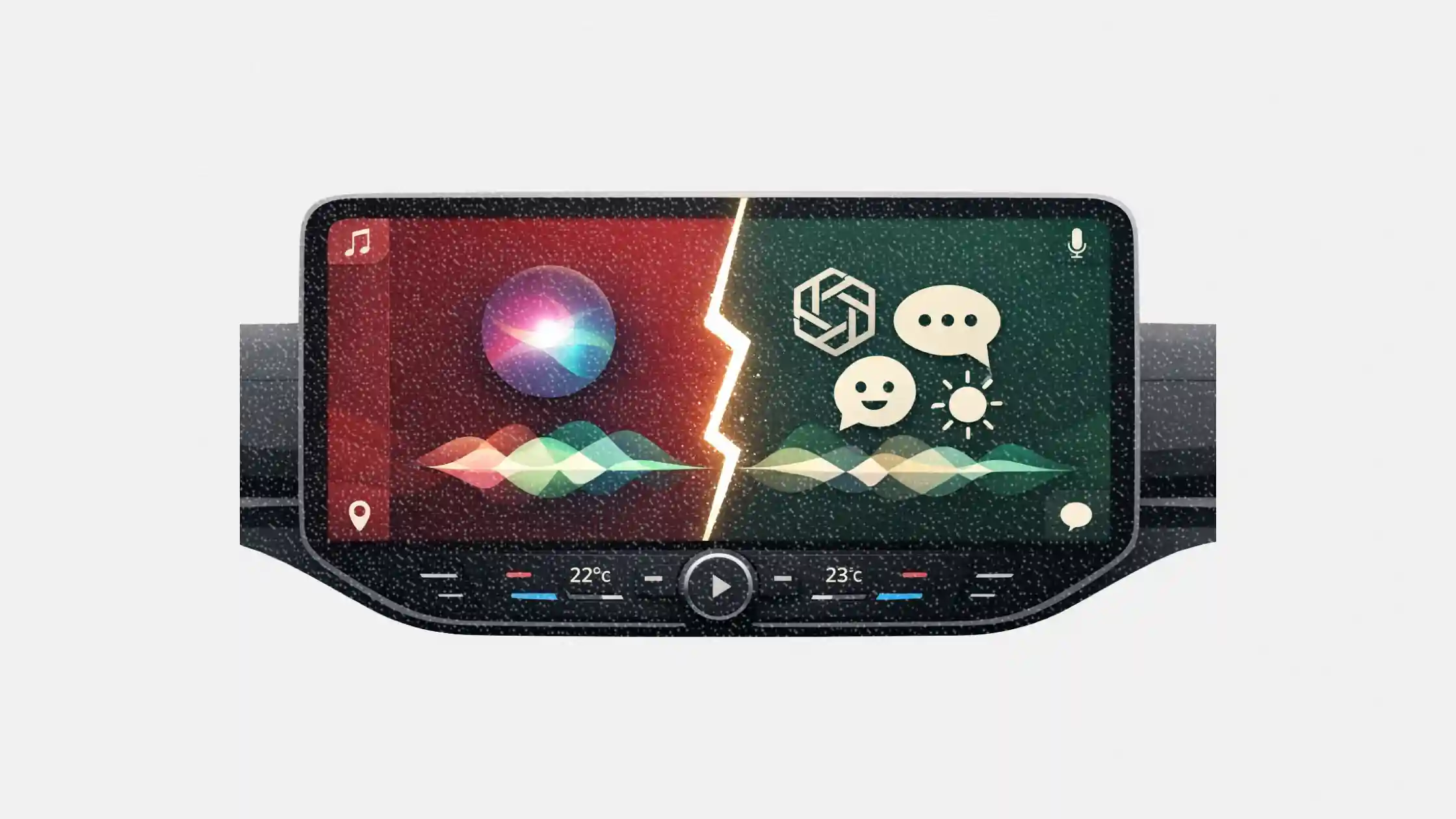
Apple is reportedly exploring how to integrate third-party AI chatbots like ChatGPT, Claude, and Gemini into its CarPlay system — a move that could radically reshape in-car voice experiences. Bloomberg broke the story, citing sources close to the matter, and while Apple hasn’t made anything official, the implications are already creating buzz in the AI and automotive ecosystems.
CarPlay, Apple’s bridge between iPhones and vehicle infotainment systems, currently relies on Siri to control apps like music, maps, and messaging. But with CarPlay Ultra — the next-gen version embedded deeper into the car’s interface — the addition of third-party chatbots could introduce an entirely new layer of interaction, content discovery, and voice-driven automation.
This article explores what’s in play, what’s at stake, and what marketers should prepare for.
Short on time?
Here’s a table of contents for quick access:
- What’s new with CarPlay and AI chatbot support
- Why this shift matters for AI and assistant ecosystems
- What marketers should know about in-car AI experiences
 Patrecia Meliana
What’s new with CarPlay and AI chatbot support
According to a Bloomberg report, Apple is working on ways to support third-party AI chatbot apps within CarPlay. The update would give users the option to interact with tools like OpenAI’s ChatGPT, Google’s Gemini, or Anthropic’s Claude while driving, likely via voice commands through the car’s interface.
CarPlay, which mirrors iPhone apps to the car’s infotainment display, currently lets users control music, messaging, and maps using Siri. But the upcoming CarPlay Ultra system is much more embedded. It spans the central touchscreen and even the driver’s digital dashboard, potentially unlocking deeper integration with a vehicle’s hardware settings.
This AI expansion could put Siri in direct competition with more advanced, conversational bots — a significant shift in Apple’s traditionally closed ecosystem.
Why this shift matters for AI and assistant ecosystems
Apple has long positioned Siri as the default assistant in its ecosystem, but it’s been widely criticized for falling behind rivals in conversational intelligence. By opening CarPlay to AI chatbot apps, Apple is essentially acknowledging that third-party assistants may offer more value in certain contexts — and that it’s willing to cede some control for the sake of user experience.
This could trigger broader shifts across both the mobile OS and automotive industries:
- Apple’s assistant strategy may evolve: We could see Apple reposition Siri as a gateway assistant or layer it alongside more capable AI agents.
- AI competition enters the car: Voice real estate inside vehicles is valuable, especially for content, commerce, and infotainment control. Now, it may become a battleground for AI brands.
- Privacy, safety, and UX considerations grow: Letting powerful third-party bots operate in a driving environment adds pressure to ensure seamless, distraction-free experiences.
For now, it’s unclear how Apple will manage permissions, defaults, or user prompts — but this move likely marks a first step in a longer roadmap toward modular, AI-enhanced operating systems.
What marketers should know about in-car AI experiences
This isn’t just a tech story — it’s a signal that the AI user interface is spreading into more daily touchpoints, including the car. That opens up new frontiers for content delivery, branding, and engagement:
- Rethink voice-first content
Marketers may need to optimize content for AI-led voice interactions in cars. Think: FAQ-style formats, short-form summaries, and ambient media designed for listening.
- Contextual moments matter
The car is a unique environment — users are often focused, time-constrained, or commuting. Tailoring campaigns and experiences to these “intent-rich” moments can improve relevance and brand recall.
- Watch the API layer
If Apple allows chatbots to trigger other app actions (music, maps, messages), integrations may become a new playground for branded interactions. Marketers and developers alike should stay close to Apple’s developer updates.
- Prepare for multi-agent environments
With Siri, ChatGPT, and Gemini potentially coexisting, brands may need to design experiences that are assistant-agnostic — or even optimize for specific bot personalities and capabilities.
As AI assistants spread across platforms and environments, the competition for attention isn’t just between brands — it’s between bots.
Marketers who understand how users interact with these agents will gain a new edge in omnichannel strategy.


Leave a Reply