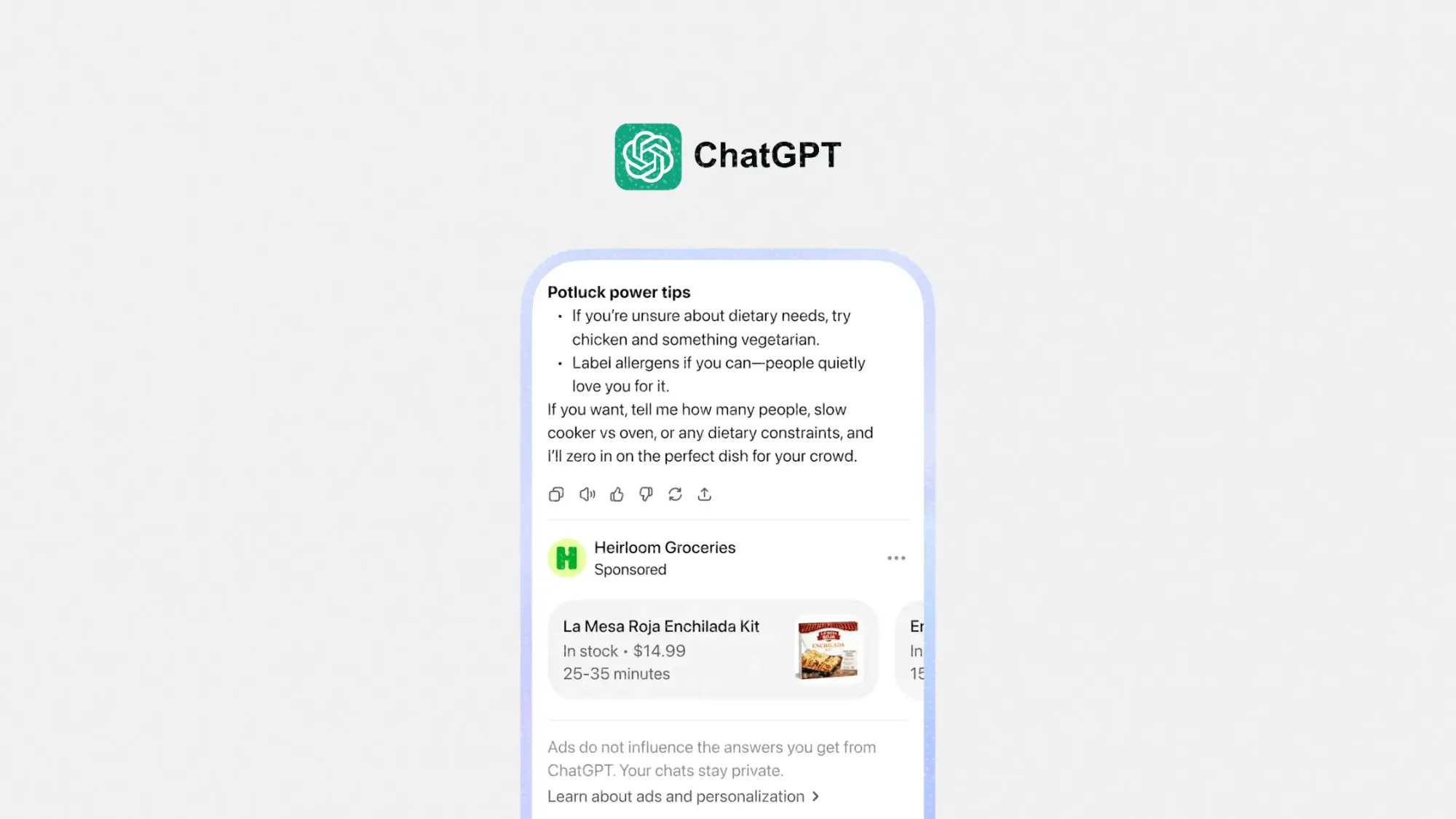
OpenAI has begun testing ads inside ChatGPT for users on its Free and Go plans, introducing a move that’s raising eyebrows across the AI and marketing communities. The shift, announced Monday, follows OpenAI’s earlier tease of a monetization strategy that would rely more heavily on sponsored content to subsidize access to its powerful tools.
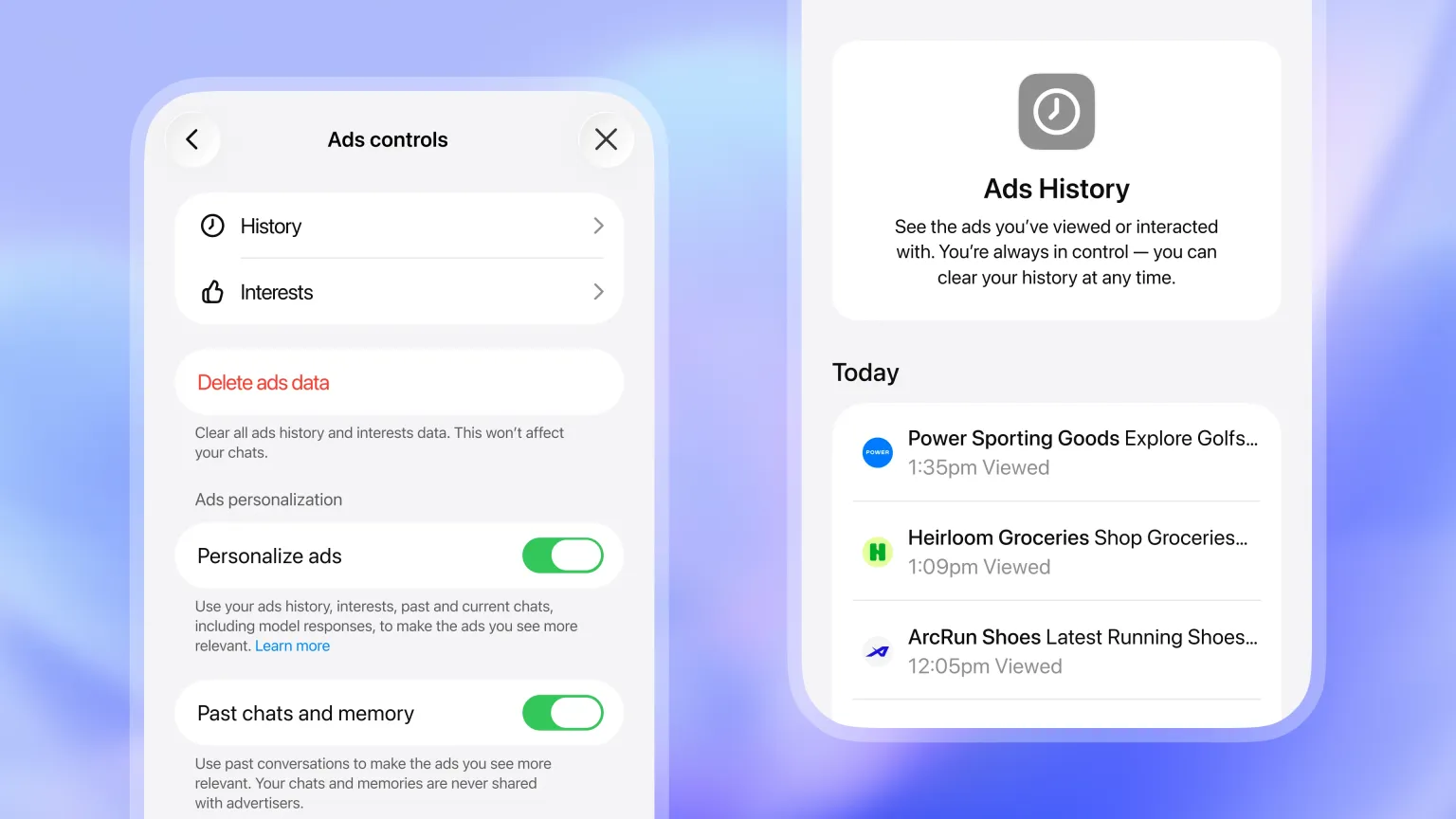
This article explores what OpenAI’s ad rollout means for marketers and brand communicators—especially those investing in conversational AI—and why the backlash, including jabs from Anthropic’s Super Bowl campaign, signals deeper trust issues brewing in AI-assisted brand engagement.
Short on time?
Here’s a table of contents for quick access:
 Patrecia Meliana
What OpenAI just announced
OpenAI has officially launched ad testing within ChatGPT, targeting users on its Free and recently introduced Go plans. The Go tier, priced at US$8 per month, was rolled out globally in January 2026 as a low-cost alternative to Plus or Pro subscriptions.
According to the company, users on higher-tier plans—including Plus, Pro, Business, Enterprise, and Education—will remain ad-free.
In a blog post, OpenAI emphasized that ads are “clearly labeled” and “separate from organic content.” The company also stressed that ads won’t influence responses and that advertiser access to user data is restricted to aggregate performance stats like clicks and views. Users can review and clear ad histories and tweak personalization settings at any time.
Importantly, OpenAI also says ads will not appear near sensitive or regulated topics such as health, politics, or mental health—and will be completely disabled for users under 18.
Why this move is making people nervous
Ads in AI products are not new, but OpenAI’s rollout has sparked a disproportionately loud reaction—driven in part by consumer sensitivity to privacy, ad creep, and opaque algorithms. The tension came to a head on Super Bowl Sunday when rival AI firm Anthropic aired TV spots mocking the concept of ad-injected chatbots. The tongue-in-cheek ads showed AI assistants interrupting helpful answers with absurd, poorly targeted product plugs.
OpenAI CEO Sam Altman fired back, calling the campaign “dishonest” and labeling Anthropic an “authoritarian company”—a comment that raised eyebrows of its own.
This isn’t OpenAI’s first brush with backlash. Late last year, early tests of “app suggestions” in ChatGPT were widely interpreted as ads and received significant pushback. The company walked back some of those features but kept experimenting behind the scenes.
The current rollout reflects a broader strategic dilemma: How does OpenAI monetize ChatGPT’s massive free user base without compromising trust or UX?
What marketers should know
If you’re a brand or agency considering ChatGPT as a marketing or service delivery channel, here’s what to keep in mind:
- Ad formats are still evolving
OpenAI’s initial tests suggest a native ad model, matched to conversation context (e.g., showing a meal kit ad during recipe planning). Expect formats to remain in flux as the company fine-tunes placement, targeting, and UX.
- You won’t get user-level data
Advertisers only receive aggregate performance metrics—OpenAI insists that no personal chat data is shared. That’s a key constraint for performance marketers but could build long-term user trust.
- Consumer tolerance is fragile
As the backlash shows, users are quick to react against perceived intrusions. Marketers should think carefully about creative strategy and value delivery if ads begin rolling out at scale.
- AI advertising is moving upstream
With Anthropic, Google, and Meta all building assistant-like AI layers, marketers should prepare for a future where search, chat, and discovery converge into a single experience—possibly monetized via ads.
- There’s a brand safety angle
OpenAI’s current guardrails avoid placing ads near sensitive topics, but marketers should still evaluate adjacency risk, especially in AI-generated content contexts.
If you’re exploring AI-driven customer engagement, this moment is a reminder to weigh innovation against control. Conversational environments are intimate—misplaced ads can feel jarring or intrusive, even if well-intended.
OpenAI’s ad rollout inside ChatGPT marks a pivotal step toward monetizing one of the world’s most widely used AI tools. But it also reopens thorny questions about data use, user experience, and brand integrity in AI-native platforms.
Marketers would be wise to track how this evolves—not just as a potential channel, but as a signal of how consumers and competitors will respond to ad-supported AI experiences in the months ahead.


Leave a Reply