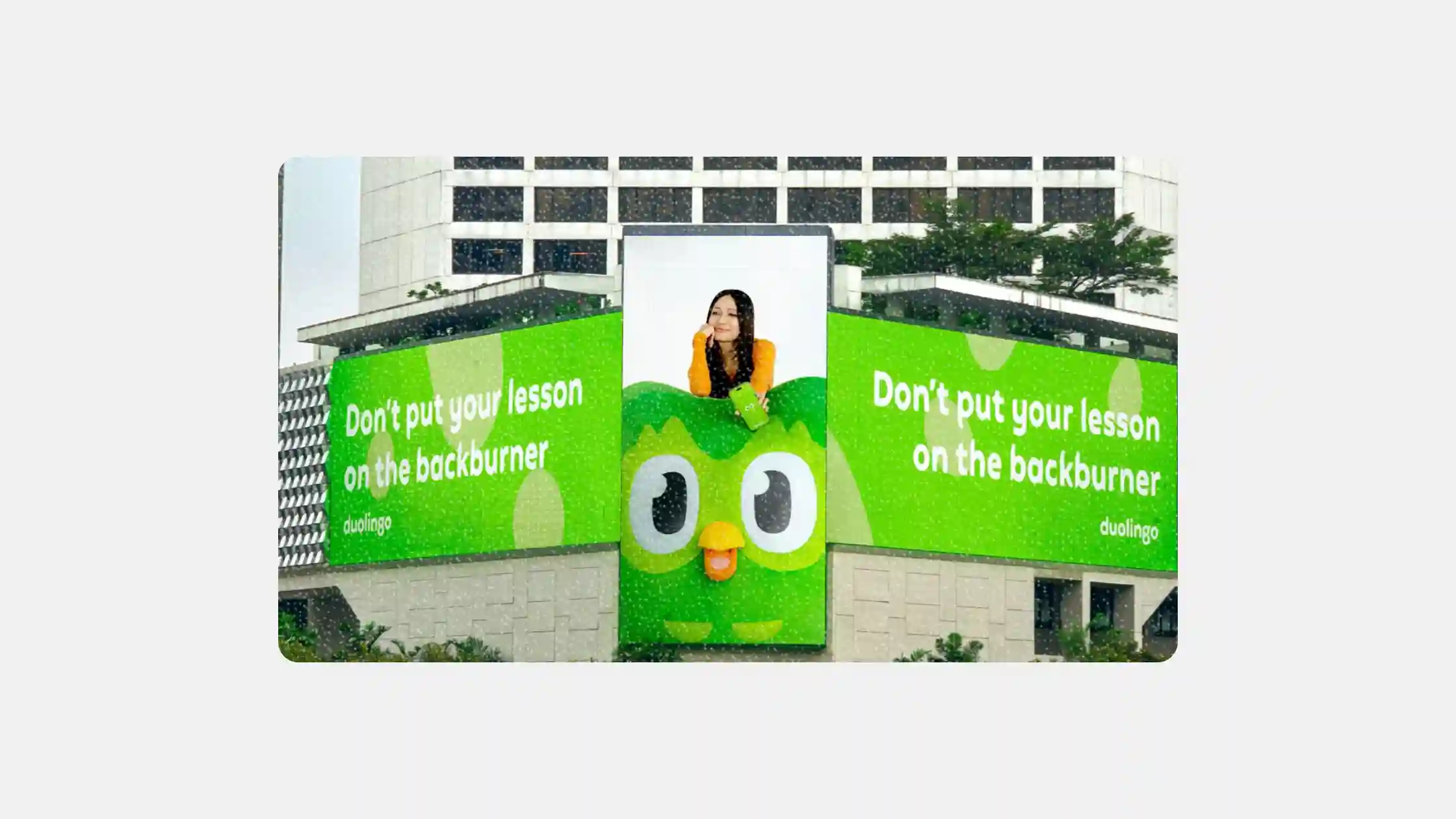
Duolingo is doubling down on culture as a growth lever, partnering with Indonesian global artist NIKI to reframe how language learning fits into everyday life. Instead of competing with entertainment, the platform is embedding itself directly into it.
@niki don’t be putting Duo on the backburner plz 😭🫶🏼💚 March 26 @ 6PM WIB, find Nikilingo on @Duolingo Indonesia 👀 #Duolingo #DuolingoIndonesia #DuolingoNiki #NikiLingo
This article explores how Duolingo’s music-led campaign signals a broader shift in edtech and martech strategy, where learning experiences are increasingly designed around cultural behavior, not traditional formats.
Short on time?
Here’s a table of contents for quick access:
- What is Duolingo and NIKI’s campaign all about
- Why music is becoming a key channel for language learning
- What marketers should know about culture-led engagement
 Patrecia Meliana
What is Duolingo and NIKI’s campaign all about
Duolingo has launched a short-run campaign in Indonesia, running from March 26 to 31, in collaboration with international pop artist NIKI. The concept is straightforward but strategically sharp: turn song lyrics into interactive language learning experiences.
The campaign spans social media, out-of-home activations, and a parody-style reinterpretation of NIKI’s track Backburner, featuring Duolingo’s mascot. It also includes a lyric-based installation at Mandarin Oriental Jakarta, transforming public space into a shareable, learning-driven touchpoint.
At its core, the campaign aligns with how Gen Z in Indonesia already engages with language. Many first encounter English through music, digital conversations, and global entertainment rather than formal education.
Duolingo is not trying to change that behavior. It is building on top of it.
 Patrecia Meliana
Why music is becoming a key channel for language learning
The campaign reflects a deeper behavioral shift that marketers should not ignore. Language acquisition is increasingly informal, passive, and culturally driven.
Duolingo’s own positioning leans into this. Its learning model is based on short, repeatable sessions. Music operates in a similar way, embedding vocabulary, rhythm, and expression through repetition and emotional connection.
Indonesia is a particularly strong testbed for this strategy:
- The country remains one of Duolingo’s fastest-growing markets
- The platform reports over 133 million monthly active users globally
- Gen Z makes up nearly 28% of Indonesia’s population
NIKI’s involvement is not incidental. With over five billion Spotify streams and global stage presence, she represents a generation that moves fluidly across languages and cultures. Her English-language songwriting mirrors the aspirations of young Indonesians who see language as access to global participation.
For Duolingo, this is less about celebrity endorsement and more about cultural alignment.
 Patrecia Meliana
What marketers should know about culture-led engagement
This campaign highlights a few important shifts in how brands should approach engagement, especially with Gen Z audiences:
1. Culture is now a distribution channel
Music, memes, and creator content are not just awareness tools. They are environments where learning, discovery, and brand interaction happen organically.
2. Utility beats interruption
Duolingo does not interrupt entertainment. It enhances it. By turning lyrics into learning prompts, the brand adds value without disrupting the user experience.
3. Behavioral design matters more than messaging
The campaign taps into existing habits such as listening to music, scrolling social, and sharing content. This reduces friction and increases adoption.
4. Offline experiences still play a role
The Jakarta installation shows that physical activations can amplify digital campaigns when they are designed for shareability and cultural resonance.
5. Gamification can be emotional, not just functional
By linking “streak guilt” to a parody of romantic neglect, Duolingo connects product mechanics with relatable storytelling. That is a more sophisticated use of gamification.
 Patrecia Meliana
Duolingo’s collaboration with NIKI is a clear example of how learning, entertainment, and marketing are converging. The brands that win will not be the ones shouting the loudest, but the ones embedding themselves most naturally into culture.
For marketers, the takeaway is simple: stop trying to pull audiences into your experience. Build your experience where they already are.


Leave a Reply