Crypto trading in 2026 is increasingly shifting beyond pure speculation toward distribution, UX, and trust-building. Exchanges are no longer competing only on fees or token listings. They are competing on brand legitimacy, onboarding speed, and product depth.
This article explores how crypto platforms are evolving their growth playbooks through partnerships, frictionless onboarding, and feature-led retention.
It also looks at how platforms like BYDFi are positioning themselves across these shifts, particularly with a centralized exchange paired with an integrated on-chain trading engine.
Short on time?
Here’s a table of contents for quick access:
- How crypto exchanges are building trust through partnerships
- How no-kyc onboarding is lowering barriers to entry
- How product features drive acquisition and retention
- What marketers should know about crypto platform growth
How crypto exchanges are building trust through partnerships
Trust remains one of the biggest barriers in crypto adoption. In response, exchanges are increasingly leaning on mainstream partnerships to signal credibility.
A clear example is BYDFi’s multi-year partnership with Newcastle United, where it became the club’s Official Crypto Exchange Partner. For a platform operating across 190+ countries, this type of association does more than drive awareness. It connects the brand to a globally recognized institution.
For marketers, this reflects a broader shift:
- Crypto brands are borrowing trust from established institutions
- Sports partnerships act as global distribution channels
- Brand legitimacy is becoming as important as product functionality
This approach does not eliminate risk, but it helps reduce perceived uncertainty for new users.
How no-kyc onboarding is lowering barriers to entry
Onboarding friction has historically been one of crypto’s biggest drop-off points. Lengthy identity verification processes, especially in regions with limited documentation infrastructure, have slowed adoption.
Platforms like BYDFi address this with no mandatory KYC access, allowing users to register with just an email and start trading immediately.
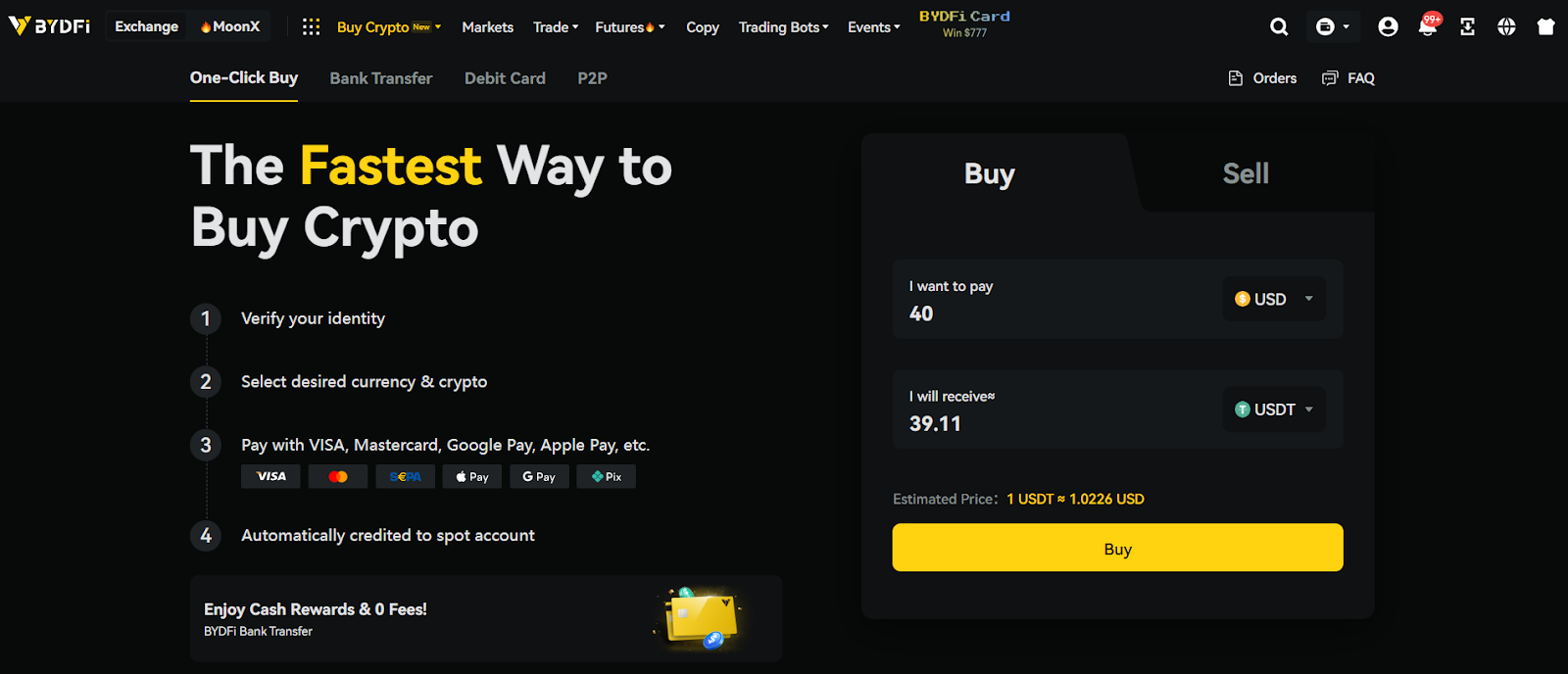
This shift has several implications:
- Faster time-to-value for new users
- Higher conversion from sign-up to first trade
- Greater accessibility in emerging markets
The appeal of BYDFi no KYC lies in this immediate usability. Users can access spot trading, derivatives, and on-chain tools without upfront verification, while optional KYC unlocks higher limits and additional features.
From a growth perspective, this mirrors patterns seen in fintech: reduce friction early, then layer in compliance as users deepen engagement.
How product features drive acquisition and retention
In 2026, product design is increasingly tied to growth. Many exchanges are embedding acquisition and engagement directly into their feature sets.
BYDFi’s model combines centralized trading with its on-chain engine, MoonX, which supports ecosystems like Solana and BNB Chain and Base.
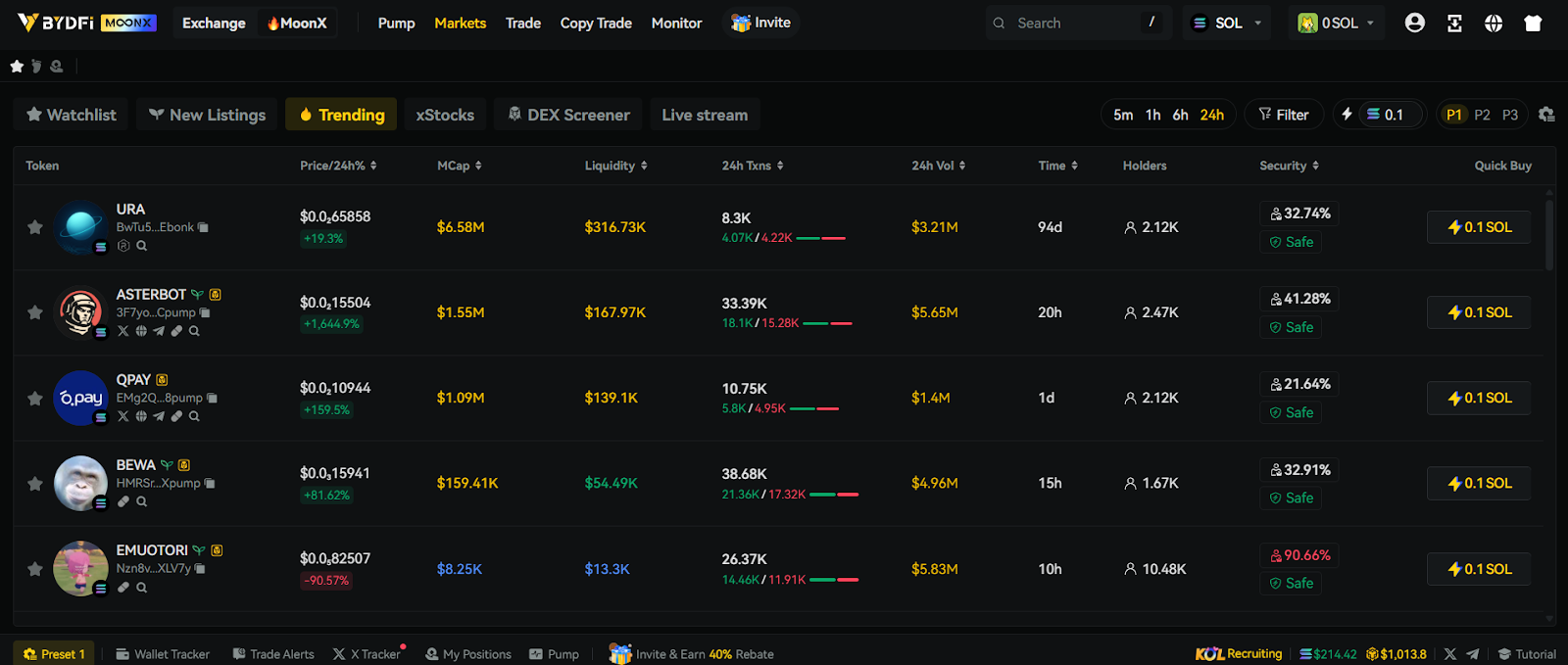
Within MoonX, several features illustrate this trend:
- Real-time on-chain data and token lifecycle tracking
- Integration with multiple DEX and launch platforms
- Smart money tracking and social signal monitoring
- An industry-first same-block copy trading mechanism that executes within the same on-chain block, minimizing delay and slippage
These features help lower the barrier to participation and make on-chain markets more accessible.
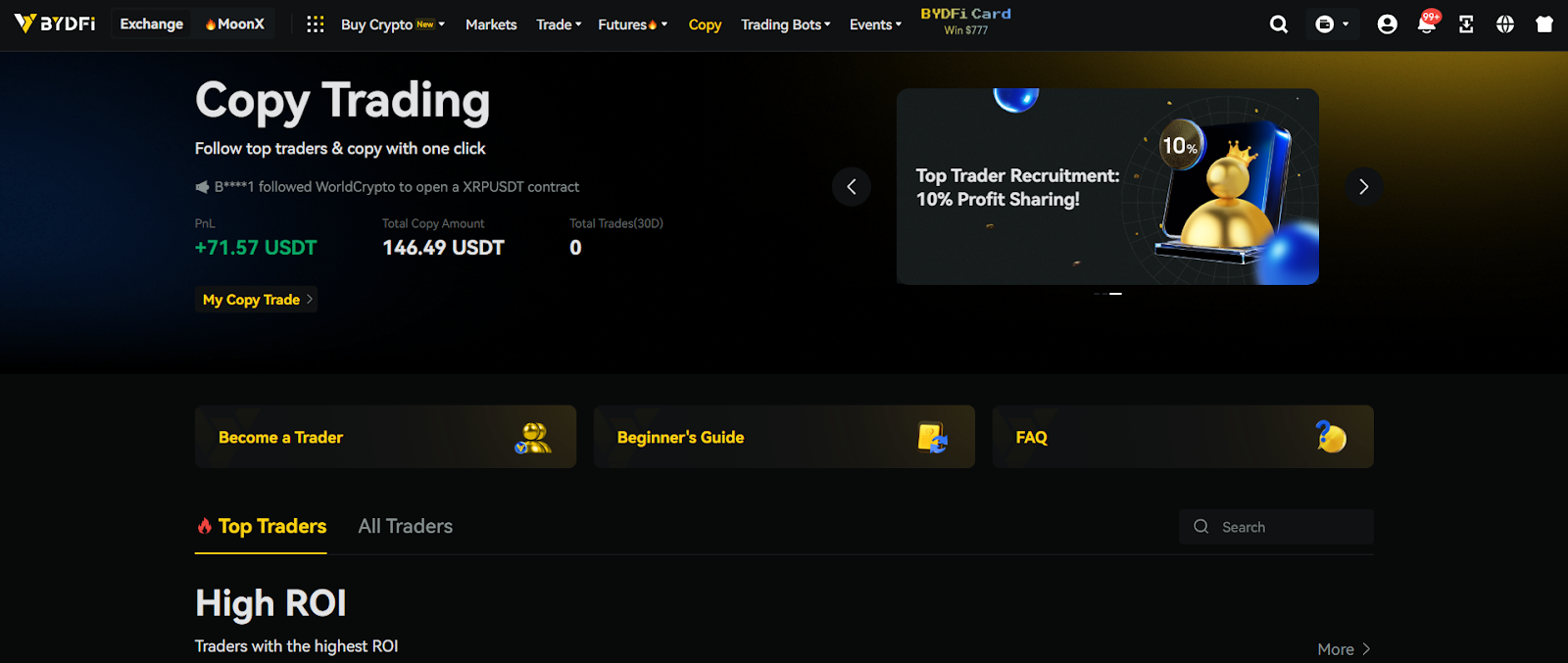
For example:
- Copy trading enables users to follow experienced traders without building strategies from scratch
- Market and social data aggregation helps users interpret trends more quickly
- Multi-chain support broadens access to different token ecosystems
Retention is also influenced by product depth. Platforms that continuously provide data, tools, and trading opportunities are more likely to keep users engaged over time.
What marketers should know about crypto platform growth
Crypto exchanges are evolving into full-stack growth systems. Here are key takeaways for marketers:
- Distribution is shifting beyond paid media
Partnerships, communities, and ecosystems are becoming primary growth channels.
- UX is a core conversion driver
Reducing onboarding friction, such as no-KYC flows, directly impacts acquisition.
- Features function as engagement loops
Tools like copy trading and on-chain analytics encourage repeat usage.
- Hybrid models are gaining traction
Platforms that combine centralized infrastructure with on-chain capabilities can serve broader user needs
- Trust is actively constructed
Through partnerships, transparency mechanisms, and user-facing data, platforms are working to build credibility over time
Crypto trading in 2026 is not just about market volatility. It is increasingly shaped by how effectively platforms reduce friction, build trust, and design products that keep users engaged. The evolution of platforms like BYDFi reflects a broader industry direction: growth comes from aligning brand, onboarding, and product into a cohesive experience.
For marketers, the takeaway is clear. The next phase of crypto growth will be driven by platforms that operate less like standalone trading tools and more like integrated user ecosystems.


Leave a Reply