Unilever’s Clear is taking a culturally sharp angle on hair loss in Turkey, where prevention has long taken a backseat to treatment. Its latest campaign, “Scalp before skin,” is less about selling shampoo and more about reframing behavior among young men who often see hair loss as inevitable.
This article explores how Clear is repositioning scalp care as a proactive grooming habit, why that matters in a transplant-driven market, and what marketers can learn from its cultural reframing strategy.
Short on time?
Here’s a table of contents for quick access:
- What is Clear’s “Scalp before skin” campaign trying to solve?
- How the campaign uses cultural insight to shift behavior
- Why media strategy and placement matter here
- What marketers should know
 Patrecia Meliana
What is Clear’s “Scalp before skin” campaign trying to solve?
Clear, owned by Unilever, launched “Scalp before skin” on World Health Day (7 April) in Turkey, targeting men aged 25 to 35. The campaign directly addresses a widespread behavioral challenge: high awareness of hair loss, but low motivation to act early.
Turkey reportedly has one of the highest rates of male pattern baldness globally, affecting around 40% of men. Yet despite this, many consumers default to reactive solutions like hair transplants rather than preventative care.
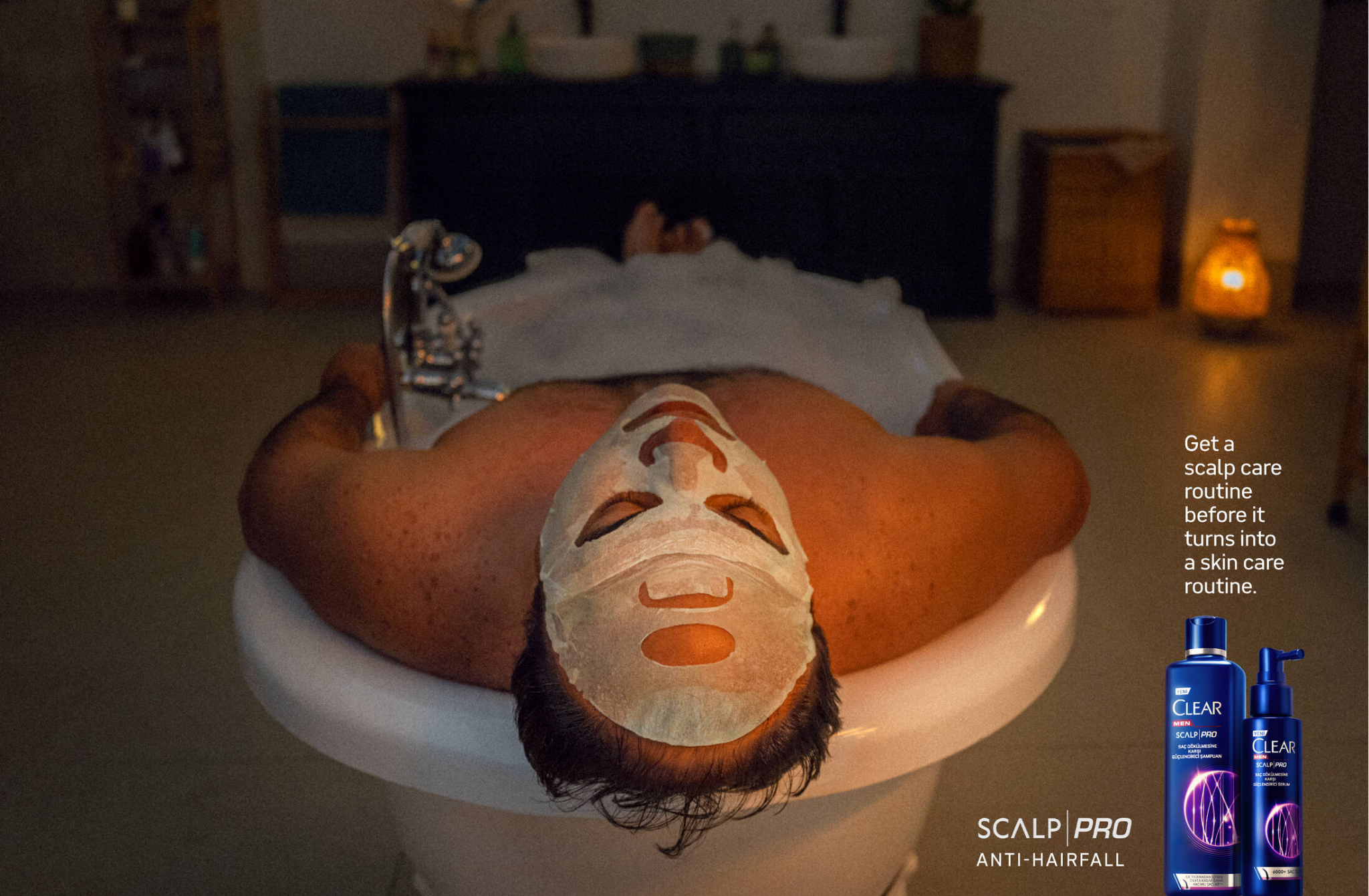
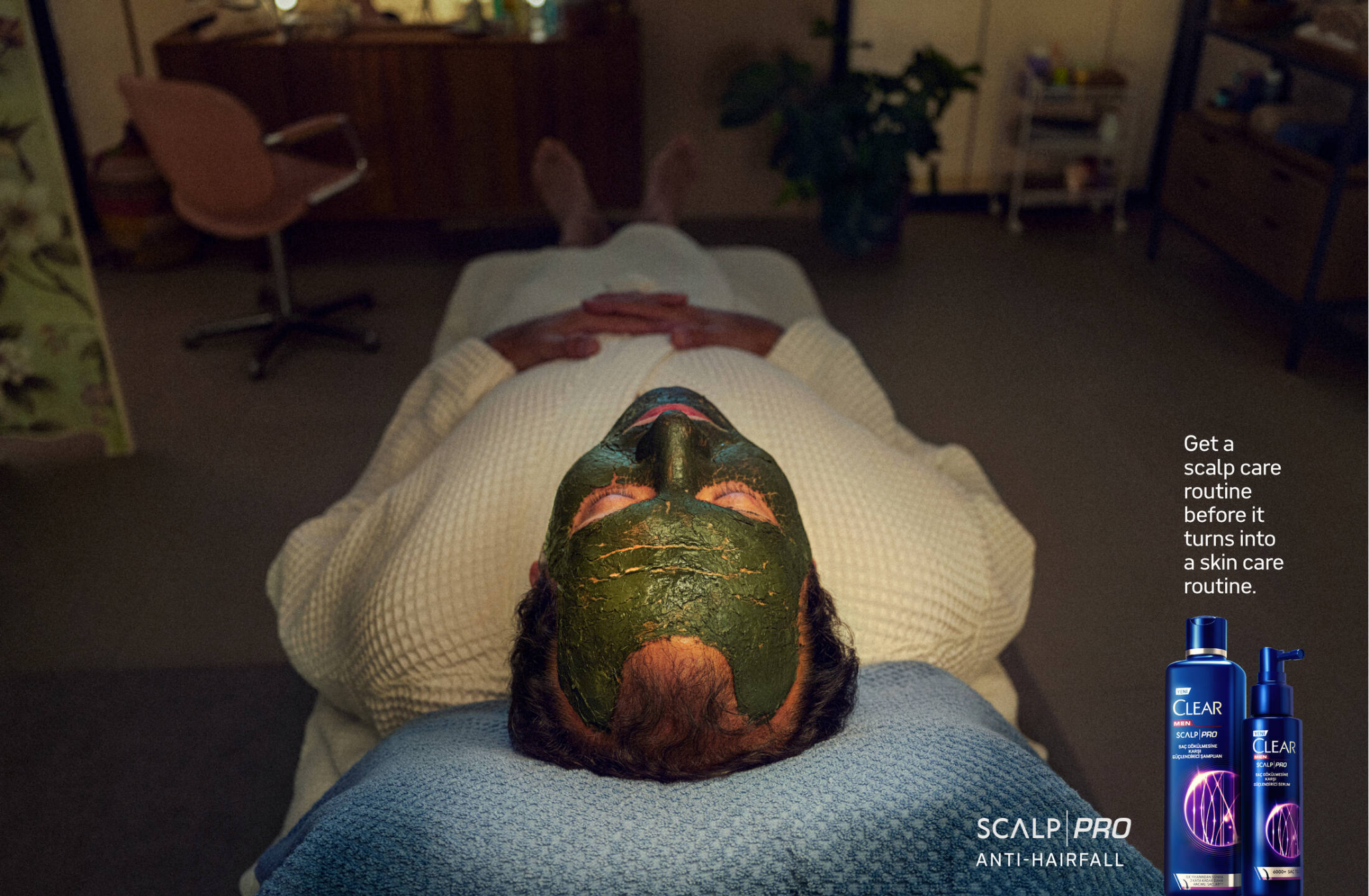
Clear’s campaign reframes the issue with a simple but provocative message: “Get a scalp care routine before it turns into a skincare routine.”
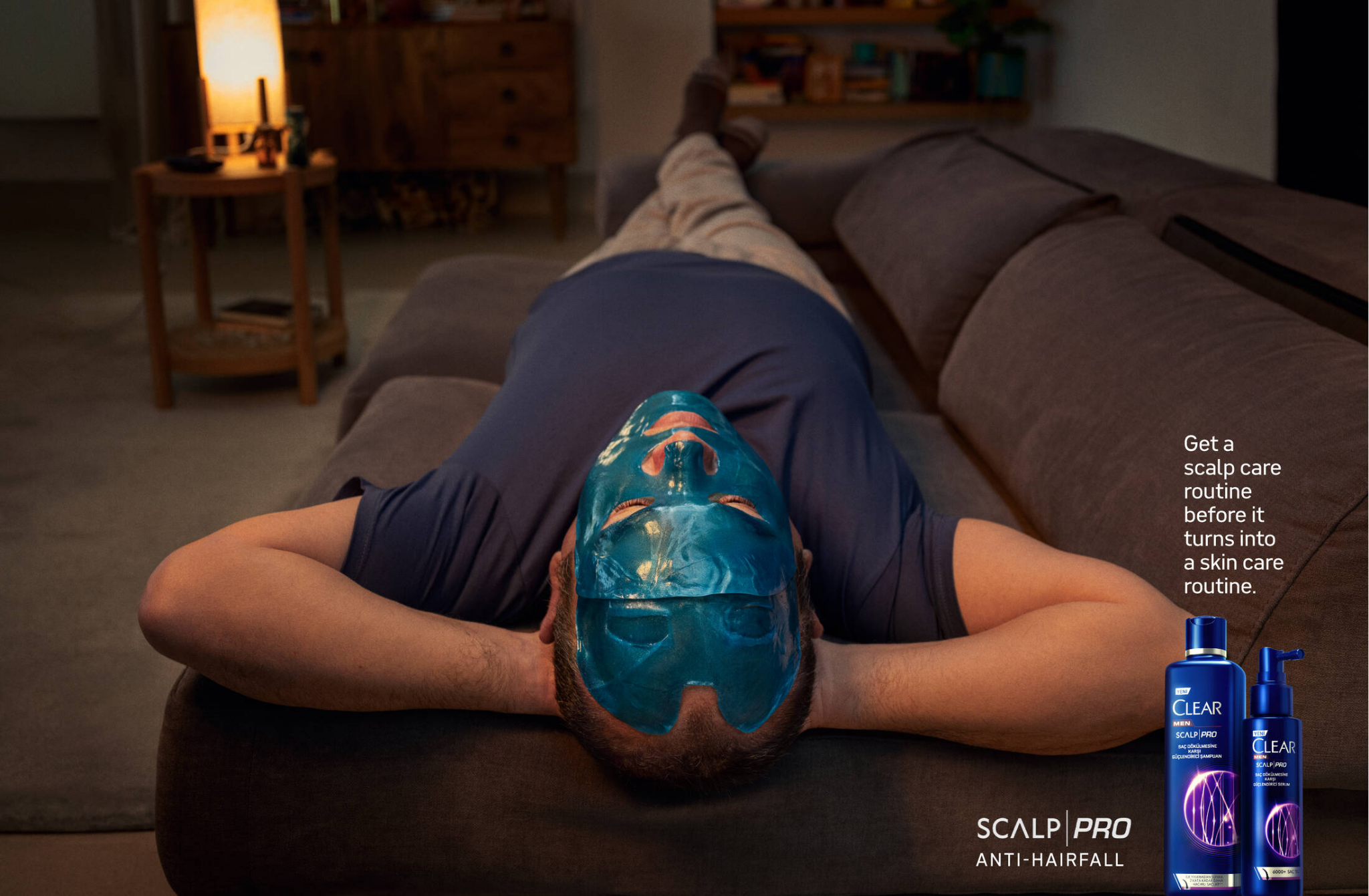
The goal is to reposition scalp care as the first step in grooming, not an afterthought once hair loss becomes visible.
How the campaign uses cultural insight to shift behavior
What makes this campaign interesting is not the product, but the behavioral bridge it builds.
Instead of pushing traditional dandruff messaging, Clear taps into the rising popularity of skincare among Turkish men. By linking scalp care to an already accepted habit, the brand reframes prevention as both familiar and urgent.
This is a classic behavioral pivot:
- From inevitability to control: Hair loss is no longer framed as fate, but as something you can act on early
- From cosmetic to preventative: Scalp care becomes a health-oriented routine
- From niche to mainstream: By aligning with skincare, the category feels more relevant
The campaign also challenges what Mohamed ElSharkawy, Global Brand Vice President, Clear, describes as a “transplant-first mindset,” positioning Clear Scalpceuticals as a smarter alternative.
Importantly, the issue is not awareness but apathy. As Marco Versolato, Chief Creative Officer, WPP@Unilever, notes, many consumers already know about hair loss but delay action because solutions feel distant or optional.
Patrecia Meliana
Why media strategy and placement matter here
Clear’s media execution reinforces its behavioral strategy.
The campaign leaned heavily on digital out-of-home and print, avoiding typical dandruff channels to create a more disruptive presence. High-impact placements included:
- University corridors in Maslak
- Social and entertainment districts like Beşiktaş
- Print placements in Hafta, a national newspaper supplement
These locations were not random. They target men in moments where appearance, social identity, and grooming are already top of mind.
Dynamic billboards and moving placements also helped the campaign achieve scale quickly, reaching over 900,000 people on launch day alone.
The result is a campaign that does not just deliver a message but inserts itself into the daily routines and environments of its audience.
What marketers should know
Clear’s campaign offers several practical takeaways for marketers, especially those working in behavior-driven categories:
1. Reframe the category, not just the product
Instead of competing within “anti-dandruff,” Clear expands into “preventative grooming.” This opens new mental territory and reduces direct competition.
2. Use adjacent behaviors as entry points
By linking scalp care to skincare, the campaign taps into an existing habit rather than trying to build a new one from scratch.
3. Target apathy, not awareness
Many campaigns overinvest in education. Here, the insight is that people already know but do not act. The messaging is designed to provoke, not inform.
4. Match media to mindset moments
Placement in social hubs and universities ensures the message lands when grooming and appearance are most relevant.
5. Build cultural, not just physical reach
As the brand notes, the goal is to reach audiences “not just physically, but culturally.” That is where behavior actually shifts.
Clear’s “Scalp before skin” campaign shows how much of modern marketing is about reframing perception rather than pushing product features. By connecting scalp care to skincare and shifting the narrative from reaction to prevention, the brand is trying to rewrite how an entire category is understood.
For marketers, the lesson is straightforward: if behavior is stuck, the answer is rarely more messaging. It is a better story that fits how people already think and live.

Leave a Reply