AI search is quietly rewriting the rules of digital visibility. Rankings still exist, traffic still fluctuates, and dashboards still light up with familiar metrics.
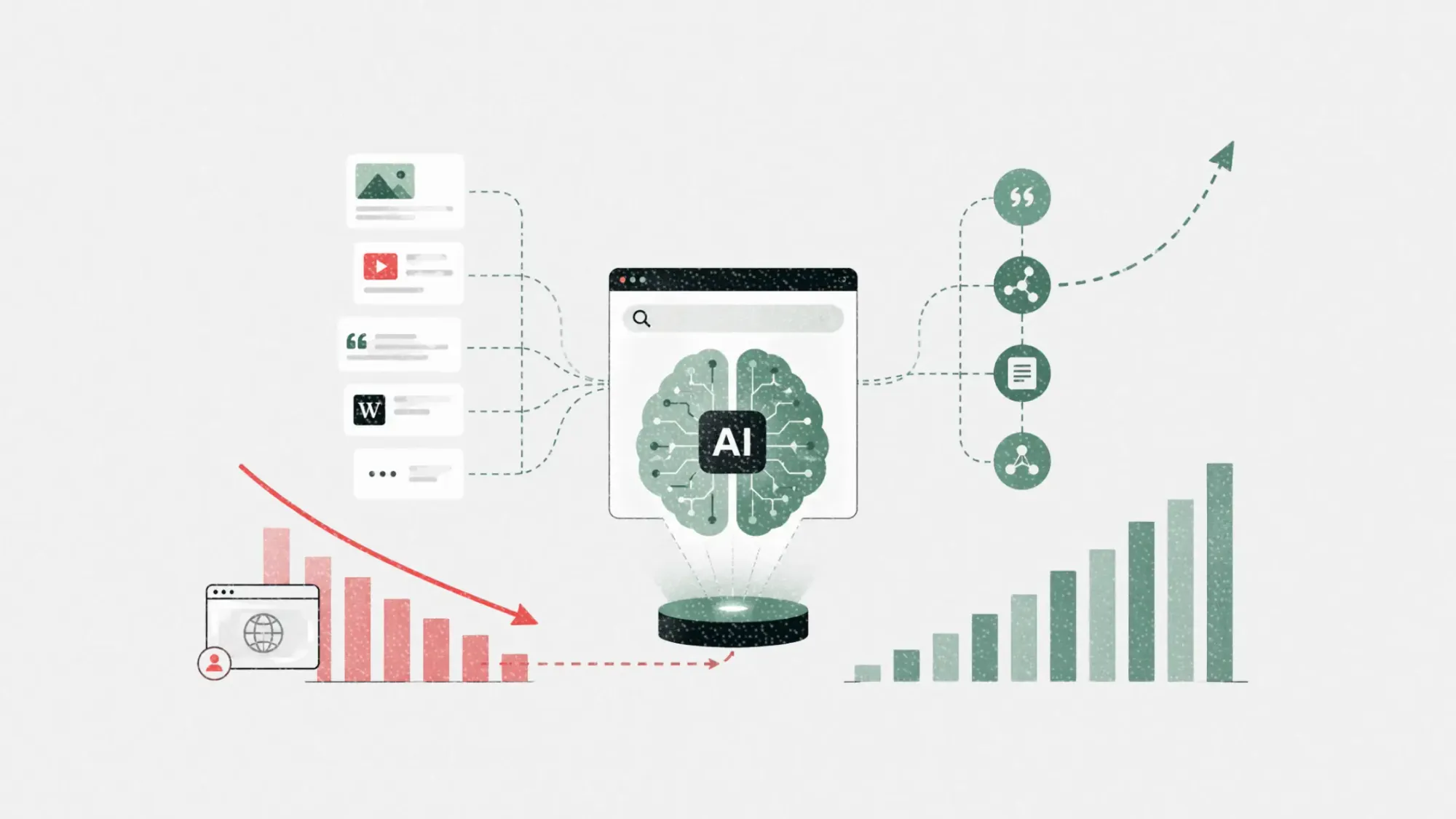
But underneath all that, something fundamental has changed. Users are no longer just clicking links. They are consuming answers generated by AI systems that synthesize information from multiple sources.
This shift forces marketers to rethink what success actually looks like. This article explores how AI search is reshaping performance measurement, why traditional SEO KPIs are losing relevance, and the new metrics marketers need to stay visible, trusted, and competitive in AI-driven discovery.
Table of contents
Jump to each section:
- Why traditional SEO KPIs are breaking
- The real shift from ranking pages to being selected as a source
- The 4 KPI categories that define success in AI search
- New AI-native KPIs marketers should start tracking
- What success in AI search actually looks like
- Common mistakes marketers still make
- What marketers should do next
 Patrecia Meliana
Why traditional SEO KPIs are breaking
Marketers are seeing a strange pattern. Rankings hold steady, impressions remain strong, but traffic declines. The disconnect is real.
The reason is simple. Users are increasingly getting answers directly from AI systems instead of clicking through to websites. These systems synthesize multiple sources, often without requiring a visit to any single page.
The data reflects this shift clearly:
- 39% of marketers report traffic declines since AI Overviews launched
- AI Overviews appeared in up to 25% of queries at peak in 2025
- Some AI-cited platforms lost up to 67% of organic traffic despite being referenced
- Position #1 CTR can drop significantly when AI answers appear
- Users now click only once for every 20 AI prompts
This creates a measurement gap. Rankings, impressions, and clicks still move, but they no longer represent actual exposure to users.
You can technically “win” SEO while becoming less visible.
Patrecia Meliana
The real shift from ranking pages to being selected as a source
Instead of ranking pages, AI systems retrieve, evaluate, and recombine information from multiple sources to generate answers. Your content is no longer competing for a position. It is competing to be selected as input.
This changes the rules:
- You do not need to rank #1 to be included
- Multiple sources contribute to a single answer
- Authority is interpreted by machines, not just link signals
The new model looks like this:
- Old model: pages compete for ranking
- New model: sources are selected for synthesis
Success now depends on whether your content is understood, trusted, and retrievable by AI systems.
The 4 KPI categories that define success in AI search
1. Discovery KPIs: can AI find you?
Before anything else, AI needs to discover and understand your content. On average, AI answers often include 4-6 sources. Getting into these means you are being “cited”.
Key metrics:
- AI brand mention rate
- Prompt coverage rate
- Share of answer
AI answers typically include multiple sources. If your content is not part of that pool, you are invisible.
Action: Focus on content clusters and semantic coverage. Clear structure and depth improve retrieval.
Patrecia Meliana
2. Selection KPIs: does AI trust you?
Being discoverable is not enough. AI must also choose to cite you.
Key metrics:
- AI citation count
- Attribution rate
- AI snippet inclusion
Citations directly influence credibility and visibility. In fact, brands cited in AI Overviews can see meaningful lifts in organic engagement.
Insight: Citations are the new rankings.
3. Influence KPIs: are you shaping the answer?
Not all mentions carry equal weight.
Key metrics:
- Share of voice in AI responses
- Sentiment of mentions
- Answer dominance
You might be cited, but are you shaping the narrative?
Influence determines how your brand is perceived, not just whether it appears.
Patrecia Meliana
4. Outcome KPIs: does AI visibility drive business results?
Visibility alone is not enough. It must translate into business impact.
Key metrics:
- AI-assisted conversions
- Branded search lift
- Direct traffic after AI exposure
AI search reshapes the funnel. Users may not click immediately, but they may search for your brand later or convert through another channel.
ROI measurement must expand beyond clicks.
New AI-native KPIs marketers should start tracking
A new layer of measurement is emerging, focused on how AI systems retrieve, interpret, and represent content.
Core KPIs include:
- AI citation count
- Attribution rate
- Share of answer
- Generative share of voice
- Chunk retrieval frequency
- Semantic relevance score
- Zero-click visibility rate
These metrics reflect how AI systems process information, not just how users interact with it.
What to do next:
- Build a hybrid dashboard combining SEO and AI KPIs
- Track performance across platforms like ChatGPT, Google AI, and Perplexity
- Use tools like Semrush and Google Analytics to monitor visibility
- Run consistent prompts weekly to track how your brand is cited
What success in AI search actually looks like
Success is no longer defined by traffic alone.
It looks like this:
- Your brand appears consistently in AI-generated answers
- You are cited across multiple AI platforms
- Your content shapes how topics are explained
- Users search for your brand after seeing AI responses
Visibility is now measured by presence, trust, and influence inside AI systems.
This is a broader, more complex definition of success, but also a more meaningful one.
Common mistakes marketers still make
Despite the shift, many teams are still operating with outdated assumptions.
Common pitfalls:
- Obsessing over rankings while ignoring AI visibility
- Treating AI search like traditional SEO
- Not tracking citations or mentions
- Underestimating zero-click behavior
These gaps create blind spots that can quietly erode performance.
What marketers should do next
To adapt, marketers need to rethink both strategy and measurement.
Actionable steps:
- Audit your visibility in AI-generated answers
- Build topic clusters instead of standalone posts
- Optimize content for clarity and structure
- Track AI citations weekly
- Align SEO, PR, and content teams
AI search is not just a channel shift. It is a structural change in how information is discovered and trusted.
Marketers who adapt early will not just maintain visibility. They will define it.