Qualtrics has completed its acquisition of Press Ganey Forsta for $6.75 billion. The combination is positioned around expanding Qualtrics’ Experience Management (XM) AI and data platform with what it describes as the scale and depth of Press Ganey Forsta’s healthcare experience dataset.
The immediate marketing and CX implication is that healthcare organizations may get a tighter link between experience measurement, benchmarking, and AI-driven action, with more longitudinal patient and care-team signals feeding the system.
Table of contents
Jump to each section:
- What the $6.75B acquisition adds to Qualtrics’ XM platform
- Why healthcare experience data is strategically different
- Competitive context in experience management analytics
- Operational implications for providers and payers adopting the combined stack
What the $6.75B acquisition adds to Qualtrics’ XM platform
Qualtrics says the deal expands its proprietary XM AI and data platform with healthcare-specific experience data at significant scale. Press Ganey Forsta’s measurement systems are used by more than 41,000 healthcare facilities, including a majority of U.S. hospitals, which implies broad coverage and benchmarking depth that is hard to replicate quickly.
Strategically, this is not just adding customers. It is adding domain-specific data, relationships, and measurement infrastructure that can shape how models are trained, how benchmarks are defined, and how workflows are packaged for regulated clinical environments.
Qualtrics is also framing XM as “required context” for AI-driven experiences, arguing that large language models alone lack human and situational understanding. Whether or not buyers accept that framing, the purchase price signals Qualtrics is prioritizing proprietary datasets and category defensibility, especially in verticals where trust, compliance, and benchmarking are durable moats.
 ContentGrip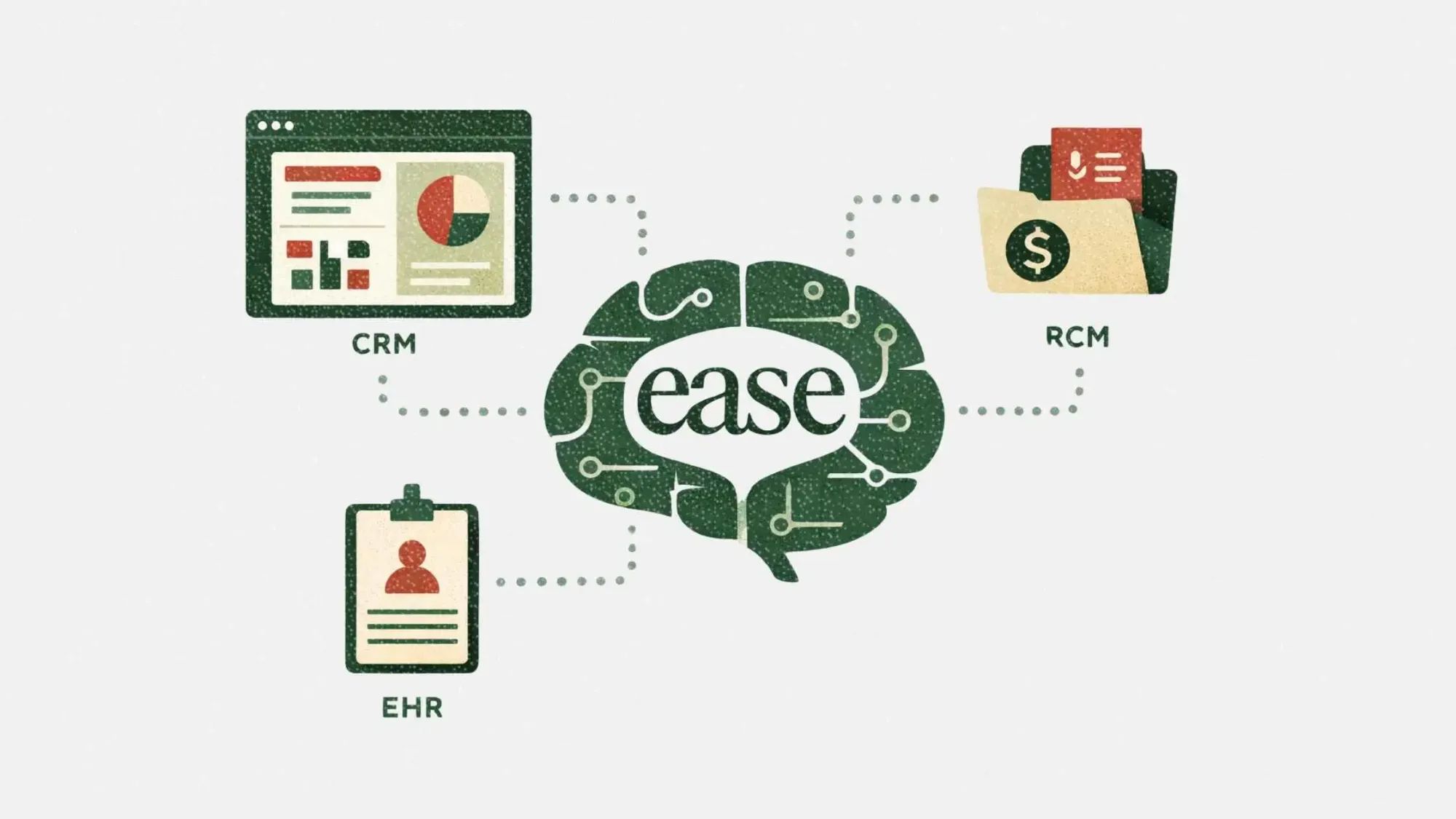
Why healthcare experience data is strategically different
Healthcare experience data carries constraints that general consumer CX data often does not: regulatory realities, clinical operations, and high stakes outcomes. That tends to increase switching costs and elevates the value of systems that are embedded in established measurement programs.
Qualtrics also emphasizes an “experience gap” in healthcare, describing a delta between patient expectations and what organizations can consistently deliver. Even if the language is directional, the underlying point is practical: expectations are increasingly set by consumer-grade digital experiences, while healthcare organizations must coordinate across complex care journeys.
If the combined platform can translate experience signals into workflows that drive timely action, it could move healthcare organizations from retrospective reporting to more operational, near-real-time interventions. That is where experience management starts behaving like an operational system, not just a survey and dashboard layer.
Competitive context in experience management analytics
The experience management and voice-of-customer analytics market remains competitive, with vendors like Medallia, InMoment, SurveyMonkey, and NRC Health offering combinations of feedback capture, analytics, and action workflows. In healthcare specifically, differentiation often comes down to proprietary datasets, benchmarking credibility, and how deeply tools integrate with operational systems.
This acquisition increases Qualtrics’ ability to compete on healthcare-specific depth rather than horizontal breadth alone. Press Ganey Forsta’s installed base and benchmarking footprint can function as both a distribution channel and a dataset advantage, which may pressure competitors to respond via partnerships, acquisitions, or deeper vertical specialization.
The broader category trend here is consolidation around “data plus workflow.” Buyers increasingly expect platforms to connect experience signals to actions inside operational tools, not just generate insights. That raises the bar for vendors whose products stop at analysis.
Operational implications for providers and payers adopting the combined stack
For healthcare providers and payers, the combined capabilities could change what “activation” looks like for experience data:
- Benchmarking to action loops: Using comparative performance to prioritize operational changes rather than only reporting results.
- More unified signal ingestion: Bringing patient, member, employee, and customer experience signals into a more consistent analytics and workflow environment.
- AI governance and trust: Larger datasets can improve model performance, but they also increase the need for transparent methodology, bias controls, and auditability, particularly in regulated settings.
- Implementation realism: Integrating experience workflows into clinical and administrative operations typically requires change management, not just software configuration.
The near-term outcome to watch is whether the combined entity can package healthcare experience improvements into repeatable playbooks that executives can justify with operational metrics, not only satisfaction scores.

