DoorDash is expanding its ads business with new premium placements, offsite activation via Symbiosys, and a partnership with LiveRamp focused on clean room measurement. The company outlined the updates in an official newsroom post.
The combined move targets two common friction points in commerce media: proving incrementality using privacy-centric data collaboration, and giving brands more high-attention inventory beyond standard sponsored listings.
Table of contents
Jump to each section:
- What’s changing in DoorDash Ads
- How LiveRamp clean rooms shift measurement and audience planning
- Spotlight and premium homepage placements
- Offsite activation with Symbiosys and closed-loop measurement
- AI automation updates: Smart Campaigns and auto-bidding
- What this means for CPG and restaurant marketers
What’s changing in DoorDash Ads
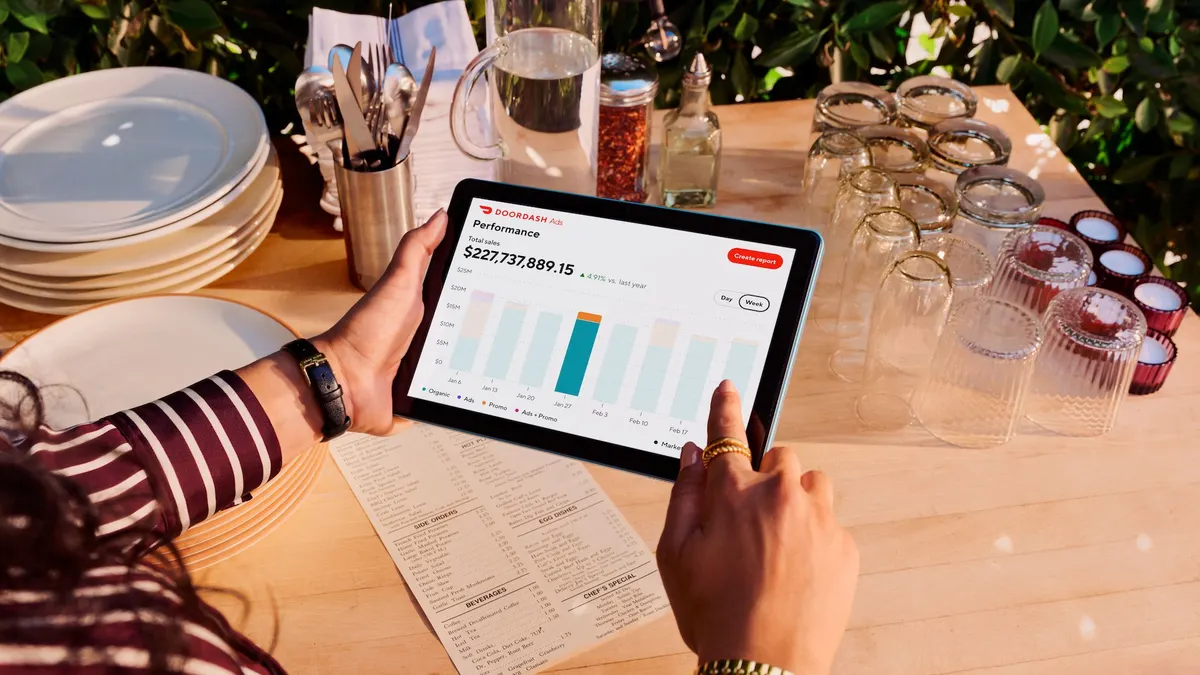
DoorDash Ads is positioning itself more explicitly as a commerce media platform spanning onsite ads, offsite activation, and measurement. Across DoorDash, Wolt, and Deliveroo, the company says it supports more than 400,000 advertisers and surpassed a US$1 billion annualized advertising revenue run rate as of 2024.
The product changes cluster around three themes: (1) premium inventory (Spotlight), (2) interoperability and measurement via LiveRamp clean rooms, and (3) expanded offsite reach powered by Symbiosys, which DoorDash acquired for US$175 million.
 undefined
How LiveRamp clean rooms shift measurement and audience planning
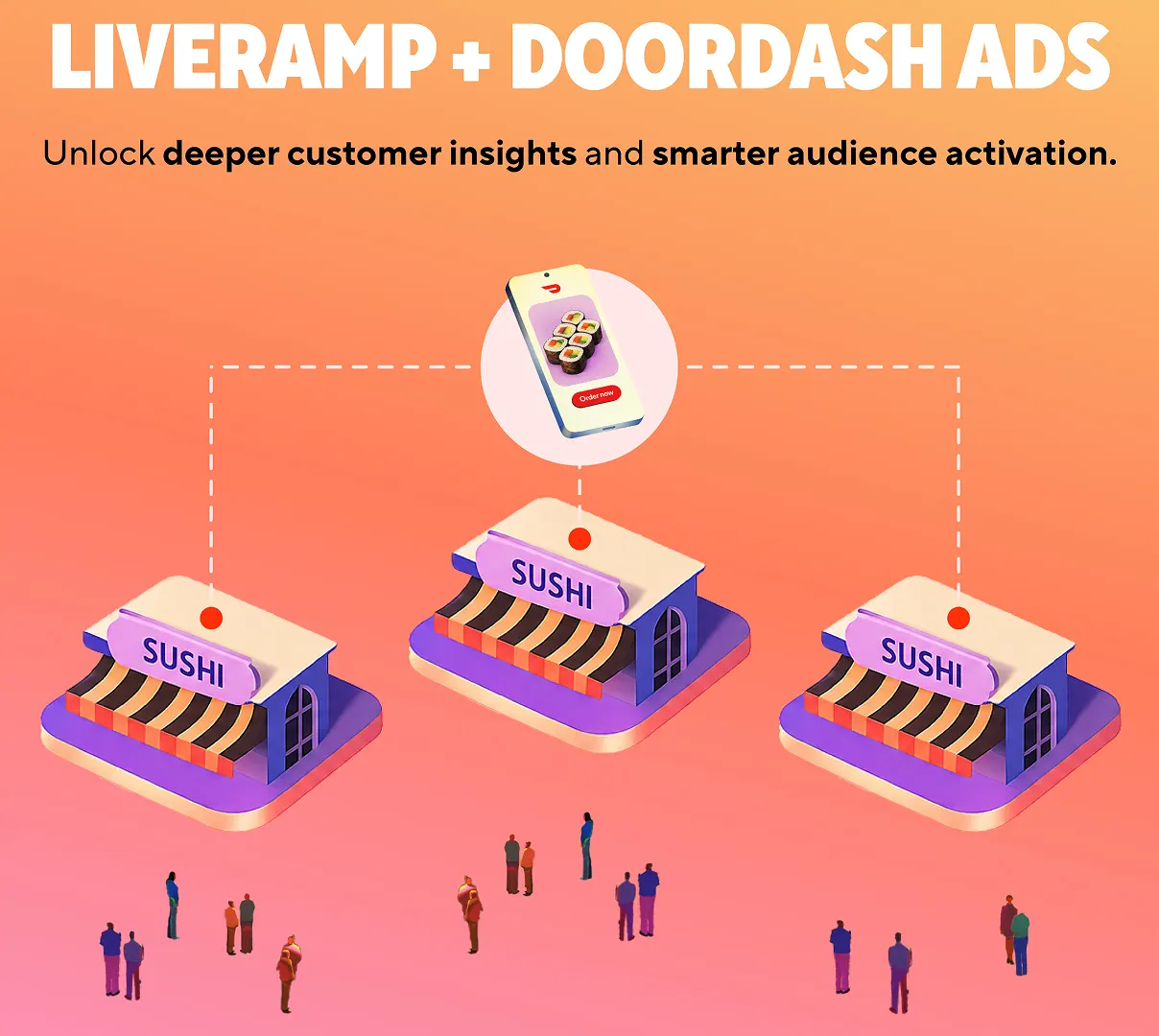
The LiveRamp partnership centers on clean rooms that match an advertiser’s data with DoorDash data to evaluate incremental reach and campaign impact without directly exposing raw customer-level data. In practice, that can change how teams answer a familiar question in commerce media: are sponsored products and retail media placements reaching net-new buyers, or mostly harvesting existing demand?
DoorDash shared early tests that point to “new customer” reach as a headline metric. A leading CPG brand running a small test across four portfolio brands found nearly 100% of consumers reached through sponsored product campaigns were new to its existing customer base. DoorDash also cited an example from a national restaurant chain, where 81% of customers engaging with the chain on DoorDash were exclusive to DoorDash.
For marketers, the operational implication is that clean room workflows can move from being a compliance-driven checkbox to a planning tool, supporting audience overlap analysis, custom segmentation, and activation decisions grounded in measured exclusivity and incrementality.
Spotlight and premium homepage placements

DoorDash is rolling out Spotlight, a premium homepage placement designed to use visual storytelling when a consumer opens the app. In early testing, the company says Spotlight delivered 2x higher click-through rates than banner ads.
The placement is meant to support use cases like new product awareness, seasonal menu items, and limited-time offers. It can also be paired with promotions such as buy one, get one free, which matters because premium inventory often needs a direct path to conversion to justify pricing.
DoorDash also shared that first-time customers account for over 20% of sales for restaurants and over 36% for CPG brands tied to Spotlight, framing the unit as both an awareness and acquisition lever rather than only a conversion placement.
Offsite activation with Symbiosys and closed-loop measurement
DoorDash is emphasizing offsite advertising enabled by Symbiosys, which now supports onsite and offsite advertising across the Americas, Europe, the Middle East and Africa, and Asia-Pacific. The stated goal is to extend commerce media beyond DoorDash inventory into channels where consumers also shop, while retaining closed-loop measurement.
DoorDash says media dollars through Symbiosys have nearly doubled since the 2025 acquisition. It also cited Magnum Ice Cream Company as the first marketer to use Symbiosys’ full social channel suite with DoorDash first-party data for high-intent targeting, delivering an 85% increase in new consumers versus the prior period.
This matters because the long-running tradeoff in retail and commerce media is between reach (often best offsite) and attributable sales (often best onsite). A more integrated offsite stack is an attempt to narrow that gap, especially for brands that need scale beyond an in-app marketplace.
AI automation updates: Smart Campaigns and auto-bidding
DoorDash is expanding AI-driven campaign automation in two areas:
- Smart Campaigns now support buy one, get one free promotions in addition to “spend X, get Y” offers, with the system managing targeting, discounts, and campaign limits in real time within the Merchant Portal to reduce manual optimization.
- Auto-bidding for CPG advertisers adds a minimum return on ad spend target, applying machine learning to optimize bids in real time. DoorDash says that in February testing, more than 95% of auto-bidding campaigns exceeded the input minimum ROAS.
DoorDash also provided a merchant example: Pubbelly Sushi generated over US$300,000 in sales and 4,500 orders over nine months, returning more than US$4 for every US$1 spent, with select locations seeing 20%+ net sales growth after adopting the latest version.
What this means for CPG and restaurant marketers
For CPG marketers, the combination of sponsored product performance, clean room measurement, and offsite activation is a bid to make DoorDash a planning surface, not just a point solution. The key questions shift toward: how much incremental reach is available versus existing customers, and which segments are exclusive enough to justify incremental spend.
For restaurant marketers, the message is about controlling the full path from discovery to order with less day-to-day tuning. Premium homepage placements can create higher-attention moments, while automation features aim to reduce optimization overhead for teams that may not have dedicated media operators.
Across both groups, the practical takeaway is that commerce media is converging on three requirements: premium inventory that can change attention dynamics, privacy-centric measurement that can stand up in budget conversations, and workflow automation that keeps campaigns stable as inputs change.