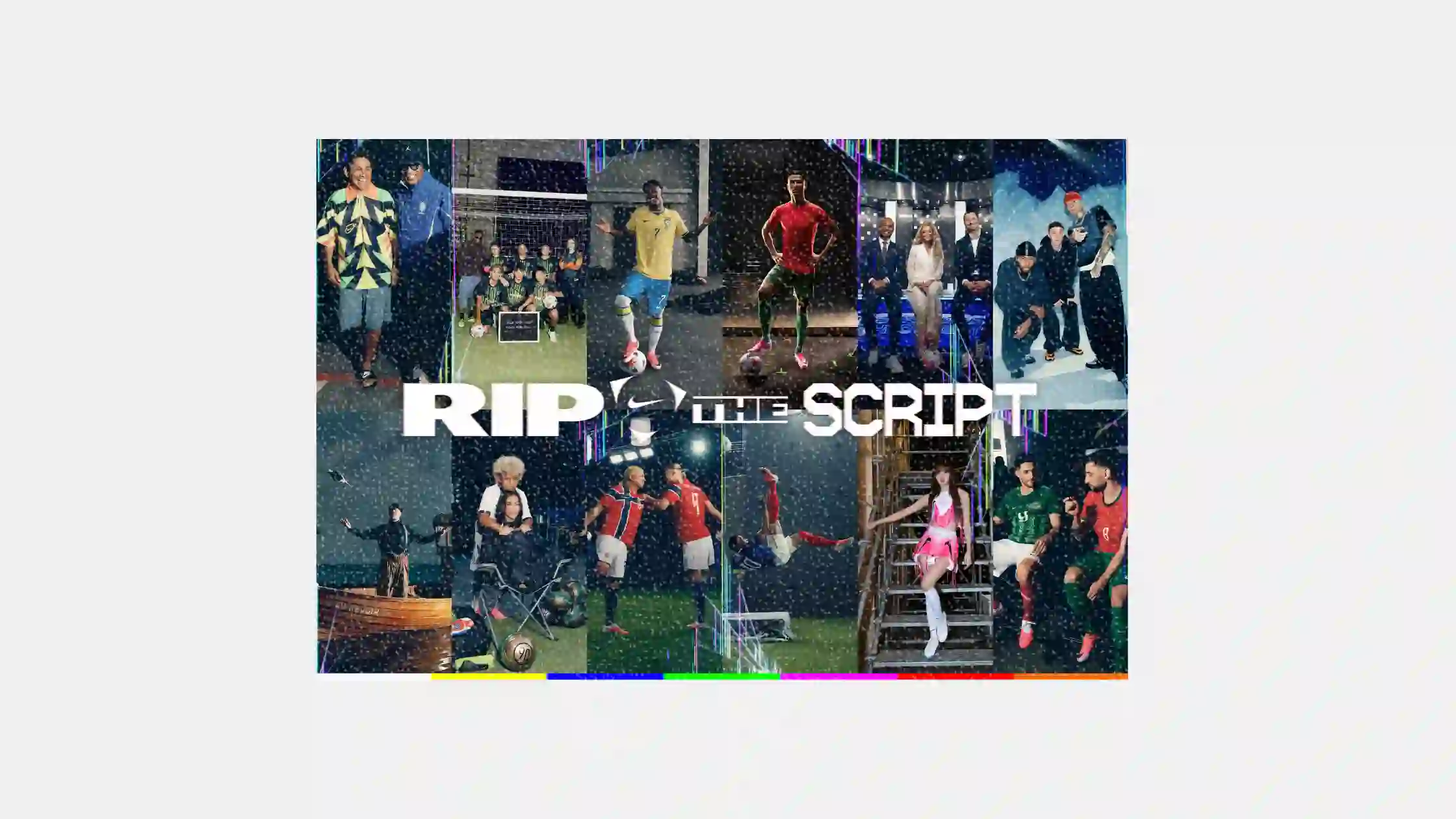
Nike has launched “Rip the Script,” a global football campaign designed to encourage players to trust their instincts and embrace a more creative style of play. But beneath the headline message sits something much larger: a marketing strategy that treats football as a cultural ecosystem rather than a sporting event.
Instead of relying on a single hero film, Nike is building what it describes as a broader universe of football content spanning sport, entertainment, music, fashion, community programs, product innovation, and retail experiences. For marketers, that makes this campaign particularly interesting because it reflects how major brands are increasingly moving beyond traditional campaign thinking toward interconnected content ecosystems.
Table of contents
Jump to each section:
- What happened with Nike’s Rip the Script campaign?
- Why Nike is building a football universe instead of a single campaign
- What marketers should learn from Nike’s approach
- The bigger shift in sports and cultural marketing
 Patrecia Meliana
What happened with Nike’s Rip the Script campaign?
At the center of the initiative is a six-minute film set inside a Hollywood movie studio. The story follows football stars including Cristiano Ronaldo, Kylian Mbappé, Erling Haaland, and Vinícius Júnior as they reject scripted instructions and embrace instinctive play. Football legends such as Ronaldinho, Eric Cantona, Zlatan Ibrahimović, Didier Drogba, and Jorge Campos also appear throughout the film.
Nike further expands the campaign with appearances from celebrities and cultural figures including LeBron James, Travis Scott, Kim Kardashian, LISA, Young Miko, Channing Tatum, Ted Lasso, and Kate Scott. According to Nike, these appearances are intended to reinforce football’s influence beyond the pitch and into broader culture.
The campaign is designed to evolve throughout the summer tournament period through connected storylines, unexpected character appearances, and content filled with Easter eggs intended to encourage repeat engagement from fans and creators.
Why Nike is building a football universe instead of a single campaign
The most notable aspect of “Rip the Script” is not the film itself. It is Nike’s decision to create an ongoing content ecosystem.
According to Nike executives, the goal was to create something fans could talk about, remix, wear, and participate in rather than simply watch. The company is positioning football as a cultural platform that intersects with fashion, music, entertainment, and community participation.
This strategy extends well beyond media content:
- Nike is highlighting its 2026 federation kits and football boot innovations.
- The brand continues investing in Toma el Juego, its community-led street football initiative.
- Football-inspired lifestyle collections are being launched across multiple markets.
- More than 5,000 retail locations will receive football-focused experiences and activations.
- Local experiential activations are being created in cities including New York, Los Angeles, and Dallas.
Rather than separating product marketing, community engagement, content, retail, and culture, Nike is combining them into a single narrative framework.
What marketers should learn from Nike’s approach
Nike’s campaign highlights several trends that B2B and consumer marketers should pay attention to.
1. Campaigns are becoming ecosystems
The traditional model of launching a campaign and moving on is becoming less effective. Nike is creating a framework that can generate content, conversations, and activations over an extended period.
Marketers should consider how major campaigns can evolve into ongoing narratives rather than isolated moments.
2. Cultural relevance now requires participation
Nike is deliberately encouraging audiences to discover hidden details, follow storylines, and engage with extensions of the campaign.
This reflects a broader shift toward participatory marketing where audiences become part of the experience rather than passive viewers.
3. Retail is becoming media
The brand’s football-themed retail experiences demonstrate how physical locations can function as content and community hubs.
For marketers, this is a reminder that retail, events, creator partnerships, and digital content increasingly operate as one connected channel.
4. Celebrity marketing works best when it serves a bigger story
Many campaigns add celebrities simply to increase reach. Nike instead uses celebrities as characters inside a larger narrative universe.
The lesson is simple: star power attracts attention, but storytelling sustains engagement.
The bigger shift in sports and cultural marketing
Nike’s latest initiative reflects a broader industry trend where sports marketing is evolving into cultural marketing.
Brands increasingly compete not only for audience attention but also for relevance within communities and subcultures. The most successful campaigns often extend across multiple touchpoints, including entertainment, commerce, creators, live experiences, and social content.
The “Rip the Script” campaign demonstrates how global brands are adapting to fragmented media consumption by creating interconnected experiences rather than relying on a single advertising format.
For marketers, the challenge is no longer simply generating awareness. It is creating a system that keeps audiences engaged long after the initial launch.
 Patrecia Meliana
Nike’s “Rip the Script” campaign is ultimately about more than football. It represents a shift toward ecosystem-driven marketing where storytelling, community, products, creators, and retail all reinforce one another.
As audiences become harder to reach through traditional campaigns, marketers may find that the future belongs to brands capable of building worlds rather than advertisements. Nike appears to be making that bet.