Burn Boot Camp has named Marshmello as an equity partner, franchise partner, and executive partner for creative and music as part of a long-term collaboration.
The company outlined the partnership in an official announcement, positioning music as a core lever in its in-gym experience and programming.
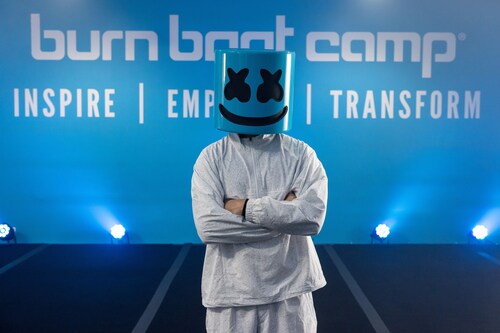
Table of contents
Jump to each section:
- What Burn Boot Camp and Marshmello are partnering on
- Why “music as product” matters in boutique fitness
- How the partnership fits Burn Boot Camp’s partner strategy
- What this means for marketers
What Burn Boot Camp and Marshmello are partnering on
Burn Boot Camp said Marshmello will take on three roles tied to the business and brand: equity partner, franchise partner, and executive partner for creative and music.
The partnership is scheduled to show up in gyms starting June 29 through “Marshmello Mondays,” described as a weekly member experience with exclusive playlists built to shape energy and motivation at the start of the week.
Beyond playlists, Burn Boot Camp said members should expect additional content, activations, and experiences throughout the year inspired by Marshmello’s “positivity” and the brand’s community-first positioning.
A notable operational detail is that Marshmello is preparing to open a Burn Boot Camp location. That moves the relationship beyond a typical licensing or endorsement arrangement into something closer to operator alignment.
Why “music as product” matters in boutique fitness
Burn Boot Camp framed music as more than ambiance, describing it as a consistent part of how workouts feel and how members stay motivated through a 45-minute class format.
For marketers, that framing is important because it treats an experiential input (music selection) as a product layer with brand implications: if the “feel” of the workout is part of what members buy, then curating that feel becomes a brand system, not a playlist decision.
The “Marshmello Mondays” construct also turns a creative asset (exclusive playlists) into a repeatable content franchise. Weekly cadence can create habit, give members a simple reason to return early in the week, and supply the brand with a recurring story to tell across owned channels.
How the partnership fits Burn Boot Camp’s partner strategy
Burn Boot Camp positioned the Marshmello agreement as part of a broader strategy that includes naming partners with defined executive roles. The company noted that Kevin Hart joined in January 2026 as an equity partner, franchisee, and its first executive partner focused on brand and growth.
Taken together, these roles suggest Burn Boot Camp is using partnerships to formalize two levers that are often informal in fitness brands:
- Brand and growth leadership tied to a well-known operator-investor
- Creative and music direction tied to a globally recognized artist
The key detail is not the celebrity itself, but the structure. When a partner is framed as an executive function (creative/music), the expectation shifts from a one-off campaign to ongoing programming, content, and in-person experience design.
What this means for marketers
Partnerships that touch the “in-product experience” can be more durable than campaign-only collaborations, but they also raise the bar for consistency and measurement.
- Treat recurring programming as a media product, not a promo
“Marshmello Mondays” works like an episodic format. That can simplify editorial planning, create predictable social hooks, and reduce reliance on constant new campaign concepts.
- Make the collaboration legible inside the customer experience
The partnership is designed to be felt during workouts, not just seen in ads. For experience-led brands, the strongest partnerships often translate into what customers repeatedly do, hear, or participate in.
- Align incentives when you need long-term creative continuity
Equity and franchise involvement can reduce the risk of short-term sponsorship dynamics. It can also signal that the partner is committing time and attention, which matters when the output is ongoing creative direction.
- Use “exclusive” carefully, and define what’s actually exclusive
Burn Boot Camp described exclusive playlists and additional experiences. Marketers should be explicit internally about what exclusivity means: content windowing, platform access, in-location experiences, or member-only programming.
- Plan measurement around retention and habit signals, not just reach
Weekly experiences are easier to measure through repeat attendance, early-week usage, or engagement with recurring content. That can complement, not replace, top-of-funnel metrics.
Over time, partnerships like this can shift how a brand builds consistency: from pushing motivation messaging to designing predictable rituals members can adopt.
For fitness and lifestyle brands, the larger lesson is that creative partnerships can be most effective when they become part of the product cadence. When the collaboration is operationalized, marketing has a clearer job: explain the ritual, make it easy to join, and keep the story coherent week after week.