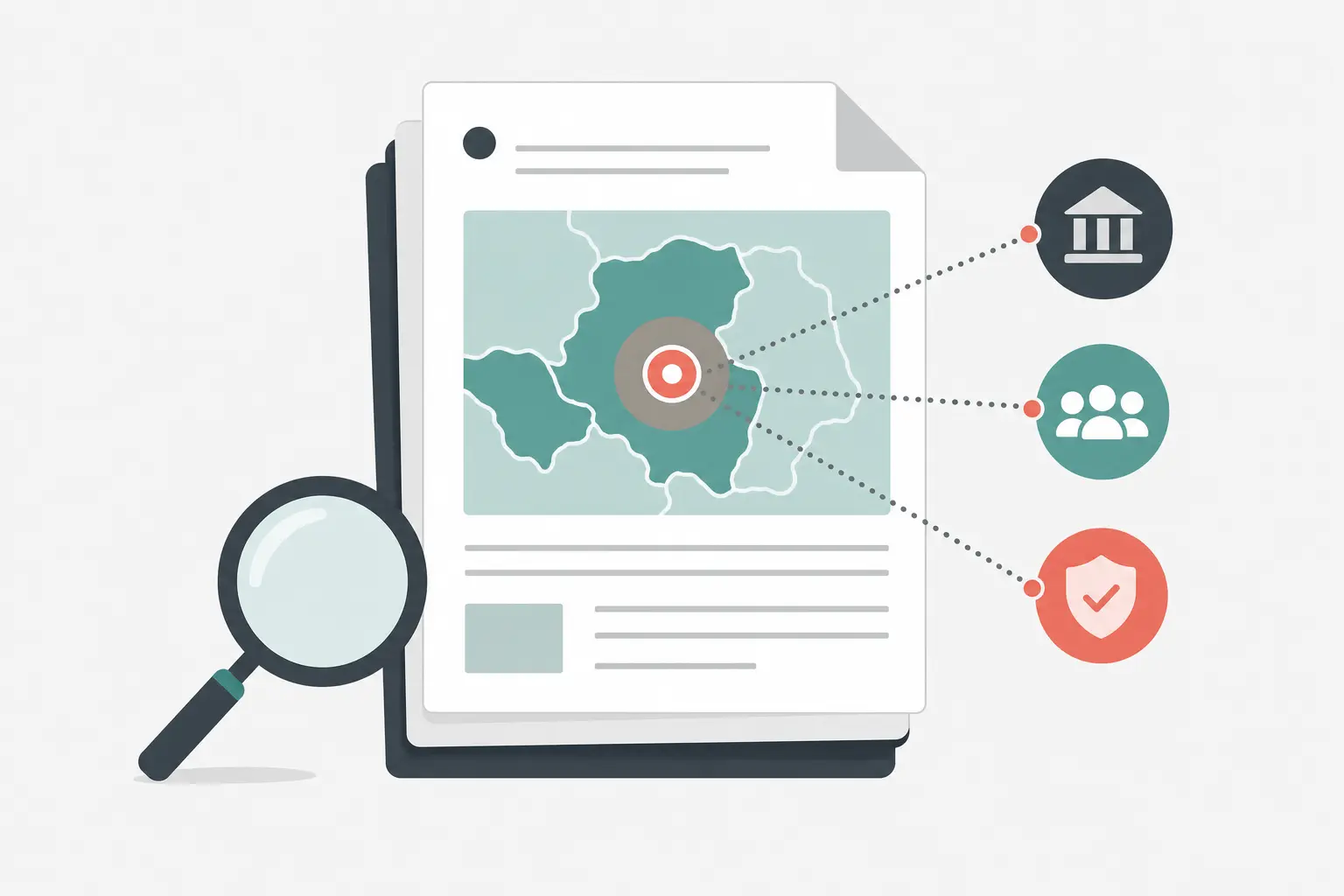
Backgrounders solve a quiet but expensive PR problem: journalists often need context before they can use your pitch, but they do not have time to reconstruct your company history, category claim, product details, executive background, and proof points from scratch. A good backgrounder gives them that context in one clear, factual asset.
For B2B PR teams, the backgrounder is especially useful when the story is technical, regulated, founder-led, research-heavy, or easy to misunderstand. It does not replace the pitch, press release, or interview. It makes those assets easier to trust, quote, and verify.
Key Takeaways
- A backgrounder is a factual PR document that gives journalists context they need to understand a company, issue, product, or announcement.
- The strongest backgrounders are neutral, evidence-led, and built around journalist utility rather than brand persuasion.
- PR teams should connect backgrounders to message maps, press kits, spokesperson prep, and coverage measurement so context stays consistent.
Table of contents
Jump to each section:
- What is a backgrounder in PR?
- When should PR teams use a backgrounder?
- How is a backgrounder different from a press release or press kit?
- What should a backgrounder include?
- How do you write a backgrounder journalists can use?
- Which tools help teams maintain backgrounders?
- What mistakes make backgrounders useless?
- How should PR teams measure whether a backgrounder worked?
What is a backgrounder in PR?
A backgrounder is a factual PR document that explains the context behind a company, issue, product, person, event, or announcement.
A backgrounder gives journalists enough context to understand what they are covering and why it matters. It may explain the company history, category problem, market context, executive background, product details, customer proof, regulatory issue, or technical terms behind a story.
Merriam-Webster defines a backgrounder as either an off-the-record briefing for reporters or a document that gives background information on a subject. In PR practice, the second meaning is usually the working one: a written context document that supports accurate reporting.
The key word is factual. A backgrounder should not read like a landing page, sales deck, or manifesto. If every paragraph sounds like the company is trying to win the argument, the asset stops being useful to journalists.
Use ContentGrip’s press kit examples guide when you need the full asset library behind an announcement. Use a backgrounder when one part of that library needs deeper explanation.
86% of journalists said at least some of their work began with a PR pitch, according to Muck Rack’s 2026 State of Journalism report.
That is the practical reason backgrounders matter. If a pitch opens the door, the backgrounder helps the journalist decide whether the story is credible enough to keep moving.
When should PR teams use a backgrounder?
PR teams should use a backgrounder when the story needs context that would make a pitch, release, or interview too long.
A backgrounder is most useful when the reader needs to understand something before the announcement makes sense. This often happens in B2B categories where the product, customer pain, regulation, or technical shift is not obvious to a general business reporter.
Good use cases include:
- A startup entering a complex category where reporters need a plain explanation of the market problem.
- A founder story where the executive’s history, expertise, or prior company experience gives the announcement credibility.
- A product launch where the real news depends on technical context, workflow change, or customer behavior.
- A research campaign where methodology, definitions, sample sources, and limits need to be clear.
- A crisis or issue response where reporters need background facts without turning the first statement into a long legal document.
- A funding, expansion, or partnership announcement where the company needs to explain why the move matters beyond the transaction.
The test is simple: would the pitch become bloated if you included all the context? If yes, move that context into a backgrounder and keep the pitch focused on the news hook.
72% of journalists said fewer than a quarter of pitches are relevant to their work, according to Cision’s 2026 State of the Media release.
A backgrounder cannot fix a weak pitch, but it can help a relevant pitch survive scrutiny. It gives the reporter enough proof to understand the angle without asking your team for every missing detail.
How is a backgrounder different from a press release or press kit?
A backgrounder explains context, a press release announces news, and a press kit stores the reusable assets journalists need.
PR teams blur these formats because they often travel together. The difference is the job each asset performs.
| Asset | Primary job | Best use case | Risk if misused |
|---|---|---|---|
| Backgrounder | Explain context, history, proof, or technical detail. | Complex company, product, issue, founder, research, or category story. | It becomes promotional and loses journalist trust. |
| Press release | Announce one piece of news as the source of record. |
Launches, funding, partnerships, appointments, reports, events, and milestones. |
It becomes overloaded with background and buries the news. |
| Press kit | Store reusable media assets in one accessible place. |
Company profile, logos, product images, bios, fact sheets, releases, and contact details. |
It becomes a file dump with no hierarchy or update owner. |
| Media advisory | Invite journalists to attend or cover a scheduled moment. |
Press conferences, demos, briefings, events, launches, and interview availability. |
It reads like a mini press release instead of a clear invitation. |
Think of the backgrounder as the context layer. The release says what happened. The advisory says when journalists can attend. The press kit stores the files. The backgrounder explains what a reporter needs to understand before writing.
This is why backgrounders pair naturally with ContentGrip’s media relations guide. Media relations works better when journalists receive useful support, not just another branded announcement.
What should a backgrounder include?
A backgrounder should include the facts, definitions, proof, people, timeline, and caveats a journalist needs to understand the story accurately.
The contents depend on the story, but the structure should always favor clarity over volume. A useful backgrounder helps a reporter answer basic questions without turning the document into a brochure.
For most B2B PR uses, include these elements:
- One-sentence context: what the backgrounder explains and why it matters.
- Company or issue overview: the factual background needed to understand the story.
- Timeline: major dates, milestones, product changes, funding moments, leadership moves, research windows, or policy developments.
- Key people: executives, technical experts, customers, partners, researchers, or spokespeople who are relevant to the story.
- Definitions: plain-language explanations of technical, regulatory, category, or product terms.
- Proof points: verified facts, customer examples, research methods, product evidence, awards, market signals, or third-party sources.
- Assets and availability: images, charts, demos, interviews, spokesperson windows, or press kit links.
- Source notes: where the journalist can verify claims, especially data and research findings.
- Media contact: one person who can respond quickly and knows the story.
Avoid treating this as a required template. A crisis backgrounder may need chronology, affected stakeholders, known facts, open questions, and update channels. A product backgrounder may need customer workflows, technical definitions, screenshots, and executive availability.
9 in 10 companies include multimedia in press releases, while 91% reuse press release content on other channels, according to PR Newswire’s 2025 global report.
That makes the backgrounder more than a reporter handout. It can also become a consistency asset for social posts, executive talking points, sales enablement, podcast prep, event submissions, and AI-answer visibility, as long as the facts remain verifiable.
How do you write a backgrounder journalists can use?
Write a backgrounder by defining the reader need, separating facts from claims, organizing context by use case, and assigning one owner for updates.
The writing process should begin before the first sentence. If the PR team cannot agree on what the journalist needs to understand, the document will turn into a pile of internal talking points.
Follow this workflow:
- Define the editorial question. Write the one question the backgrounder should help a journalist answer, such as why this category is changing or why this founder is credible.
- Collect only useful context. Pull company history, technical detail, customer proof, research notes, and executive background, then remove anything that does not support the question.
- Separate facts from positioning. Put verified facts, dates, definitions, and named sources first. Keep claims short and support them with evidence.
- Build a clean structure. Use sections, bullets, timelines, tables, and links so the journalist can scan quickly.
- Check every data point. Confirm source URLs, dates, methodology, customer permissions, image rights, and spokesperson availability before sharing.
- Connect the backgrounder to the pitch. Mention the backgrounder only when it helps the journalist evaluate the story. Do not attach a long file without explanation.
- Assign an update owner. Make one person responsible for refreshing dates, team bios, product details, customer examples, and press kit links.
The strongest backgrounders are written like useful briefing notes, not corporate self-portraits. Keep sentences short, define terms early, and make it obvious where the reporter can verify each major claim.
This is also where message discipline matters. If the backgrounder, pitch, interview prep, and follow-up email all describe the story differently, the journalist may not know which version to trust. ContentGrip’s message map guide is useful when the team needs one shared narrative before building the supporting materials.
Tommy Prayoga, Head of Agency at digital PR service provider Content Collision: “A backgrounder is not a place to hide weak positioning. It should make the useful facts easier to find. If a journalist can understand the category, the company, and the evidence faster because of the document, the backgrounder is doing its job.”
Which tools help teams maintain backgrounders?
The best backgrounder tools help teams keep facts, media assets, approvals, and journalist-facing links current without creating duplicate versions.
Most backgrounders fail through neglect, not writing quality. The launch version is useful, then six months later the team size, product screenshots, leadership bios, customer list, funding numbers, and media contact are stale.
Use a simple tool stack that matches the team’s maturity.
| Tool | Use case |
|---|---|
| Google Drive or Dropbox |
Hosting backgrounders, images, logos, fact sheets, screenshots, and interview assets in one shareable folder. |
| Notion or Airtable |
Maintaining version history, update owners, source notes, claims, customer permissions, and approval status. |
| Prezly or Prowly |
Managing an online newsroom where backgrounders, releases, bios, and media assets can stay journalist-ready. |
| Muck Rack or Cision |
Connecting backgrounders to media lists, pitch tracking, journalist profiles, monitoring, and coverage reporting. |
| Grammarly or Writer |
Checking clarity and consistency, while leaving factual judgment and source verification with the PR team. |
The tool does not matter as much as the operating habit. A stale backgrounder is worse than no backgrounder because it gives journalists a reason to doubt everything else in the pitch.
For spokesperson-heavy stories, connect the backgrounder to ContentGrip’s media training guide. The document should help spokespeople answer consistently, but it should not turn them into scripted readers.
What mistakes make backgrounders useless?
Backgrounders become useless when they are promotional, outdated, too long, poorly sourced, or disconnected from the actual pitch.
The common failure pattern is overloading. A team starts with a useful context document, then every department adds its preferred line until the backgrounder reads like a corporate archive.
Avoid these mistakes:
- Writing like a sales page: journalists need context, not conversion copy.
- Including unsupported claims: phrases like “market-leading” or “first of its kind” need proof or removal.
- Burying the useful details: dates, names, definitions, and links should be easy to find.
- Ignoring permissions: do not include customer names, screenshots, quotes, or financial details unless they are approved for media use.
- Letting versions multiply: one approved live version is safer than five PDFs in different inboxes.
- Forgetting the update owner: product facts, people, logos, locations, and customer examples change.
- Sending it too early: use the backgrounder when it helps a journalist evaluate the story, not as a heavy attachment to every cold pitch.
The biggest mistake is confusing more information with better context. A journalist does not need everything the company knows about itself. The journalist needs the details that make the story accurate, fair, and easier to explain to readers.
How should PR teams measure whether a backgrounder worked?
Measure a backgrounder by whether it improves coverage accuracy, reduces repetitive questions, supports better interviews, and keeps key facts consistent.
Do not measure a backgrounder as if it were a campaign by itself. It is a support asset. Its value shows up in the quality and efficiency of the media process.
Track signals such as:
- Coverage uses the correct company description, product terms, executive titles, and timeline.
- Journalists ask deeper questions instead of spending the interview on basic context.
- Fewer follow-up emails are needed to clarify facts that should have been obvious.
- Spokespeople repeat consistent proof points across interviews.
- The same source notes support pitches, press releases, briefing decks, and owned content.
- The PR team can update the asset quickly before the next announcement.
For earned coverage, connect the backgrounder to message pull-through. If the intended story survives into the published article, the backgrounder may have helped the reporter understand the frame. If coverage keeps missing the point, the team should review whether the backgrounder made the most important context clear enough.
The practical standard is not whether the backgrounder looks polished. It is whether a busy journalist can open it, understand the story faster, verify the key facts, and decide what to ask next.