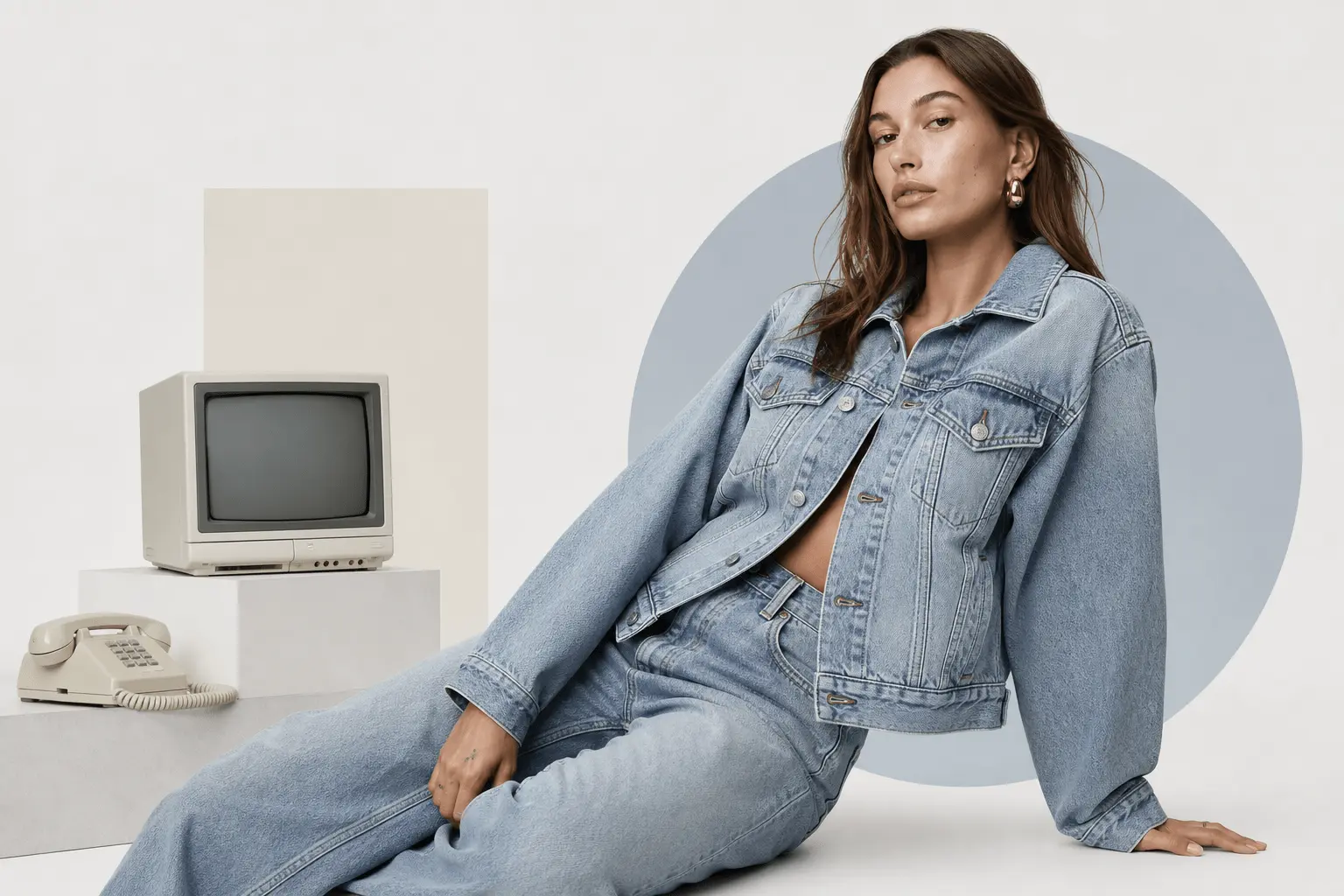
If you were alive for dial-up, CRT TVs, and a bedroom that felt like your entire universe, “1996” is less a year and more a vibe. It is the kind of nostalgia that does not just reference the past, it recreates the feeling of living in it, down to the tech clutter and the pre-social-media idea of privacy.
That is the emotional lane Gap is driving in with a new limited-edition denim capsule and campaign fronted by Hailey Bieber, built around the “effortless attitude” of 1996 and anchored by a knowing punchline: it is also the year Bieber was born. The company outlined the details in an official announcement.
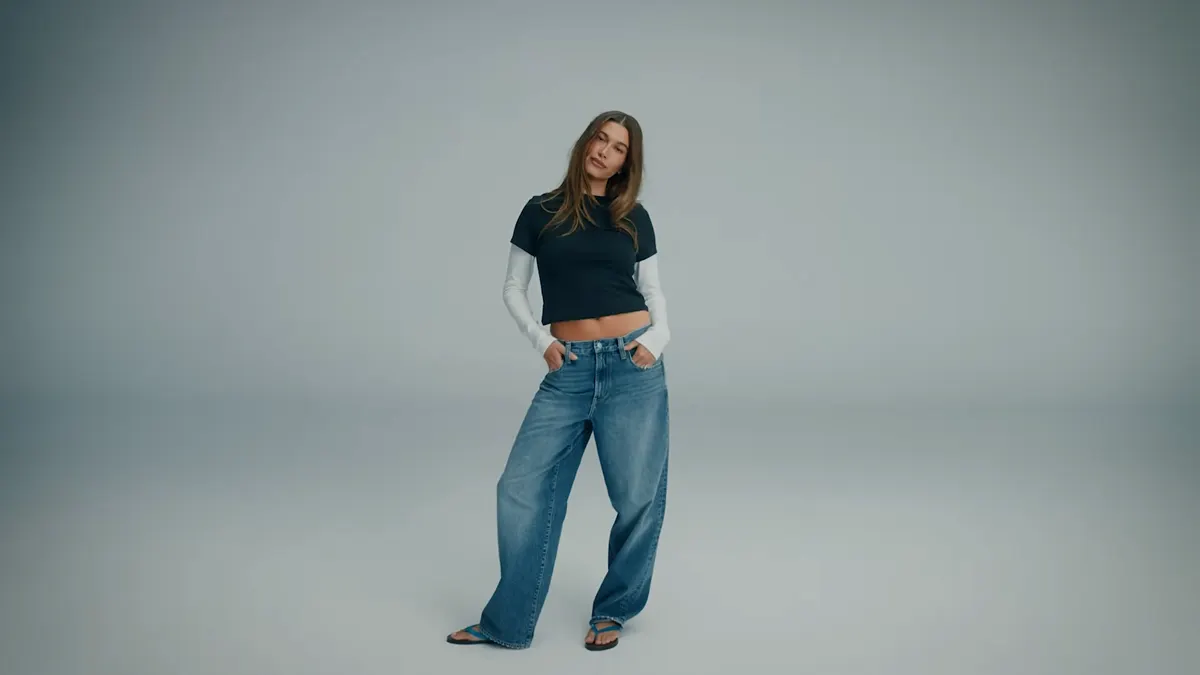
Table of contents
Jump to each section:
- Why 1996 nostalgia still sells, especially in denim
- What Gap and Hailey Bieber are actually releasing
- How the campaign blends “classic Gap” with creator-era distribution
- Why this fits Gap’s recent denim momentum
- What this means for marketers
Why 1996 nostalgia still sells, especially in denim
Nostalgia marketing works best when it is not just visual, but behavioural. The “your bedroom was your world” framing taps into an era where personal style and identity were practiced offline, with fewer inputs and fewer spectators.
Denim is a natural canvas for this kind of time travel. Jeans already carry a built-in story about wear, memory, and “your version” of a silhouette, so a campaign that references a specific year can feel like a personal time capsule rather than a generic retro grab.
Gap’s spot makes that specificity literal: a minimalist set filled with ‘90s tech props like a boombox, CRT TV, corded phone, and bulky desktop computer. It is not trying to be subtle, it is trying to be instantly recognisable.
What Gap and Hailey Bieber are actually releasing
Gap partnered with Hailey Bieber on “The Hailey Jean,” a limited-edition denim capsule collection built around two relaxed fits: the Extra Baggy and the ‘90s Low Rise Loose.
Each jean is priced at $89. The capsule spans six washes across the two fits, and the Low Rise Loose is available exclusively on gap.com. The collection includes “1996” design details referencing Bieber’s birth year, with her signature printed inside the pocket lining.
The products launched July 16 at 12 p.m. ET. Availability includes online, select North American stores, and select international markets including the U.K., China, and Japan.
How the campaign blends “classic Gap” with creator-era distribution
The campaign’s creative leans into the Gap playbook people remember: clean studio visuals, confident styling, and a music cue designed to do emotional heavy lifting. The film features “Linger” by The Cranberries and was directed by Charlie Di Placido. Still photography was shot by Mario Sorrenti and styled by fashion and image consultant Alastair McKimm.
Production was handled by Bolded, OBB Media’s branded content studio and a longtime Bieber partner, which matters because familiarity can show up on screen as ease. If the talent looks like they are performing a brand deal, audiences feel it.
Distribution-wise, Gap is not treating the film as the whole story. The campaign spans creator partnerships, paid and owned social, digital, and out-of-home, including billboards in Times Square and on Sunset Boulevard. Paid media is being managed across YouTube, TikTok, Meta, Pinterest, and other digital channels.
Why this fits Gap’s recent denim momentum
This drop is positioned as a continuation of a denim-led run that Gap has already been leaning on. In Q1 2026, Gap’s comparable sales increased 10%, versus a 5% increase over the same period in 2025. The company described it as the brand’s tenth consecutive quarter of positive comps, with denim cited as a key growth driver, even as sister brands Old Navy and Athleta weighed on parent company Gap Inc.
Gap has also been using music-and-culture hooks to make denim feel like a moment, not just a product category. The 2025 “Better in Denim” campaign, featuring girl group Katseye dancing to “Milkshake” by Kelis, generated more than 8 billion impressions and 500 million views, and was tied to double-digit growth in denim sales.
More recently, Gap collaborated with fashion icons including Victoria Beckham and Kendall Jenner, and said a spring campaign featuring singer Young Miko outperformed benchmark goals with nearly 1.5 billion press and social media impressions.
What this means for marketers
There is nothing “small” about a denim launch with Hailey Bieber, but the bigger insight is simpler: specificity travels farther than broad nostalgia, and the details do the persuading.
- Pick a year, not an era
“The ‘90s” is a mood board. “1996” is a memory. When a campaign narrows the reference point, it becomes easier for audiences to project themselves into it, even if they did not live it firsthand. - Make the joke with the audience, not at them
The line “It’s also the year I was born” works because it acknowledges the nostalgia play openly. That kind of self-awareness can reduce the “brand trying too hard” reaction and make the reference feel shared. - Treat the hero film as a starter, not the whole meal
Gap is pairing a central piece of creative with creator partnerships and multi-platform paid distribution. In practice, that is how a campaign becomes a repeatable social object, not just a one-time view. - Use craft to signal legitimacy in culture-led campaigns
Naming the director, the photographer, and the stylist is not just credits, it is a signal. In fashion, audiences read craft the way sports fans read stats. Production choices become part of the credibility. - Tie culture moments to a business narrative you can sustain
Gap is framing these collaborations as part of a denim growth engine, not a random celebrity moment. When the brand can point to comps, prior campaign reach, and product category lift, it becomes easier to keep investing in the same lane without it feeling like chasing the algorithm.
Zooming out, this is a reminder that “culture” is rarely created by one channel. It is created by repetition across places people actually hang out, and by references that feel specific enough to be real.
For brands trying to earn attention without sounding like a press release, the play is not louder messaging. It is sharper choices: a tighter reference, a clearer point of view, and distribution that lets fans and creators carry the moment forward.