
When a show crosses over from “people are watching” to “people are noticing the details,” brands start showing up in the storyline almost like characters. That is the lane Under Armour is stepping into with François Arnaud, whose role in hockey romance series Heated Rivalry has put Under Armour gear on-screen in a way that feels more like lived-in wardrobe than product placement.
Under Armour named Under Armour named François Arnaud a global brand ambassador effective July 23, with the details outlined in the company’s newsroom post. His first campaign, “For When It’s Hot,” spotlights the HeatGear franchise during what the brand describes as historically North America’s hottest week of the year.
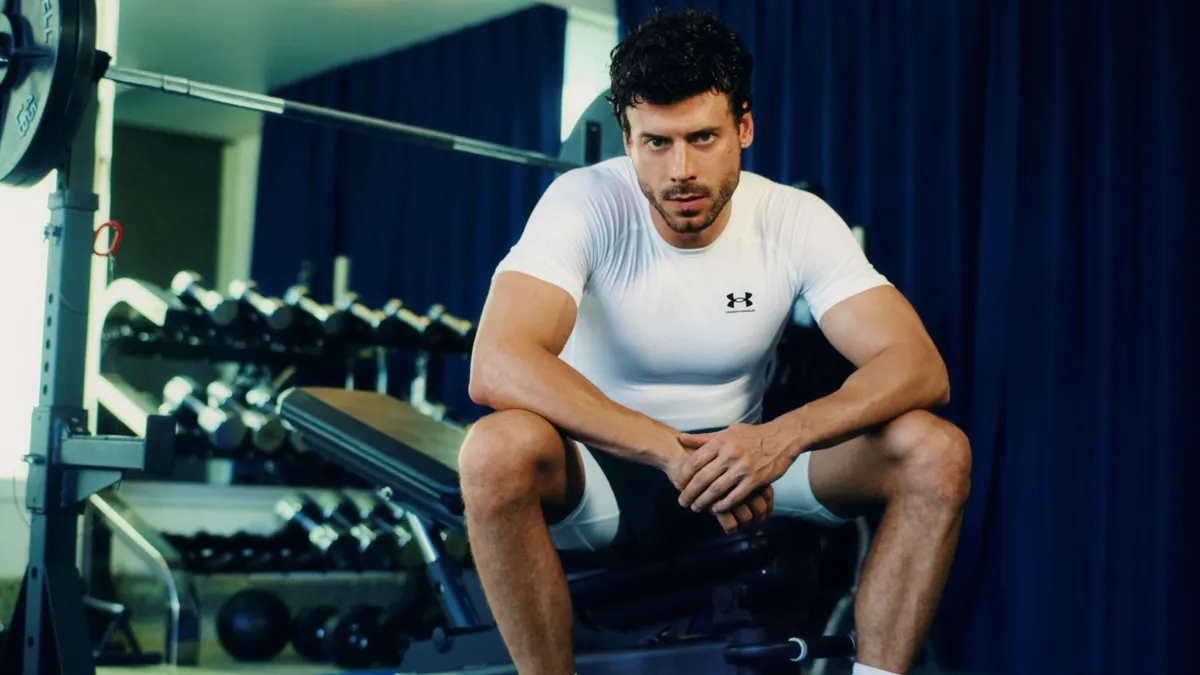
Table of contents
Jump to each section:
- Why HeatGear is showing up through entertainment right now
- What Under Armour is actually putting in the spotlight
- The business signal: bigger spend, narrower product story
- What this means for marketers
Why HeatGear is showing up through entertainment right now
Arnaud is not being positioned as a traditional athlete endorser. The partnership is built around the overlap between performance identity and culture, specifically a character that audiences have already associated with training, sport, and Under Armour gear.
That matters because fandom attention works differently from standard awareness. When viewers get attached to a character, they also get attached to the visual cues that build the character’s world, including what they wear while training. Under Armour is effectively treating that “wardrobe recognition” as a credibility signal, then extending it into a campaign that still feels like training content, not a glossy endorsement.
What Under Armour is actually putting in the spotlight
“For When It’s Hot” is framed around HeatGear, but the campaign also highlights several specific products across the franchise: UA Vanish Elite, UA Icon Fleece, UA Sola, and UA Reign XT.
Creatively, the first spot shows Arnaud working out in Under Armour gear in a garage, with neighbors watching. It is a simple setup, but that simplicity is the point: it keeps the focus on what people notice in hot-weather training, which is comfort, sweat, and whether the gear looks like it belongs in a real workout.
Under Armour’s messaging around Arnaud also leans into “authenticity” and self-definition, with the brand’s leadership tying the character’s arc to the idea that “the best athletes perform with confidence, conviction and authenticity.”
The business signal: bigger spend, narrower product story
Under Armour has said it spends roughly US$500 million a year on marketing and is investing an additional US$30 million this year.
What is notable is not just the extra spend, but the emphasis on focusing marketing on products that already exist, rather than trying to lead with brand-new items. The HeatGear franchise is positioned as core to the brand’s training ethos, and the company has also described a major SKU reduction effort completed in May, with further assortment culling planned.
In other words, the brand is trying to sound clearer, not louder: fewer products, more consistent storytelling, and campaigns that can carry performance credibility without needing constant newness.
What this means for marketers
Entertainment tie-ins work best when they start from what audiences already noticed, then formalize it without breaking the illusion.
- Treat “organic spotting” as a strategy input, not a happy accident
Under Armour explicitly called out recognizing Arnaud wearing the brand “organically.” For marketers, this is a reminder to watch for authentic usage moments and build from them, instead of forcing a fit. - Use cultural credibility to reframe product basics
HeatGear is not a novelty product story. It is performance basics. The cultural layer gives Under Armour a way to make familiar franchise items feel current again without changing the product narrative. - Keep the creative world grounded when the promise is performance
A garage workout with neighbors watching is relatable and visual. It reinforces “this is what training looks like,” which pairs well with an apparel franchise centered on heat and sweat. - Bigger budgets land better when the story gets narrower
Under Armour’s leadership framed added spend as a path to efficiency, while also emphasizing sharper storytelling behind fewer products. The combination signals a shift toward disciplined creative focus rather than broader messaging.
When performance brands borrow cultural momentum, the real risk is looking like they are chasing attention. This move works because it is anchored in an existing on-screen association and because the campaign stays close to the training reality Under Armour wants to own.
It also points to a bigger pattern: brands are increasingly using entertainment not to “enter culture” in a vague way, but to validate specific product stories with communities who already care about the details. The most effective partnerships are the ones where fans feel like the brand simply noticed what they already noticed, and decided to show up properly.
This article is created by humans with AI assistance, powered by ContentGrow. Ready to automate your content marketing?
Book a discovery call today.