Nostalgia marketing hits different when it feels like an inside joke you grew up with. In the Philippines, Angelica Panganiban’s characters are the kind of pop culture references that instantly signal a shared era, the sort of thing people quote, meme, and recognise even if they have not rewatched the originals in years.
Swift Mighty Meaty Hotdogs is leaning into that shared memory by putting Panganiban at the centre of a multiverse-style campaign film called “Method Acting”, with the details outlined in an official announcement.
Table of contents
Jump to each section:
- Why the “Angge Multiverse” idea is instantly legible to Filipino audiences
- How the campaign uses character callbacks to translate product claims
- What this campaign signals about “camp”, humour, and internet-ready ads
- What brand teams can learn from Swift’s nostalgia-first creative
Why the “Angge Multiverse” idea is instantly legible to Filipino audiences
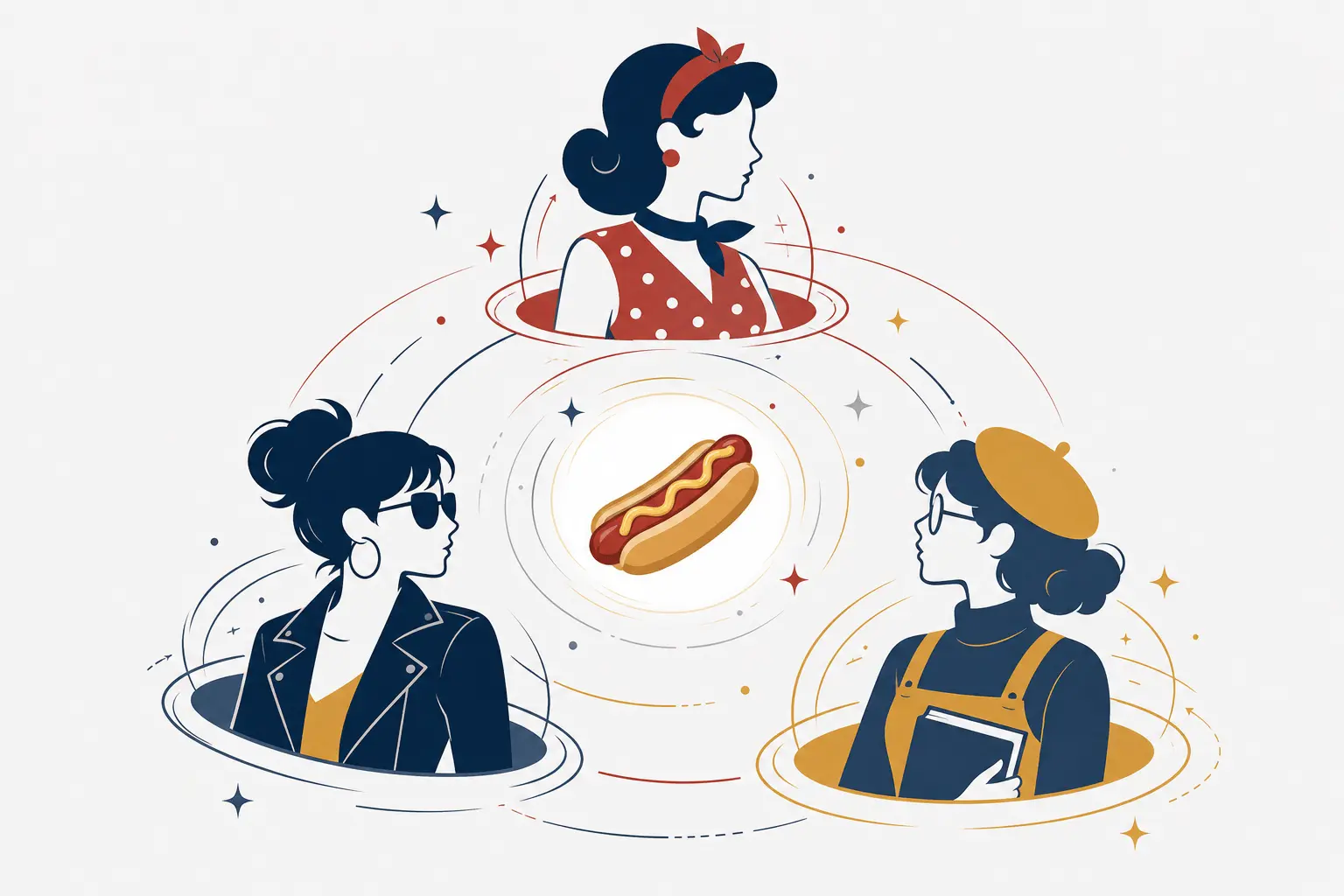
Multiverse storytelling is already a familiar format, but the real hook here is local: it is built on viewers recognising Panganiban’s past roles and enjoying the collision of personalities in one ad.
The film pulls in specific characters from her TV and movie history: Claudia Buenavista (Pangako Sa ’Yo, 2015), Stell Suarez (Beauty in a Bottle, 2014), and Stef (Here Comes the Bride, 2010). That kind of casting is not just “celebrity endorsement”, it is fandom literacy. It assumes the audience will get the reference, and rewards them for getting it.
How the campaign uses character callbacks to translate product claims
The creative idea is also doing a very practical job: turning a brand proposition into something you can remember without trying. Swift frames its “Siksik, Sulit, at Sarap” (SikSuRap) message through the different characters, with each one mapped to a specific angle of the promise.
The campaign was created by independent agency Leron Leron Sinta, and it positions “Method Acting” as the start of a broader “Angge Multiverse”, with more content expected to follow across social media.
What this campaign signals about “camp”, humour, and internet-ready ads
“Campy, fun, and relatable” is not a throwaway description in 2026. It is a creative stance that often performs well in social-first environments because it gives people permission to share without feeling like they are reposting an ad.
This approach also shows how brands are borrowing narrative structures (like multiverses) to keep attention long enough for the product message to land. Instead of cramming features into a single script, the ad uses identity shifts and character cues to keep the pace moving, while still anchoring back to the core proposition.
What brand teams can learn from Swift’s nostalgia-first creative
Nostalgia works best when it feels specific, not generic. Swift’s play here is using recognisable characters as a shortcut to emotion and memory, then translating that into a product story people can repeat.
1. Treat pop culture references like audience segmentation
The characters chosen are doing targeting work. If you recognise them, you are already “in”, which makes the brand message easier to accept.
2. Let humour carry the sales line
When the tone is intentionally camp, the audience expects exaggeration and performance. That makes product claims feel like part of the bit, not a hard sell.
3. Use storytelling formats people already understand
Multiverse framing is a familiar template. It reduces cognitive effort, so the viewer can focus on recognising the characters and absorbing the brand cues.
4. Build for continuation, not one-and-done ads
By calling this “only the beginning” of the “Angge Multiverse,” the campaign leaves room for episodic content. That matters when social platforms reward repeatable formats and recurring jokes.
At a deeper level, this kind of work reflects how advertising is moving closer to fandom mechanics: recognition, callbacks, character attachment, and the pleasure of being part of the reference. For brand teams, the lesson is not “do nostalgia.” It is “earn nostalgia” by using cultural material your audience actually holds onto.
When a campaign can function both as an ad and as a pop culture moment people want to quote, it stops feeling like interruption. It becomes something the audience can carry into their group chats, comment sections, and shared online language, which is where modern brand meaning gets built.
This article is created by humans with AI assistance, powered by ContentGrow. Ready to automate your content marketing?