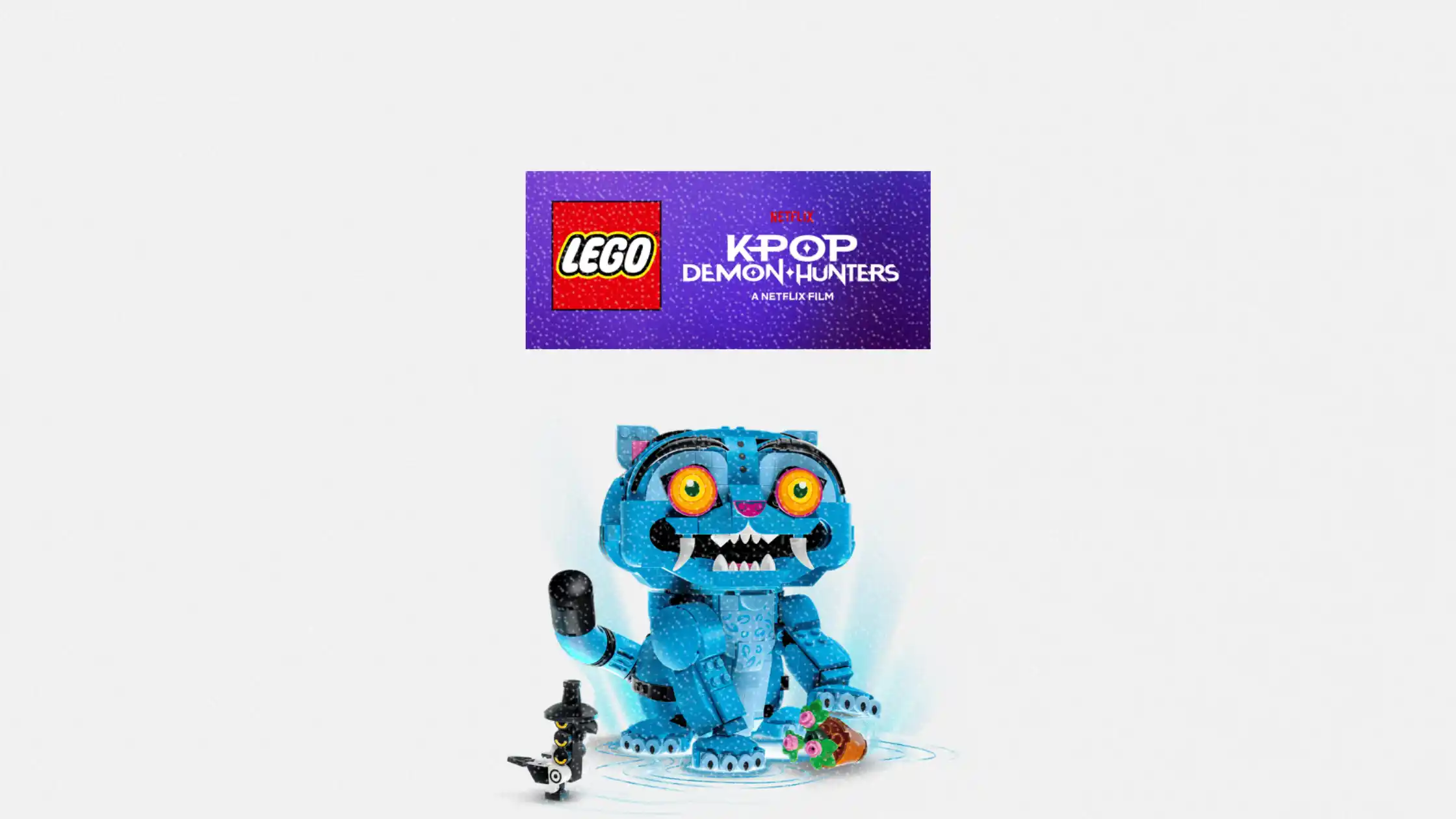
If you watched KPop Demon Hunters, there’s a good chance the characters you remember most clearly are not the leads, but the tiny chaos agents who keep the story moving. Derpy Tiger (the goofy supernatural messenger) and Sussie Bird (his watchful sidekick) are the kind of fan-favourite duo that ends up as stickers, avatars, and “I need this on my shelf” merch.
Netflix is leaning into that collector instinct with a build-and-display LEGO set themed around the pair, with preorder live now and an Aug. 1 availability window. The details were outlined in an official announcement.
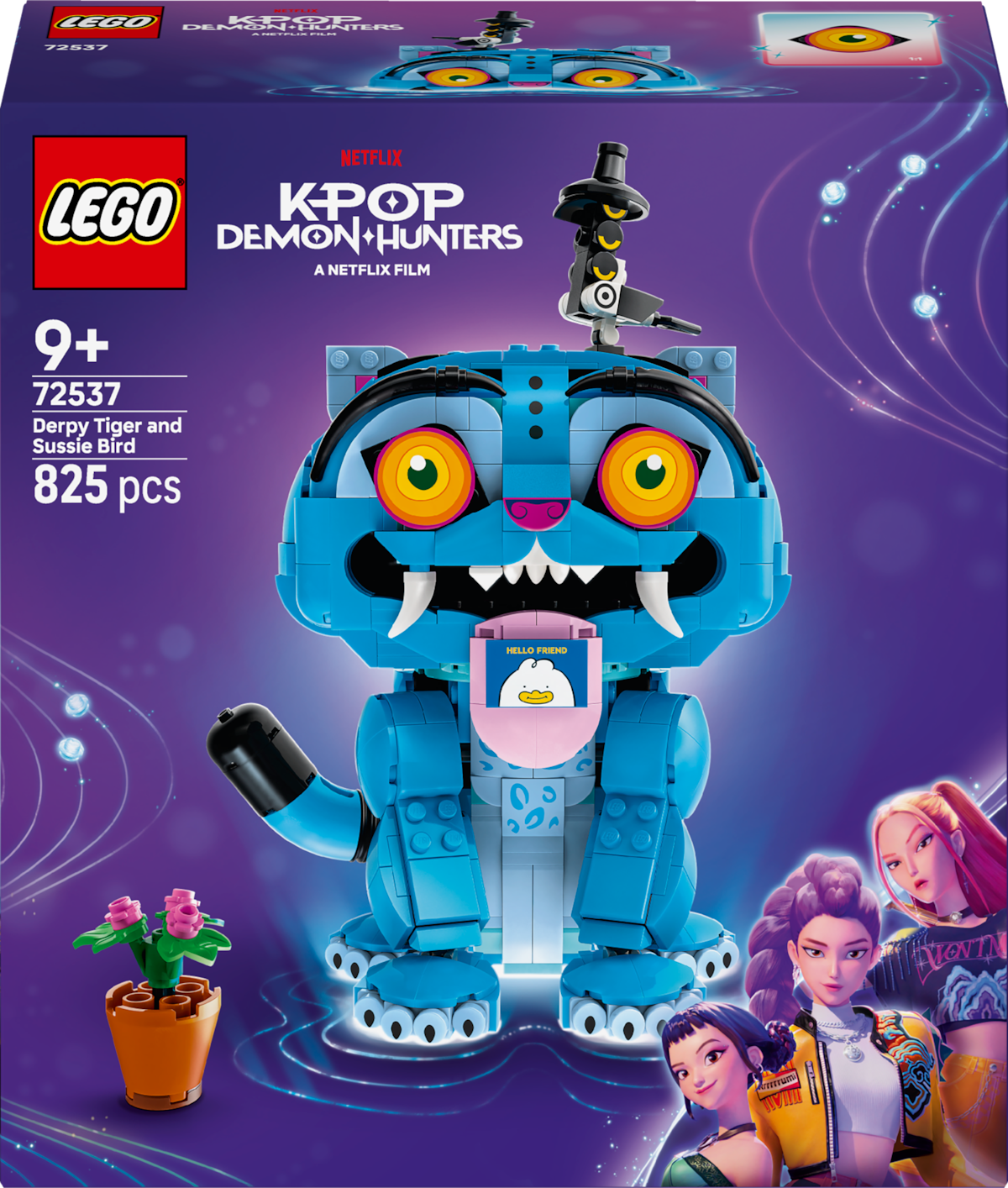
Table of contents
Jump to each section:
- What the LEGO set includes, in fan terms
- Why “expression merch” hits harder than generic collectibles
- What this means for marketers
What the LEGO set includes, in fan terms
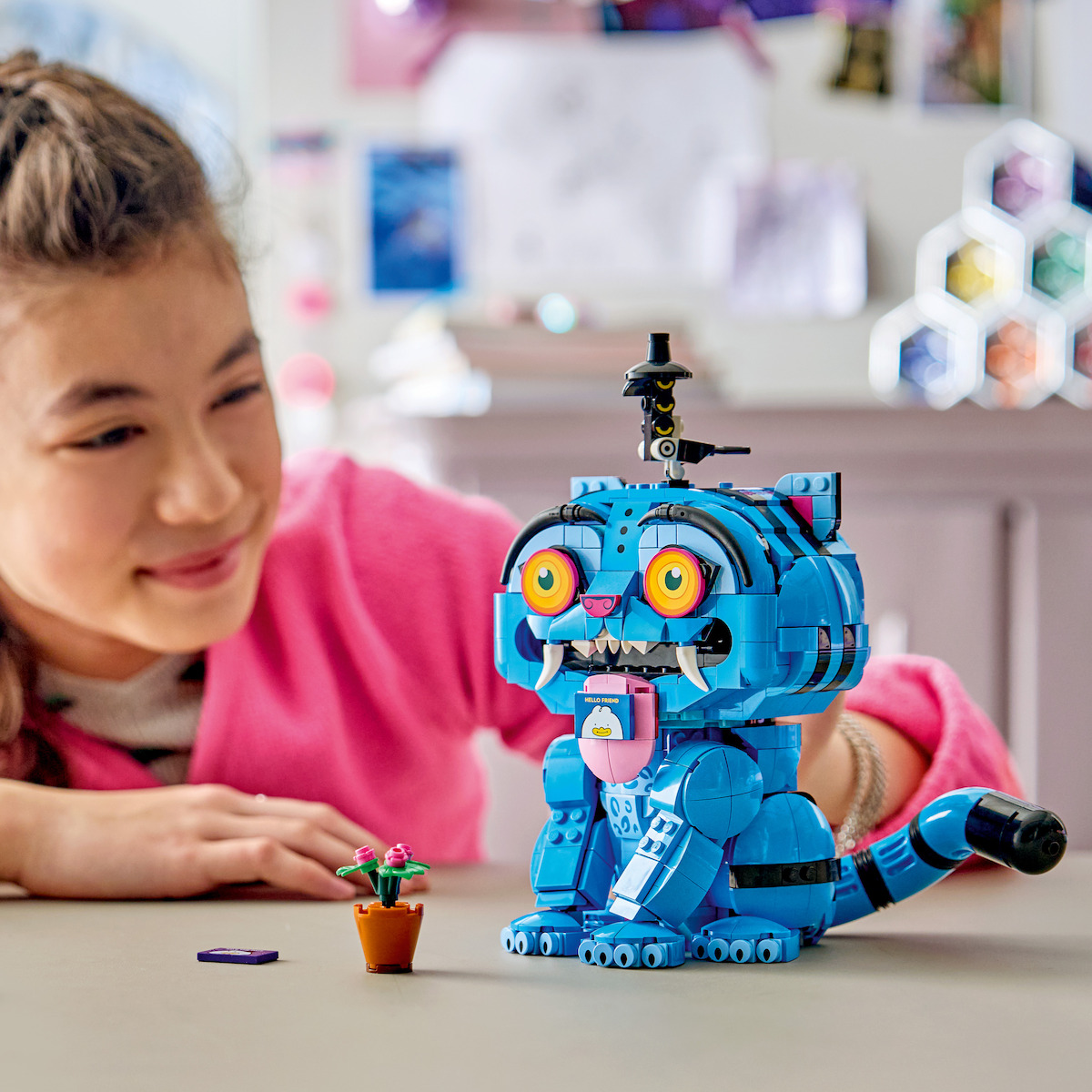
The LEGO KPop Demon Hunters Derpy Tiger and Sussie Bird set is an 825-piece build-and-display model designed to be posed, not just placed. The finished build is over 8.5 inches tall with Sussie perched on Derpy’s head, which matters because shelf presence is half the point for fandom collectibles.
What makes it feel less like a “standard figure” and more like a moment from the film is the focus on character-specific details:
- Two face options for Derpy, including a version that shows a love note on his tongue, referencing the messages exchanged between Rumi and Jinu in the movie
- Moveable parts (Derpy’s head, legs, and paws; Sussie’s rotating neck plus poseable feet and beak)
- Accessories that feel like inside jokes for people who actually watched: two love notes and a flowerpot
- A hidden storage compartment inside Derpy’s head to stash the accessories when it’s on display
Why “expression merch” hits harder than generic collectibles
Derpy Tiger is not positioned as a “lore-heavy” character. He wins people over through body language, facial expression, and a specific kind of clumsy charm. That is why the design emphasis on the eyes and face variations is not just a build detail, it is the entire product strategy.
In practical terms, LEGO is turning an emotional read (Derpy’s instantly recognizable vibe) into something physical fans can recreate. The set’s swap-in expression and poseability do the same thing fandom GIFs and reaction images do online: they give people a way to communicate personality without a paragraph of context.
There’s also a smart “replay” element baked into the build. Small discoveries like the secret compartment reward the kind of fan who likes merch that feels interactive, even after it becomes room decor. That matters because display culture has shifted: collectibles are increasingly about identity signals (what you like, what you watched, what kind of fan you are), not just ownership.
What this means for marketers
The interesting part of this release is not that it exists, but why these specific characters are the obvious merch bet. It is a case study in how fandom attachment forms around side characters that are easy to quote, clip, and share.
1. Side characters can be the strongest merchandising anchor
Audiences often bond with characters that behave like mascots: expressive, meme-able, and emotionally legible in one second. Products that capture that readability tend to travel further.
2. Build-and-display formats turn fandom into a ritual, not a purchase
LEGO sets create time with the IP. The “marketing” is the hours spent building, then the daily visibility once it’s on a shelf.
3. Specific scene references beat generic branding
Love notes, the flowerpot, and expression variants work because they feel like fan recognition, not logo placement. That is how you avoid collab fatigue.
4. Poseability is social-native product design
A posable figure invites photos, desk content, and “look what I built” posts. Even without an explicit social push, the product is designed for sharing behavior.
The broader signal is that entertainment merchandising is increasingly about translating micro-moments, not just characters, into physical objects. When brands get the details right, fans feel seen, and that feeling drives both preorder urgency and long-term display value.