For weeks, two green characters have been acting like they are competing for the same scarce resource: your attention.
Duolingo’s Duo wants people back in their lessons. Brawl Stars’ Spike wants them back in Starr Park. Their online rivalry already makes sense as a joke because both characters are tied to habits people repeat every day. Now the brands have made that rivalry something users can actually play.
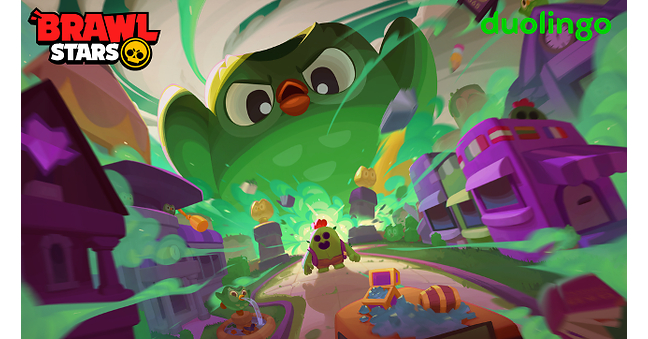
From September 19 through September 30, Duolingo and Brawl Stars are running a crossover that sends Duo into Brawl Stars as a boss while Spike appears inside Duolingo’s learning experience. The campaign includes a 20v1 Boss Fight, language questions, community challenges, streak-based quests, and crossover rewards.
Table of contents
- Why this crossover works better inside the apps
- Duo becomes a boss while Spike becomes a reward
- The joke is built around habits both products already own
- What marketers can learn from a crossover that changes the product
Why this crossover works better inside the apps
Mascot collaborations are easy to understand when the characters are already doing the marketing.
Duo has become more than an app icon. Duolingo has spent years turning the owl into a personality that can nag, joke, threaten missed streaks, and show up wherever internet culture gives the character room to play. Spike has a different appeal. The Brawl Stars character barely needs dialogue because the game already gives players a strong visual and behavioral identity around its roster.
That contrast gives the campaign its basic comedy. Duo talks too much. Spike barely talks at all. One is obsessed with lessons. The other belongs to a game built around quick battles.
The collaboration does not stop at putting both characters in the same ad. It makes each mascot behave inside the other brand’s product.
Duo becomes a boss while Spike becomes a reward
Inside Brawl Stars, Duo becomes the centerpiece of a new Boss Fight. Players can cooperate in a 20v1 mode set inside Duo’s classroom, where language questions are mixed into the battle.
Correct answers can help players. Wrong answers can cause damage or eliminate them. Supercell’s live event page also describes classroom and detention phases built around community goals, with players completing tasks to unlock rewards.
Inside Duolingo, the logic flips. Learners can start a seven-day Brawl Stars Quest, complete lessons each day, and unlock rewards at milestones. The official campaign video says the final reward is Legendary Brawler Spike.
The brands are effectively swapping their strongest behavior loops. Brawl Stars borrows Duolingo’s quizzes and classroom language. Duolingo borrows the reward logic and character appeal of a live mobile game.
That makes the collaboration feel less like a logo exchange and more like a temporary remix of both products.
The joke is built around habits both products already own
The smartest part of the campaign is that the rivalry is not invented from scratch.
Duolingo already has a reason to talk about daily repetition because streaks are part of the product. Brawl Stars already has a reason to create timed events, community goals, boss battles, and collectible rewards because those mechanics are normal inside a live-service game.
The campaign connects those existing habits rather than asking people to learn a completely new behavior.
That matters because branded entertainment often becomes weakest when the campaign idea lives outside the product. A funny video may earn attention, but the joke can disappear the moment someone opens the app.
Here, the campaign survives that transition. Duo’s obsession with lessons becomes a gameplay mechanic. Spike’s role as a character becomes an incentive for completing lessons.
Supercell says Brawl Stars has surpassed one billion lifetime downloads since its global launch in 2018. Its own 2026 company writing also points to community sentiment, creators, and word of mouth as important forces in the growth of its live games. That helps explain why an event built around shared participation fits the product rather than feeling bolted on.
Duolingo has used a similar principle before. Its 2024 Squid Game collaboration also turned Duo’s threatening streak persona into the creative idea, showing how the brand repeatedly builds campaigns from a character trait users already recognize.
What marketers can learn from a crossover that changes the product
The useful lesson is not that every brand needs a mascot feud.
It is that a collaboration becomes more memorable when the partnership changes what the audience can actually do.
For Duolingo and Brawl Stars, that means each brand contributes a recognizable behavior instead of only visual assets. Duolingo contributes lessons, streaks, and the personality of Duo. Brawl Stars contributes battle mechanics, community events, and character rewards.
That creates several practical advantages.
First, the campaign gives existing users a reason to cross into the other app. The reward is connected to participation, not just awareness.
Second, the creative idea is reinforced every time someone completes the underlying behavior. A lesson is part of the joke. A boss fight is part of the joke. The product itself keeps repeating the campaign.
Third, the collaboration has enough structure to unfold over several days rather than relying on a single launch moment. The event runs through September 30, while the Duolingo Quest asks learners to return daily for seven days.
For marketers, that is a stronger model for collaboration design than treating two audiences as media inventory to be exchanged. The more interesting question is what each partner can let the other brand’s users actually experience.
Duo and Spike started by fighting for people’s time. The campaign works because both apps now make that fight part of how people spend it.