
Amazon is bringing its Alexa for Shopping assistant into ordinary text messages, alongside a test of sponsored product recommendations. A small invitation-only group of US customers can ask the assistant to find items, build a cart, compare options and complete purchases without first opening the Amazon app.
The company described the new channel in its November 6 announcement. The advertising test adds a second layer: Sponsored Products can appear in the assistant’s text replies while shoppers are considering options. Those placements are initially free to advertisers, and purchases the agent completes on its own will not carry ads.
The distinction matters. Shopping assistance is being extended into a personal communication channel, but the point where paid influence ends is becoming just as important as the point where a product appears.
Table of contents
Jump to each section:
- What changes when shopping moves into SMS
- Where sponsored product suggestions can appear
- Why a placement is not yet proof of a sale
- What this means for retail marketers
What changes when shopping moves into SMS
Text shopping reduces the number of steps between remembering a need and making a purchase. Instead of navigating a marketplace, a customer can message Alexa for Shopping to reorder detergent, find a birthday gift or put together a grocery basket from a recipe photo. The assistant can return suggestions, modify a cart and handle order updates.
The feature is not a stand-alone chatbot. According to Amazon, a shopping conversation can carry between SMS, the Amazon website, its shopping app and Alexa-enabled devices. A shopper can start with a text and inspect the options later on a larger screen. Amazon says its assistant also draws on earlier preferences and interactions to personalize recommendations.
“Now with Alexa for Shopping, your personal shopping agent is just a text away,” said Rajiv Mehta, Amazon’s vice president of Conversational Shopping, in the company’s announcement.
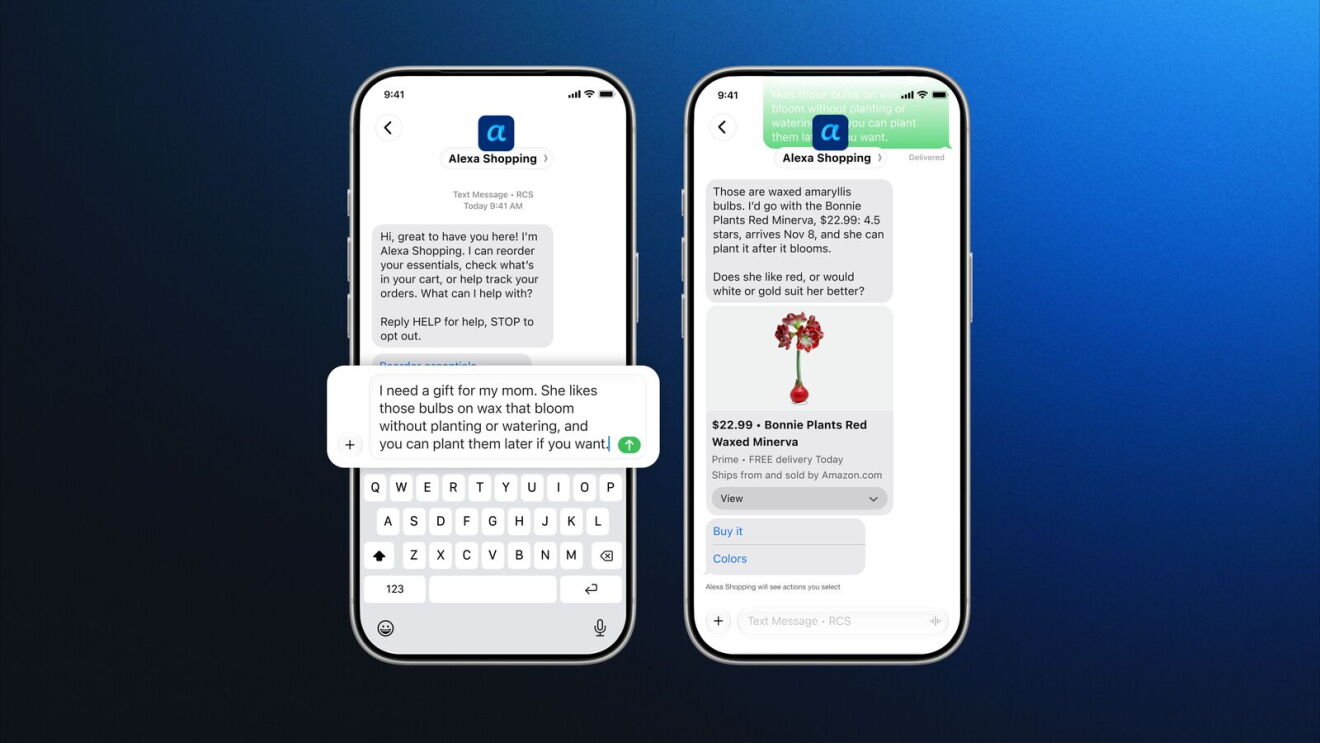
For a brand, the practical change is that product information may be evaluated before someone reaches a conventional search-results page. Price, delivery timing, attributes and relevance to the request become inputs to a short recommendation exchange. A private-feeling message thread can also function as a storefront.
That does not mean the early SMS pilot already represents mainstream shopping behavior. Amazon is starting with invited customers in the US and says access will expand to more people over the coming weeks.
Where sponsored product suggestions can appear
The new advertising opportunity sits in the discovery part of an Alexa text exchange. When the assistant responds with several potential products, a Sponsored Product can be among the suggestions. The new text-based placements are initially free to advertisers.
The boundary is deliberate: an automated purchase made by the agent is meant to remain free of sponsored substitutions. In other words, the paid suggestion is entering the conversation, not the final instruction to buy. That distinction gives marketers a clearer question to examine than whether an AI shopping agent has ads at all.
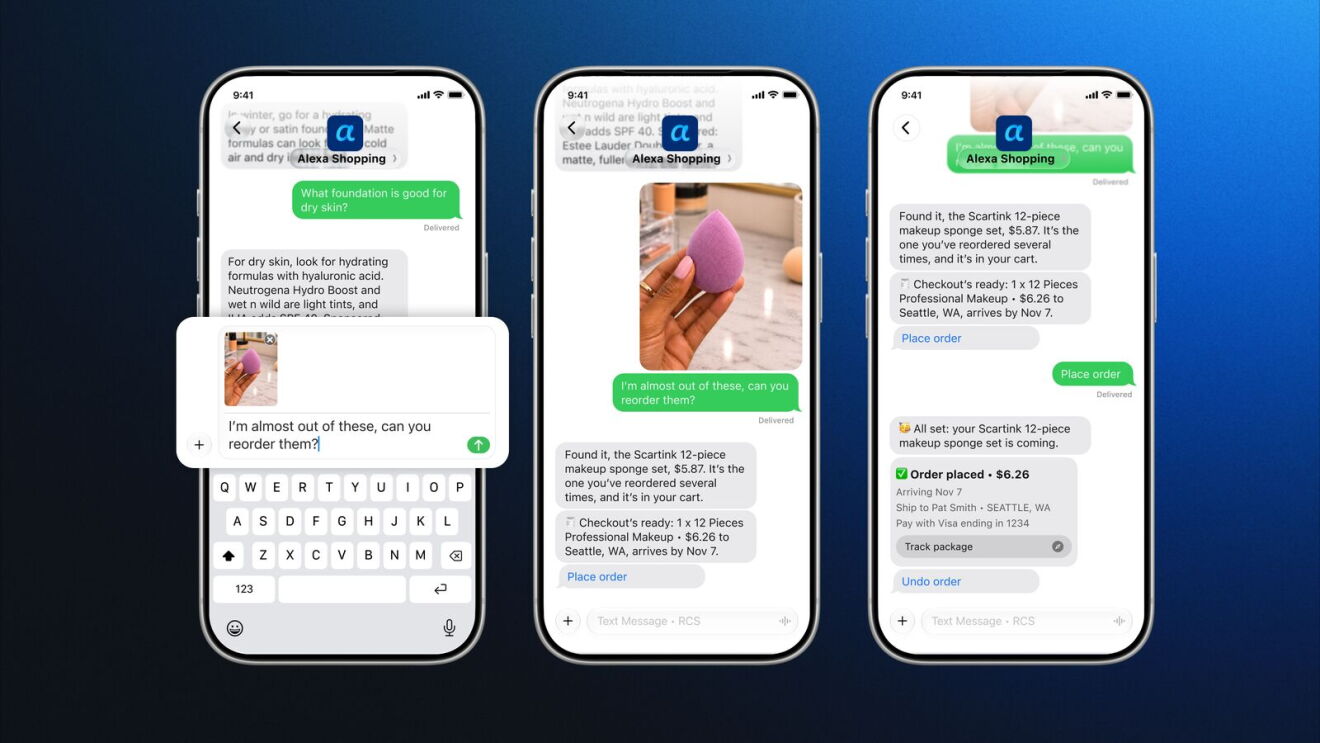
Amazon was already introducing conversational advertising before the text option. Its June description of agentic shopping ads explained how existing Sponsored Products and Sponsored Brands can appear in Alexa for Shopping interactions. The new development extends that advertising environment to SMS.
| Moment in the shopping journey | Role of the assistant | Advertising implication |
|---|---|---|
| Product discovery | Finds and compares options in a text reply | A Sponsored Product may appear among suggestions |
| Customer decision | Responds to follow-up questions and builds a cart | Marketers need to know which suggestion influenced consideration |
| Agent-completed purchase | Executes an authorized or configured buying action | The reported test keeps these purchases ad-free |
Amazon has separately described Branded Conversations, an offering intended to incorporate advertiser-supplied product expertise into Alexa for Shopping, with a US launch planned for January 2027. It is a different product from this SMS pilot. Taken together, the releases illustrate how paid placement, brand knowledge and automated checkout are becoming distinct parts of the same shopping journey.
Why a placement is not yet proof of a sale
A text reply can look more like advice than a familiar ad unit. That makes disclosure, ranking logic and attribution unusually consequential. Marketers will need to understand whether their product was selected because it matched the request, received paid exposure, or both.
The early economics also demand caution. An initial placement that carries no charge cannot yet prove an efficient paid acquisition channel. Its value depends on how often it is shown, which alternatives a shopper sees, whether the person considers or buys the item, and whether the sale would have occurred anyway.
More than 400 million customers used Alexa for Shopping in the preceding 12 months, according to Amazon. That is reach for the broader assistant, not adoption or conversion data for its new text-messaging pilot.
The numbers demonstrate why Amazon can test conversational commerce at scale, but they should not become a shortcut for forecasting the SMS format. A customer checking delivery status, comparing products and purchasing an item are performing different actions. Counting all of them as equivalent marketing outcomes would overstate what the advertising channel has established.
A conventional impression describes an opportunity to see a message. An AI recommendation describes a choice made inside a task. Advertisers need evidence connecting those two moments before treating them as interchangeable.
What this means for retail marketers
The immediate lesson is not to move budgets into a product that remains an early test. It is to examine how product discovery, advertising and delegated buying may be measured differently when they happen in one conversation.
Product information quality. Product titles, attributes, availability and delivery details need to answer concrete customer requests. The assistant’s value depends on comparing options meaningfully, not simply showing a promotional claim.
Sponsored versus organic visibility. Brands should ask how sponsored recommendations are identified and how they interact with nonpaid suggestions. A recommendation’s relevance and its commercial placement are separate questions.
Incremental outcomes. Marketers need to distinguish a suggested item from an authorized purchase, and a purchase from a sale that would not otherwise have occurred. This is especially important while Amazon’s new text placements have no initial media cost.
Customer control. Amazon’s separation of ads in discovery from agent-completed purchases highlights a design choice worth watching. Customers may welcome assistance while expecting their final buying instructions to be respected.
The broader issue extends beyond Amazon. As assistants do more of the searching, comparing and purchasing, media teams may be tempted to evaluate every newly available recommendation surface as another ad slot. Yet the assistant is also a decision tool acting for the customer, and those two functions can pull in different directions.
For AI commerce, the long-term question is not simply whether a brand can enter the conversation. It is whether marketers can explain what paid exposure changed, without confusing the shopper’s request with the advertiser’s interest.
