
Every November, Mariah Carey’s Christmas song returns to signal that the festive season is underway. For brands, that familiar moment is more than a soundtrack. It is a recognizable cultural cue that can make a holiday campaign feel instantly seasonal.
Gucci has placed Carey at the center of its 2026 gifting campaign, using her arrival at a hotel as the dramatic reveal. The film, titled Gucci Gift with Mariah Carey, is directed by Harmony Korine and was released on Gucci’s official YouTube channel on November 2.
Table of contents
Jump to each section:
- Gucci turns the Christmas countdown into a hotel arrival
- Why Mariah Carey fits the holiday story
- The difference between a seasonal celebrity and a celebrity endorsement
- What marketers can take from Gucci’s Christmas film
Gucci turns the Christmas countdown into a hotel arrival
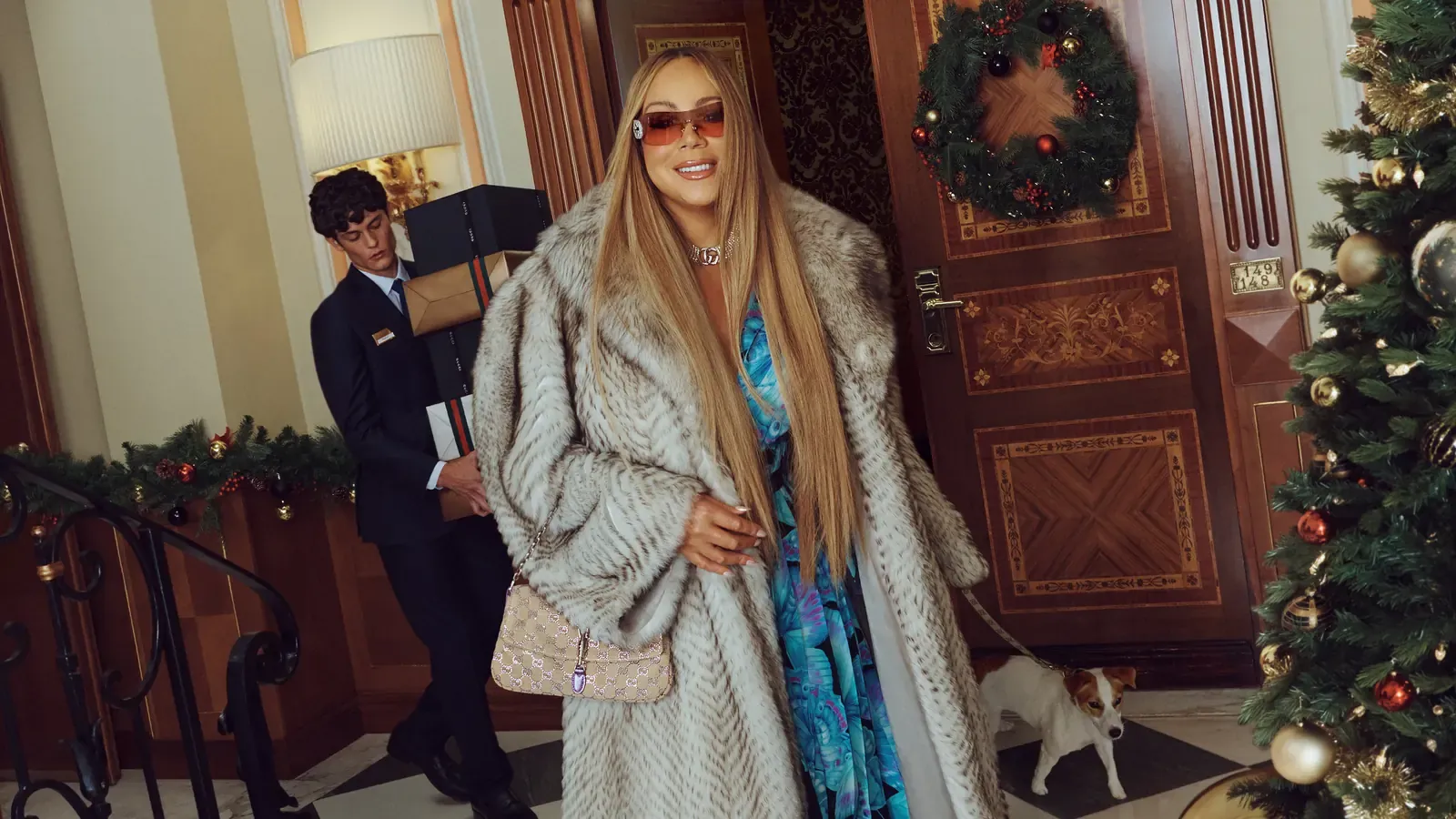
The film opens with a car pulling up outside a hotel. A bellboy alerts colleagues that a special guest has arrived, and staff rush through the building with Gucci gift boxes. The anticipation builds before Carey’s entrance, accompanied by All I Want for Christmas Is You.
The hotel setting gives the campaign a playful structure: the staff and guests react to the arrival of someone whose appearance itself announces Christmas. Gucci’s gifts and fashion are woven into the scene rather than introduced through a conventional product demonstration.
Why Mariah Carey fits the holiday story
Carey’s 1994 hit has become closely associated with the annual start of Christmas celebrations. That association gives the Gucci film a recognizable setup before the brand has to explain the campaign’s premise. The song and the singer are the creative shorthand.
Gucci also connects the holiday presentation to its Butterfly special collection, giving the celebrity-led film a product context. The collection appears alongside the house’s broader gifting edit, according to campaign coverage. The butterfly motif offers a more specific connection to Carey than a generic Christmas theme.
The difference between a seasonal celebrity and a celebrity endorsement
Carey also appeared in Sephora’s 2025 holiday campaign, which played with her familiar annual “It’s time!” moment. The two brands approach that cultural association differently. Sephora used a comedic interruption of the Christmas ritual; Gucci stages the singer’s arrival as an elegant, theatrical event.
The comparison illustrates a useful distinction for marketers. A famous face can attract attention, but a celebrity with an established relationship to the occasion can help carry the story itself. Gucci’s campaign does not need to explain why Carey is arriving at the start of the festive season.
What marketers can take from Gucci’s Christmas film
The strongest element of the campaign is its timing and casting. Gucci has chosen an artist whose annual return is already a seasonal reference point, then built the film around that anticipation. Korine’s hotel narrative lets the brand borrow a familiar cultural moment while retaining a luxury setting.
That is not proof of sales or audience impact. Gucci has not provided campaign conversion figures in the sources reviewed. The observable creative lesson is narrower: when a celebrity’s public identity is already linked to a calendar moment, the brand can make that recognition do part of the storytelling.
