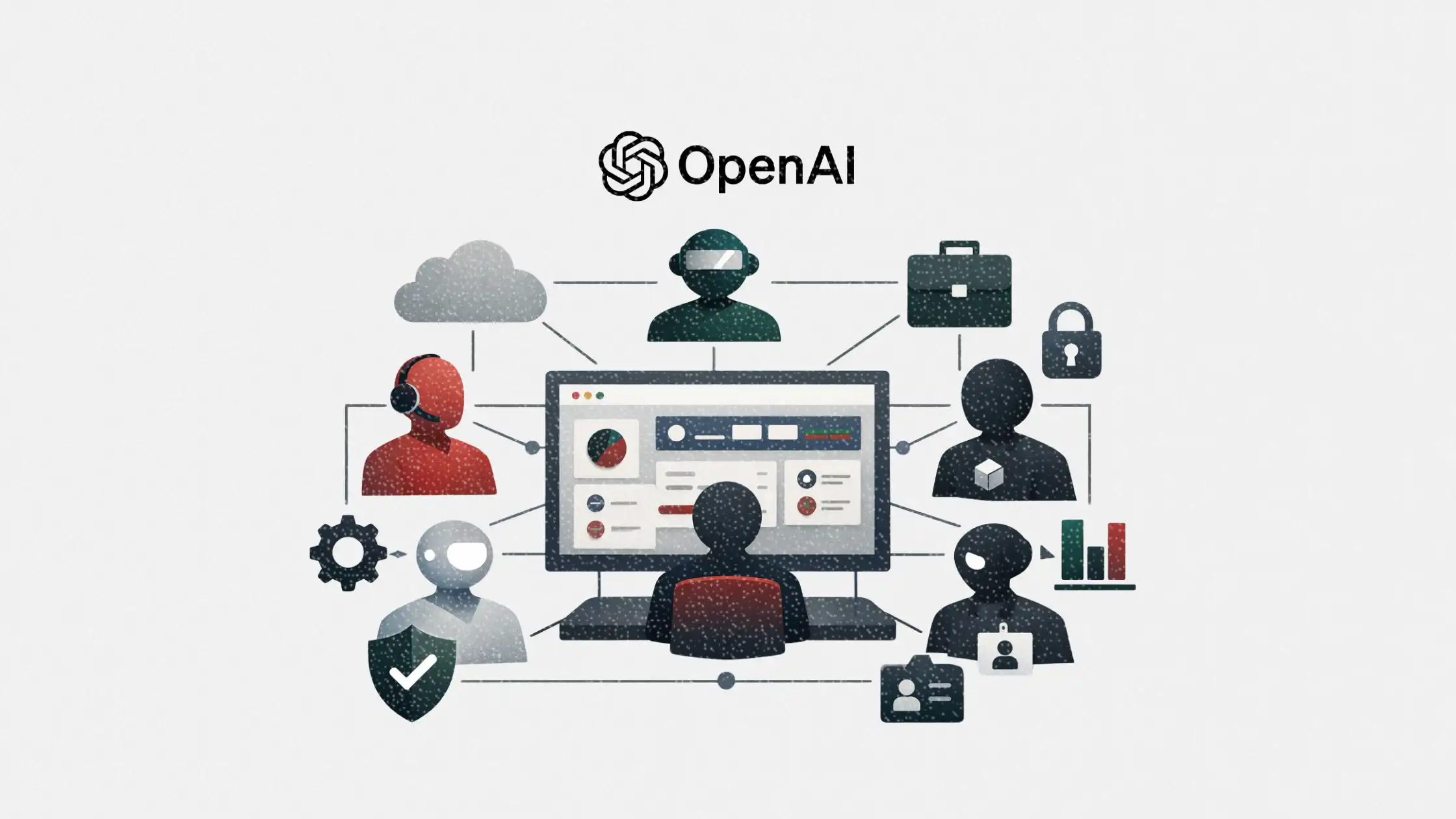
OpenAI’s latest move targets one of the biggest challenges in enterprise AI: turning models into practical, scalable tools that work across departments, systems, and workflows. Frontier positions AI agents not as one-off tools, but as digital coworkers with identity, context, and guardrails—ready to operate across clouds, platforms, and teams.
Backed by early adopters like HP, State Farm, Uber, and Oracle, the product reflects a growing race among tech firms to own the “agent management” layer. With competitors like Salesforce’s Agentforce and LangChain moving fast, OpenAI is betting that a purpose-built orchestration platform will give it a firm foothold in enterprise AI infrastructure.
This article explores what Frontier is, how it works, and what it signals for marketers and enterprise AI teams in 2026.
Short on time?
Here’s a table of contents for quick access:
- What is OpenAI Frontier, and why does it matter?
- How OpenAI Frontier works in the enterprise
- What marketers should know about agent management
 Patrecia Meliana
What is OpenAI Frontier, and why does it matter?
OpenAI Frontier is a new enterprise-grade platform for building and managing AI agents—autonomous software entities designed to perform tasks, make decisions, and integrate across enterprise tools and systems.
While AI agents have become one of the hottest trends since 2024, deployment has remained patchy and experimental for most businesses. Frontier aims to close that gap by offering:
- A unified interface to manage agent identity, context, and permissions
- Open integrations that let teams use agents from OpenAI or other vendors
- Tools to evaluate, onboard, and improve agent performance over time
OpenAI likens Frontier to managing human employees: it lets teams “hire” AI coworkers, assign them responsibilities, set boundaries, and provide structured feedback. That’s a big leap from the typical chatbot or automation script.
The platform is currently in limited release, with general availability expected in the coming months. Pricing details haven’t been disclosed.
How OpenAI Frontier works in the enterprise
At its core, Frontier helps enterprises give AI agents the tools and context needed to operate reliably within business environments. Here’s how:
1. Shared business context
Frontier links together siloed data sources—like CRMs, data warehouses, and ticketing tools—so agents can understand how work happens across the organization.
2. Agent execution environment
Once deployed, agents can run code, manipulate files, and use integrated tools just like a human employee. They operate across local systems, enterprise infrastructure, or OpenAI-hosted runtimes.
3. Built-in governance and feedback
Each agent has a unique identity and permission set. Managers can review performance, apply feedback loops, and ensure compliance in sensitive environments.
4. Open ecosystem
Frontier supports agents built in-house, sourced from third parties, or deployed by OpenAI itself. This flexibility means enterprises don’t need to replatform or abandon existing AI projects to adopt Frontier.
Notably, OpenAI is working with early adopters such as Intuit, Thermo Fisher, and Cisco, and it’s also bringing on a wave of partners like Harvey, Abridge, and Sierra to build native agent integrations.
What marketers should know about agent management
Marketers and digital teams won’t be writing agent scripts—but they’ll absolutely feel the impact of platforms like Frontier in their workflows. Here’s what to watch:
- AI coworkers are coming for cross-functional work
From campaign reporting to customer outreach, expect AI agents to show up in marketing operations, sales enablement, and lifecycle workflows.
- Contextual intelligence will matter more than model power
The value of an agent will come from how well it understands your business—not just how smart the underlying model is. That means alignment with your CRM, brand tone, and customer segments is key.
- Governance and trust will shape adoption
Frontier’s emphasis on identity, permissions, and performance feedback is a direct response to enterprise concerns about control and risk. Expect marketing and compliance teams to get more involved in AI governance.
- Open ecosystems are good news for agility
Marketers don’t want to be locked into single-vendor AI solutions. Frontier’s open model means teams can work across platforms, reuse tools, and scale AI adoption without constant rebuilds.
This shift also reflects a broader trend: agent management is becoming a category of its own, with platforms like Salesforce’s Agentforce and LangChain already pushing similar visions.
For OpenAI, Frontier marks a decisive move toward enterprise infrastructure—not just AI capabilities. It’s a bet that managing agents like employees, with context, tools, and accountability, will be the key to unlocking real productivity at scale.
For marketers, it’s a signal to start thinking of AI not just as a tool, but as a teammate—one that needs to be hired, trained, and managed just like anyone else on the team.