
Artificial intelligence is transforming how content is created, distributed, and personalized. From AI-written articles and synthetic influencers to automated video editing and personalized playlists, brands now have unprecedented tools to scale content production.
But one question continues to shape marketing strategy: How does Gen Z feel about AI-generated content?
As the first generation to grow up fully immersed in the digital world, Gen Z has a unique relationship with technology. They are both enthusiastic adopters of new tools and highly critical consumers of online content.
Understanding their perspective matters more than ever. In the United States alone, Gen Z represents US$360 billion in spending power, making them one of the most influential consumer groups for brands.
Keep reading to understand how Gen Z evaluates AI-generated content and what businesses must do to build trust with this digitally native audience.
Short on time?
Here’s a table of contents to help you find what you’re looking for:
- Who is Gen Z?
- What is AI-generated content?
- Gen Z’s views on AI-generated content
- Why Gen Z can detect AI content
- What works: successful AI integration case studies
- When AI goes wrong: cautionary tales
- The 4A framework for AI content that resonates with Gen Z
- The future of AI content and Gen Z
 Patrecia Meliana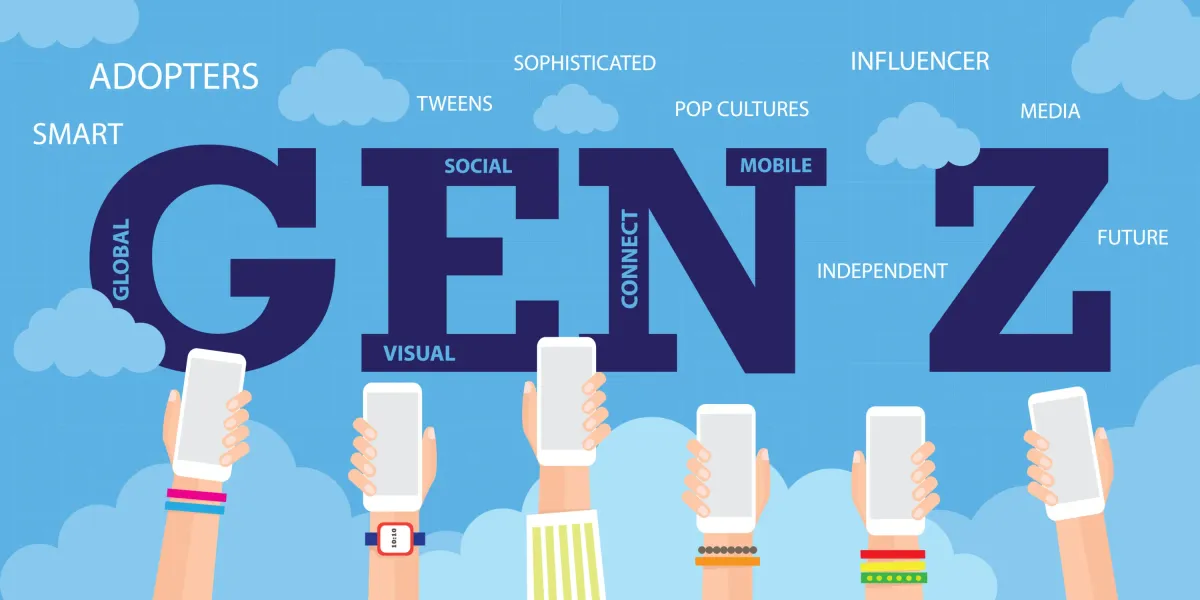
Who is Gen Z?
Gen Z refers to people born roughly between the late 1990s and early 2010s. Unlike millennials, who witnessed the transition from analog to digital technology, Gen Z grew up with the internet as a permanent part of everyday life.
As digital natives, their online behavior shapes their perspectives in profound ways. Recent data shows that 47% of adult Gen Z users in the U.S. spend 2-4 hours daily on social media, while a significant 60% dedicate at least 4 hours per day to these platforms. This extensive digital engagement influences not just what content they consume, but how they evaluate its authenticity and value.
What is AI-generated content?
AI-generated content refers to text, images, audio, or video created using generative artificial intelligence models.
Examples include:
- AI-written blog posts or articles
- AI-generated images or advertisements
- Synthetic influencers or virtual celebrities
- Automated marketing copy
- AI-edited video or audio content
For marketers, these tools offer major advantages in terms of efficiency and scalability. However, Gen Z’s expectations around authenticity mean brands must be careful about how these technologies are used.
Gen Z’s views on AI-generated content: a complicated relationship
Gen Z’s perspective on AI content is complex. They use AI tools frequently but remain skeptical about relying on them fully. This contradiction has become known as the AI trust gap.
Research shows that around 70% of Gen Z users actively use generative AI tools, yet only about 52% trust these tools to help them make informed decisions. This gap reveals an important truth about the generation: they see AI as useful, but not authoritative. In other words, Gen Z treats AI as a tool rather than a source of truth.
Authenticity above all
For Gen Z, authenticity is one of the most important qualities in digital content. A recent study found that 55% of participants aged 16-24 favored human-written articles, finding them more engaging than AI-generated alternatives.
This preference for human-created content stems from Gen Z’s ability to detect inauthenticity, leading to distrust of content that feels overly polished or impersonal. With a striking 84% trust brands more when they feature real customers in advertisements.
This explains the popularity of platforms like BeReal, which encourages unfiltered photo sharing rather than highly curated social media posts. For Gen Z, overly polished content often signals inauthenticity.
The AI trust paradox
Gen Z’s relationship with AI is characterized by both embrace and caution. While 70% report using generative AI tools, only 52% trust these tools to help them make informed decisions.
This gap between usage and trust highlights a fundamental tension: Gen Z appreciates AI’s convenience and capabilities but harbors legitimate concerns about its reliability and implications.
Beyond mere content consumption, Gen Z forms deeper connections with brands that align with their values. Nearly 6 in 10 Gen Z feel a bond with brands they use, and 46% even judge others based on the brands they purchase.
A remarkable 84% globally state the need to share values with a brand before using it—demonstrating that for Gen Z, consumption is often an expression of identity. This behavior reflects a broader trend toward algorithmic skepticism, where younger users rely on multiple sources to confirm the accuracy of information they encounter online.
Why Gen Z can detect AI content
One of the biggest challenges for marketers is that Gen Z is particularly good at identifying AI-generated content.
Several factors explain why:
1. The uncanny valley effect
AI-generated images or videos sometimes appear almost human but not quite. This subtle sense of artificiality can create discomfort, often referred to as the uncanny valley effect. Gen Z users, who consume large volumes of digital media, are especially sensitive to these signals.
2. Cultural context gaps
AI models often struggle to capture cultural nuance, humor, or social context. For a generation that spends hours each day immersed in online communities, even small inaccuracies in tone or language can signal that content is artificial.
3. Overly polished content
Another giveaway is excessive polish.
AI-generated content can feel formulaic, repetitive, or emotionally flat. Gen Z tends to prefer content that feels spontaneous, imperfect, or human. This preference explains why creator-led platforms like TikTok continue to outperform highly produced brand campaigns.
What works: successful AI integration case studies
Despite skepticism toward AI-generated content, several brands have successfully integrated AI in ways that resonate with Gen Z audiences. The key difference is that these companies use AI to enhance experiences rather than replace human creativity.
- Spotify’s personal touch
Spotify has used AI to deliver highly personalized listening experiences through features such as Discovery Weekly and Daily Mix playlists. These recommendations analyze listening behavior to introduce users to music aligned with their tastes.
Because the technology improves discovery without removing human creativity from the music itself, Gen Z users perceive the experience as helpful rather than artificial. The results speak for themselves: In 2023, Gen Z accounted for a substantial portion of Spotify’s user base, contributing to a 67% increase in their music and podcast listening compared to the previous year.
- TikTok’s algorithm-driven discovery
TikTok’s recommendation engine is another example of AI enhancing content discovery. By analyzing user interactions, TikTok’s algorithm surfaces videos that match individual interests while maintaining a sense of spontaneity.
This balance between personalization and authenticity has made TikTok one of the most influential platforms for Gen Z.
In fact, surveys show that 53% of Gen Z internet users use TikTok for search because 86% of users said traditional search engine answers like Google often feel repetitive .
When AI goes wrong: cautionary tales
Not every AI campaign resonates with Gen Z audiences. In some cases, poorly implemented AI can damage brand perception.
- Coca-Cola’s AI Christmas Miss
In November 2024, Coca-Cola released an AI-generated Christmas advertisement inspired by its iconic Holidays Are Coming campaign.
Despite the nostalgic theme, the advertisement faced criticism from consumers and marketing experts who felt it lacked emotional warmth. Some viewers described the campaign as cold or artificial, highlighting the risks of replacing human storytelling with automated production.
- FN Meka: AI rapper controversy
FN Meka, a virtual AI rapper with over 10 million TikTok followers, initially appeared to be a breakthrough experiment in synthetic entertainment.
However, after signing the character to a record label, the project faced backlash over racial stereotyping and cultural appropriation. Critics argued that the AI character attempted to replicate cultural experiences without genuine understanding or representation.
The controversy ultimately led to the project being canceled.
@fnmeka
- The visual authenticity gap
Research from Getty Images suggests that consumers respond negatively to AI-generated visuals depicting people or products. Respondents reported feeling less trust toward brands that used synthetic imagery without transparency.
For Gen Z audiences, visual authenticity is particularly important. When AI-generated imagery feels deceptive or misleading, it can quickly undermine trust.
 Patrecia Meliana
The 4A framework for AI content that resonates with Gen Z
Brands that succeed with AI content often follow a similar set of principles.
A useful way to understand these principles is through the 4A framework.
1. Augmentation
Use AI to enhance human creativity rather than replace it.
2. Authenticity
Ensure that content still reflects real experiences, real people, and genuine storytelling.
3. Attribution
Be transparent when AI tools are used in content production.
4. Alignment
Make sure AI-powered content reflects the values Gen Z cares about, such as diversity, fairness, and cultural awareness.
When these principles are followed, AI becomes a supportive tool rather than a credibility risk.
 Patrecia Meliana
The future of AI content and Gen Z
As AI tools become more sophisticated and Gen Z gains more purchasing power, the relationship between this technology and its young audience will continue to evolve. What remains constant is Gen Z’s expectation for content that feels genuine, aligns with their values, and respects their intelligence.
Brands that can navigate this complex landscape—using AI as a means to deliver more authentic, personalized experiences rather than as a cost-cutting substitute for human creativity—will find a receptive audience in Gen Z. Those that fail to understand the importance of authenticity risk losing relevance with a generation that can spot inauthenticity from a mile away.
The message from Gen Z is clear: They don’t mind AI-generated content, as long as it serves human connection rather than replacing it. The technology itself isn’t the problem—it’s how brands choose to implement it that makes all the difference.
For marketers and content creators, the key isn’t choosing between AI and authenticity, but finding ways to use the former to enhance the latter. In doing so, they’ll connect with a generation that doesn’t just consume content but evaluates, critiques, and ultimately chooses whether a brand deserves their loyalty in an increasingly crowded digital landscape.
Sources
- Exploding Topics. (2025, March 6). 85+ Stats on Gen Z Spending and Buying Habits (2024). https://explodingtopics.com/blog/gen-z-spending
- The Harris Poll. (2024, September 10). What Gen Z thinks about its social media and smartphone usage. https://theharrispoll.com/briefs/gen-z-social-media-smart-phones/
- ARTSMART AI. (2024, August 3). AI-Generated Content Statistics in 2024. https://artsmart.ai/blog/ai-generated-content-statistics-2024/
- Embryo. (2024, October 15). Gen Z Marketing: 24 Key Statistics and Trends You Need to Know. https://embryo.com/blog/genzmarketingstatistics/
- inBeat Agency. (2024, May 24). 50 UGC Statistics + Strategic Implications for Your Brand in 2025. https://inbeat.agency/blog/ugc-statistics
- Salesforce. (2025, March 19). Top Generative AI Statistics for 2025. https://www.salesforce.com/news/stories/generative-ai-statistics/
- Edelman. (2024, June 13). Winning with Gen Z: Embracing Intention and Values for Brand Success. https://www.edelman.com/trust/2024/trust-barometer/special-report-brand/gen-z-embracing-intention-values-brand-success
- Spotify Advertising. (2023, December 15). Gen Z psychographics: Generational values, lifestyles, and more. https://ads.spotify.com/en-US/news-and-insights/gen-z-psychographics/
- EMARKETER. (2024, January 17). TikTok gains favor among Gen Z over Google for searches. https://www.emarketer.com/content/gen-z-prefers-tiktok-google-searches
- PRWEEK. (2025, March 19). Consumers dislike brands using AI images of people, report finds. https://www.prweek.co.uk/article/1870853/consumers-dislike-brands-using-ai-images-people-report-finds
This post is created by ContentGrow, providing scalable and tailored content creation services for B2B brands and publishers worldwide. Book a discovery call to learn more.



Leave a Reply