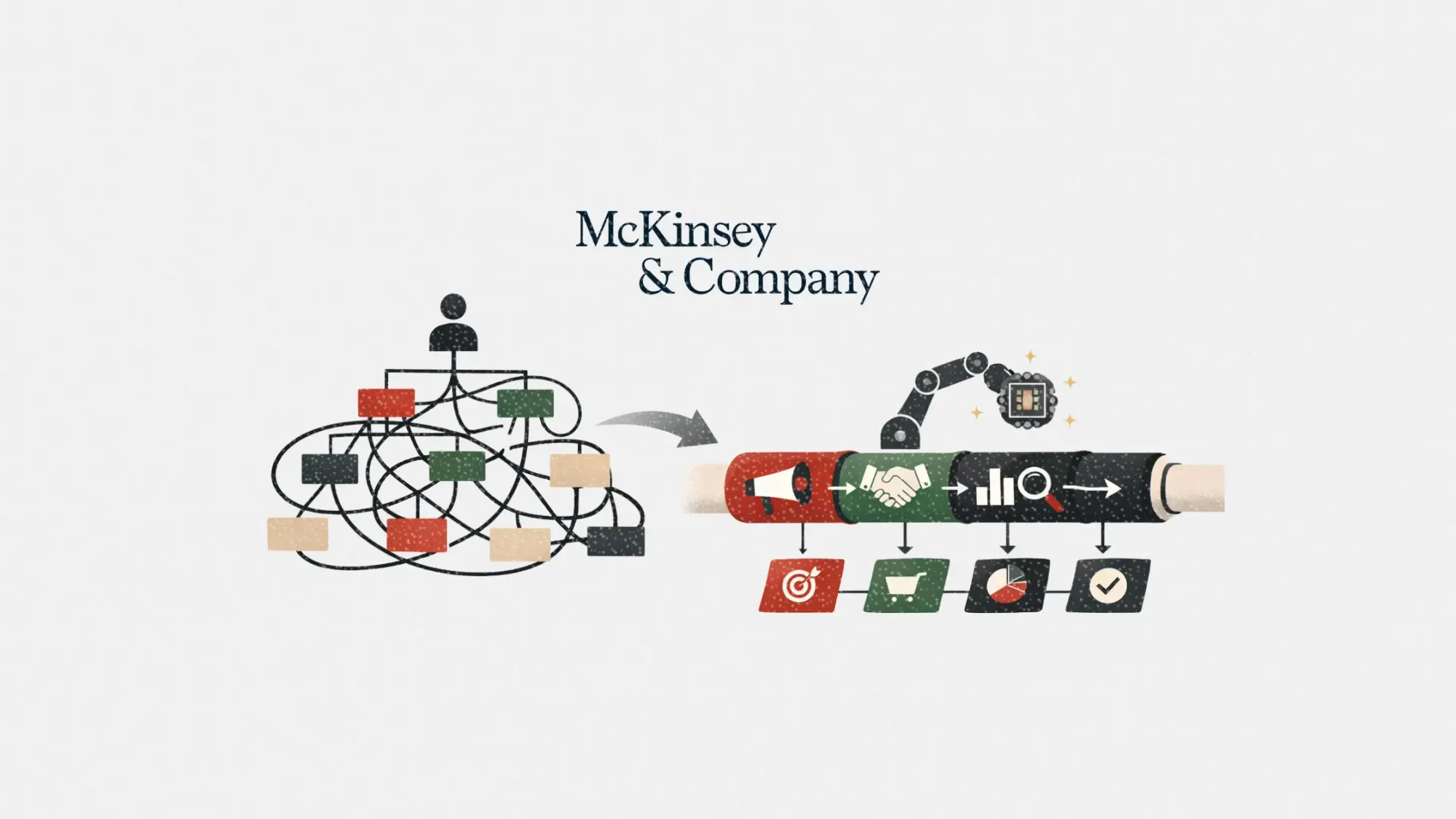
For decades, organizations have tried to boost productivity by reorganizing departments, flattening hierarchies, or restructuring leadership teams. But those structural changes often fail to address a deeper problem: how work actually flows across the organization.
According to McKinsey’s The State of Organizations 2026 report, many leaders now believe that the next productivity breakthrough will come from redesigning workflows rather than reorganizing teams.
That shift reflects a growing recognition that complexity, fragmented processes, and disconnected decision-making systems often slow organizations down more than their formal structures.
This article explores why productivity pressure is rising across organizations, how companies are beginning to rethink workflow design, and what marketing teams can learn from the shift toward more streamlined operating models.
Short on time?
Here’s a table of contents for quick access:
- Why productivity pressure is rising across organizations
- Why traditional org structures are losing effectiveness
- How workflow redesign unlocks the next productivity frontier
- What marketers should learn from workflow-first organizations
 Valery Moniaga
Why productivity pressure is rising across organizations
Productivity has become one of the top concerns for organizational leaders worldwide.
In McKinsey’s survey, 43% of leaders identified productivity growth as their top priority for the coming years.
At the same time, many executives believe their organizations have become overly complicated. Layers of processes, governance rules, and reporting structures can slow decision-making and create operational bottlenecks.
According to the report, two-thirds of leaders say their organizations are overly complex and inefficient.
These challenges are forcing companies to rethink how work is organized across teams.
Why traditional org structures are losing effectiveness
Historically, companies tried to solve productivity problems by changing their organizational structures.
Reorganizations often involve merging departments, redefining leadership roles, or introducing new reporting lines. While these efforts can temporarily improve coordination, they rarely solve the deeper issues that slow organizations down.
The real bottleneck often lies in fragmented workflows.
When processes span multiple departments with unclear responsibilities, projects move slowly and decision-making becomes complicated. Even well-designed organizational charts cannot fix inefficient workflows.
As a result, many leaders are shifting their focus from structure to process.
How workflow redesign unlocks the next productivity frontier
Instead of focusing on hierarchical structure, organizations are beginning to examine how information, decisions, and tasks move across teams.
Workflow redesign typically involves simplifying processes, reducing duplicated work, and aligning teams around shared goals. Technology can play an important role in enabling these changes by automating routine tasks and improving data visibility.
Companies that succeed in redesigning workflows often experience faster decision-making and better collaboration across departments.
In many cases, the goal is not to eliminate hierarchy entirely but to ensure that workflows remain clear, efficient, and adaptable as organizations grow.
What marketers should learn from workflow-first organizations
Marketing teams can benefit directly from the shift toward workflow-focused operating models.
Several lessons stand out.
1. Break down silos between marketing and other teams
Marketing performance often depends on collaboration with product, sales, analytics, and customer support teams.
2. Simplify campaign approval processes
Long approval chains can delay campaign launches and reduce responsiveness to market trends.
3. Adopt data-driven workflows
Integrated analytics systems allow marketing teams to track performance and adjust strategies quickly.
4. Use automation to reduce operational complexity
AI-powered tools can help marketing teams manage data, content, and experimentation at scale.
Productivity challenges rarely stem from organizational charts alone. Instead, they often arise from fragmented processes that make it difficult for teams to collaborate effectively.
As organizations shift their focus from structure to workflow design, the companies that simplify how work flows across teams may gain a significant advantage. For marketing teams, the lesson is clear. Improving performance may depend less on reorganizing teams and more on redesigning how work actually gets done.