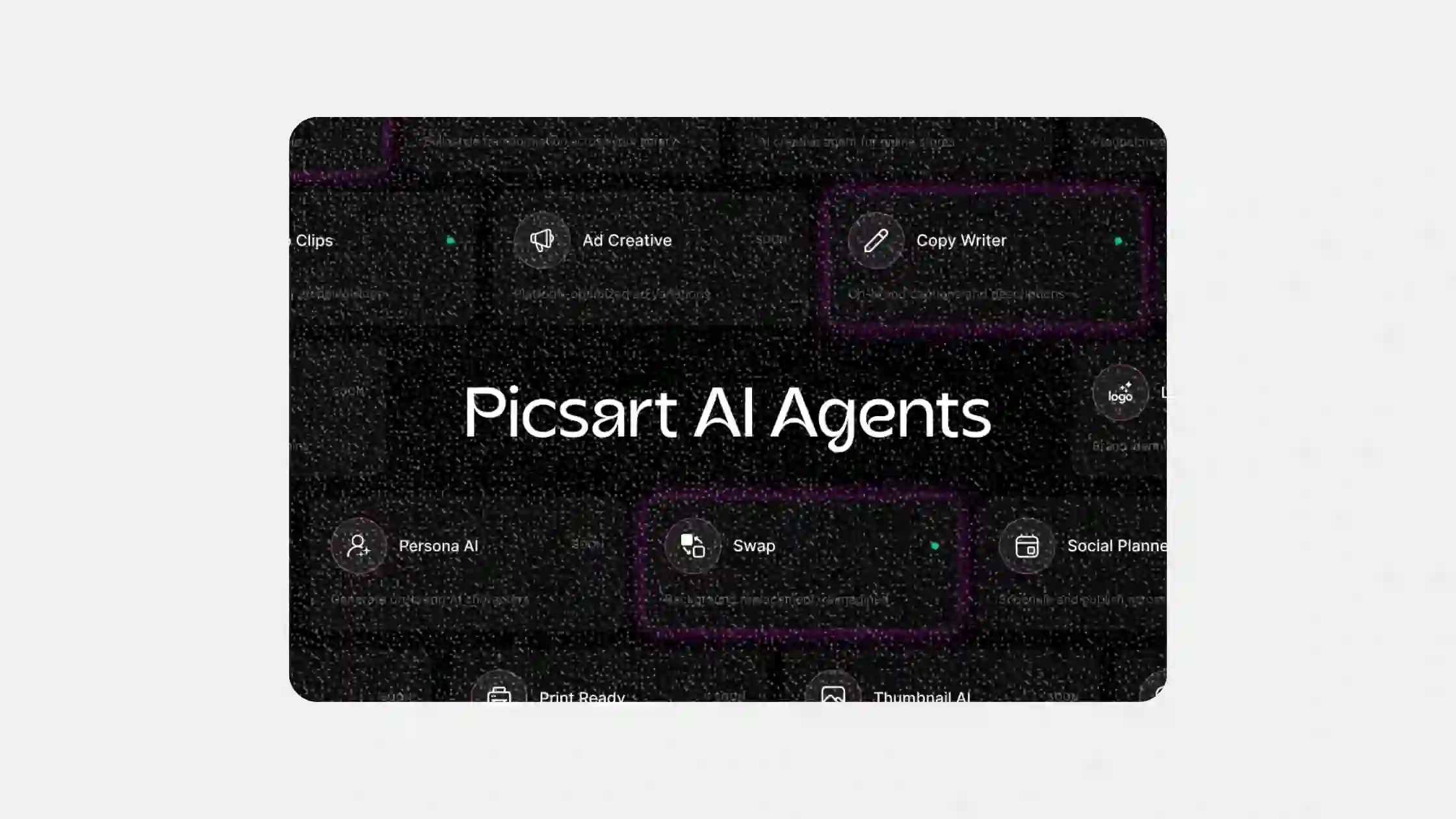
Picsart is taking a clear step beyond AI-powered editing tools into something more operational: an AI agent marketplace designed to handle end-to-end creative workflows.
For a platform with over 130 million users, largely Gen Z creators and social media managers, this is not just a feature update. It signals a move toward agentic AI, where execution is delegated, not just accelerated. For marketing teams under pressure to scale content without scaling headcount, that distinction matters.
This article explores what that shift means for marketers, creators, and e-commerce teams navigating increasingly fragmented content demands.
Short on time?
Here’s a table of contents for quick access:
- What Picsart’s AI agent marketplace actually introduces
- How Picsart’s AI agents work across creative workflows
- Why agentic AI is gaining traction in creator and martech ecosystems
- What marketers should know about adopting AI agents
 Patrecia Meliana
What Picsart’s AI agent marketplace actually introduces
Picsart has opened a waitlist for its AI Agent Marketplace, a new layer within its platform that allows users to “hire” specialized AI assistants for creative and operational tasks.
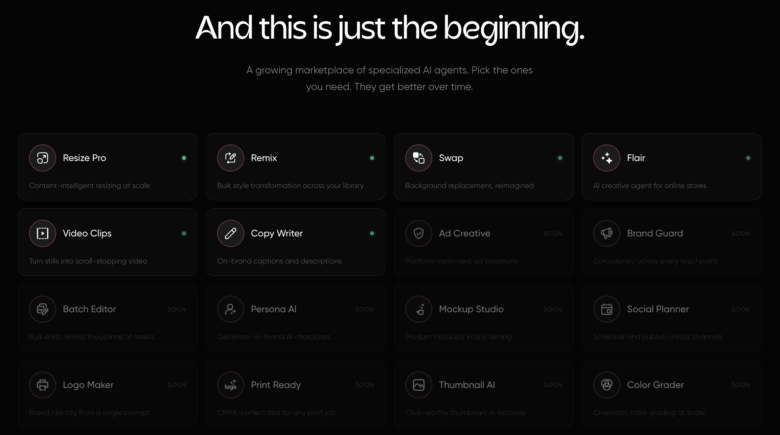
At launch, the marketplace includes four agents:
- Flair for e-commerce optimization, with Shopify integration
- Resize Pro for platform-specific content resizing
- Remix for bulk style transformation across assets
- Swap for automated background replacement
Unlike traditional AI tools that generate single assets, these agents are designed to handle full workflows. Users brief the agent, review a proposed plan, approve it, and let the system execute.
The marketplace is also positioned as an ecosystem. Picsart plans to introduce new agents weekly and eventually allow third-party developers to contribute, turning it into a scalable “team of agents” model rather than a fixed feature set.
 Patrecia Meliana
How Picsart’s AI agents work across creative workflows
The core idea behind Picsart’s agents is simple: move creators from doing to directing.
Instead of manually editing, resizing, exporting, and publishing assets, users define the goal. The agent then:
- Analyzes the input and context, including brand assets and performance data
- Builds a step-by-step execution plan
- Requests approval before acting
- Executes the workflow and adapts based on feedback
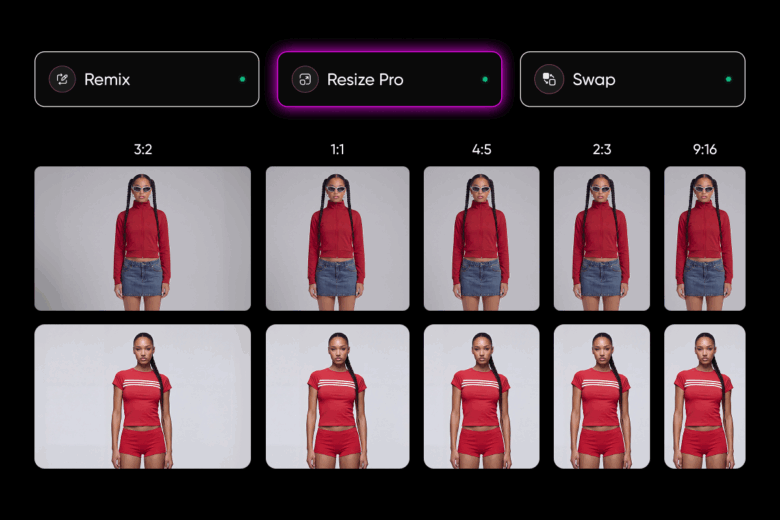
For example, an e-commerce team uploading raw product photos could see the agent propose:
- Lighting correction
- Background removal
- Lifestyle mockup generation
- Platform-specific formatting
Once approved, the agent completes the process and returns publish-ready assets.
Notably, agents like Flair go further by analyzing store performance and suggesting improvements. Future updates include A/B testing and identifying underperforming products automatically.
Another key detail is accessibility. These agents can be managed not only inside Picsart but also via WhatsApp and Telegram, enabling asynchronous workflows and mobile-first execution.
Why agentic AI is gaining traction in creator and martech ecosystems
Picsart’s move aligns with a broader shift toward agentic AI, fueled by growing interest in tools that can act, not just respond.
Traditional AI tools still require users to operate every step. Even with automation, marketers are often stuck managing fragmented workflows across platforms. Agent-based systems attempt to collapse that complexity.
Several factors are driving this trend:
- Execution fatigue: Teams spend more time producing variations than developing strategy
- Channel fragmentation: Each platform demands different formats and creative specs
- Performance pressure: Creative output is increasingly tied to measurable business outcomes
Agentic AI addresses these by combining planning, execution, and optimization into a single loop. Picsart’s approach also reflects a shift toward embedded intelligence. Agents operate within existing ecosystems like Shopify, messaging apps, and brand asset libraries, making them more context-aware and potentially more useful than standalone tools.
However, risks remain. Like all LLM-based systems, these agents can hallucinate or misinterpret intent. Picsart attempts to mitigate this with “autonomy levels,” allowing users to require approval before execution.
What marketers should know about adopting AI agents
For marketers evaluating tools like Picsart’s AI Agents, the opportunity is less about novelty and more about workflow transformation.
Here are practical considerations:
1. Start with high-friction workflows
Focus on repetitive, time-intensive tasks like resizing, background editing, or content repurposing. These are where agents deliver immediate ROI.
2. Treat agents as collaborators, not tools
The briefing process matters. Clear inputs and brand guidelines improve output quality and reduce rework.
3. Maintain human checkpoints
Use approval-based autonomy, especially for customer-facing or revenue-impacting workflows like product listings and campaigns.
4. Align agents with performance metrics
Tools like Flair connect creative changes to outcomes like conversion rates. This is where agentic AI becomes a growth lever, not just a productivity tool.
5. Prepare for tool consolidation
Agent marketplaces hint at a future where multiple tools are replaced by specialized agents within a single ecosystem. This has implications for stack decisions and vendor strategy.
Picsart’s AI Agent Marketplace is not just another AI feature drop. It reflects a broader shift toward outcome-driven systems that handle execution from start to finish.
For marketers, the real question is not whether to use AI, but how much of the workflow to delegate. As agents become more capable and integrated, the competitive edge will come from how effectively teams brief, guide, and scale these systems.
The promise is clear: fewer manual steps, faster execution, and more time spent on strategy. The challenge is maintaining control, accuracy, and brand consistency as automation deepens.