
CourtAvenue has acquired GTX Solutions, a data and marketing technology consultancy focused on customer data and CDP implementations, as brands push for stronger enterprise data foundations to support AI-driven experiences.
The deal was structured as a mix of cash and stock, with terms undisclosed. CourtAvenue says it plans to scale the GTX team to roughly 30 employees by the end of the year, signaling the acquisition is intended to become a growth engine inside its delivery model rather than a small specialist add-on.
Short on time?
Here’s a quick look at what’s inside:
- What CourtAvenue is adding by acquiring GTX Solutions
- Why CDP and data-layer work is resurfacing as an AI prerequisite
- Competitive landscape: how this positions CourtAvenue vs Dept, Valtech, Bounteous, and Merkle
- What enterprise marketers should ask before funding “agentic” roadmaps
- Operational implications: integration, measurement, and delivery capacity
What CourtAvenue is adding by acquiring GTX Solutions
GTX Solutions is known for helping brands manage and activate customer data across enterprise martech environments, particularly around customer data platforms such as Tealium, Adobe, and Optimizely.
For CourtAvenue, the value is capability depth. The firm has done data work already, but it has described that work as more commerce-oriented. GTX brings more enterprise-grade implementation experience across larger, more complex stacks where identity, consent, and downstream activation create the real bottlenecks.
GTX’s publicly cited clients include Hard Rock and Merck, which suggests experience navigating regulated environments and larger governance requirements, a different constraint set than mid-market commerce builds.
 Patrecia Meliana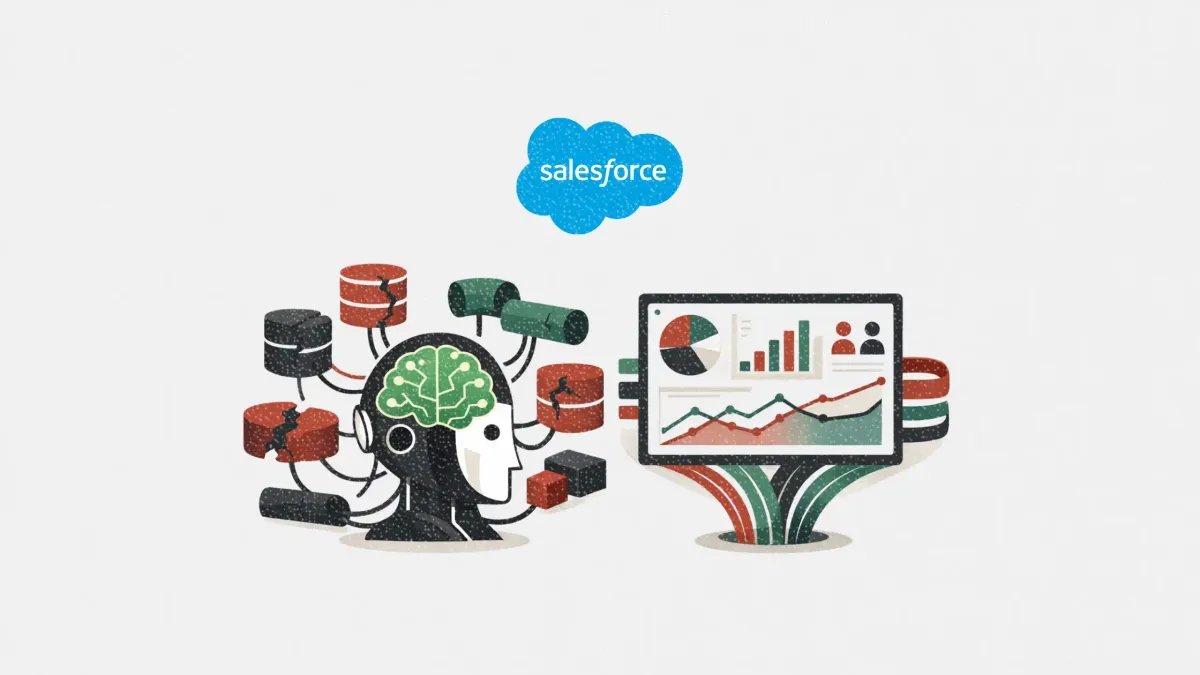
Why CDP and data-layer work is resurfacing as an AI prerequisite
A lot of “AI in CX” talk quickly collapses into a data reality check: orchestration only works if profiles, events, product data, content, and permissions are usable across systems.
That is why CDP and data-layer projects are showing up again under new labels. Teams may call it “agentic,” “real-time personalization,” or “AI-driven CRM,” but the prerequisite work looks familiar:
- unify identifiers across channels and business units
- standardize event schemas and campaign metadata
- resolve consent and access rules
- make downstream activation reliable across email, paid media, on-site, and service channels
In other words, the acquisition is less about buying an AI product and more about buying delivery talent that can make AI initiatives measurable, because measurement depends on clean inputs and consistent instrumentation.
Competitive landscape: how this positions CourtAvenue vs Dept, Valtech, Bounteous, and Merkle
Enterprise data and martech consulting is crowded and competitive. Dept, Valtech, Bounteous, and Merkle all sell variations of the same promise: integrate complex stacks, modernize data, and improve marketing performance.
CourtAvenue’s bet appears to be specialization and tighter integration between experience delivery and data modeling, with GTX adding stronger CDP and data activation expertise. That can be a differentiator when clients want fewer handoffs between “strategy,” “implementation,” and “optimization,” which is where many programs lose time and accountability.
The risk is that capability parity is easy to claim in services. The proof point becomes repeatable delivery, referenceable outcomes, and the ability to hire and retain specialized talent in a competitive market.
What enterprise marketers should ask before funding “agentic” roadmaps
If your agency or consultancy is proposing agent-like experiences or AI-driven orchestration, the practical questions to ask often have little to do with models:
- What data is the agent allowed to use, and under what consent?
- What is the system of record for identity, and how are conflicts resolved?
- What is “real time” in your stack, milliseconds, minutes, or daily batch?
- How will you measure lift and attribution without double-counting across channels?
- What changes when the CDP vendor, CMS, or commerce platform changes?
This is where a CDP-heavy consultancy can help, not by adding more dashboards, but by tightening the definitions and pipelines that determine whether AI-driven experiences are trustworthy and repeatable.
Operational implications: integration, measurement, and delivery capacity
CourtAvenue says GTX will be integrated into operations immediately, with shared systems and cross-functional collaboration. That approach can shorten time-to-value versus running GTX as an isolated specialist unit, but it creates near-term integration work: delivery processes, staffing models, and measurement standards have to align.
There is also a capacity signal. CourtAvenue’s reported revenue growth has been steep, with figures cited as $1.3 million in 2021, $21.1 million in 2022, and over $30 million in 2023. For marketers buying services, fast growth can be good, but it can also mean teams are stretched. Expanding the GTX team to around 30 is a way to add delivery bandwidth where demand is strongest.
The practical impact for clients should show up in clearer KPIs, better attribution plumbing, and faster deployment cycles across data, analytics, and activation.