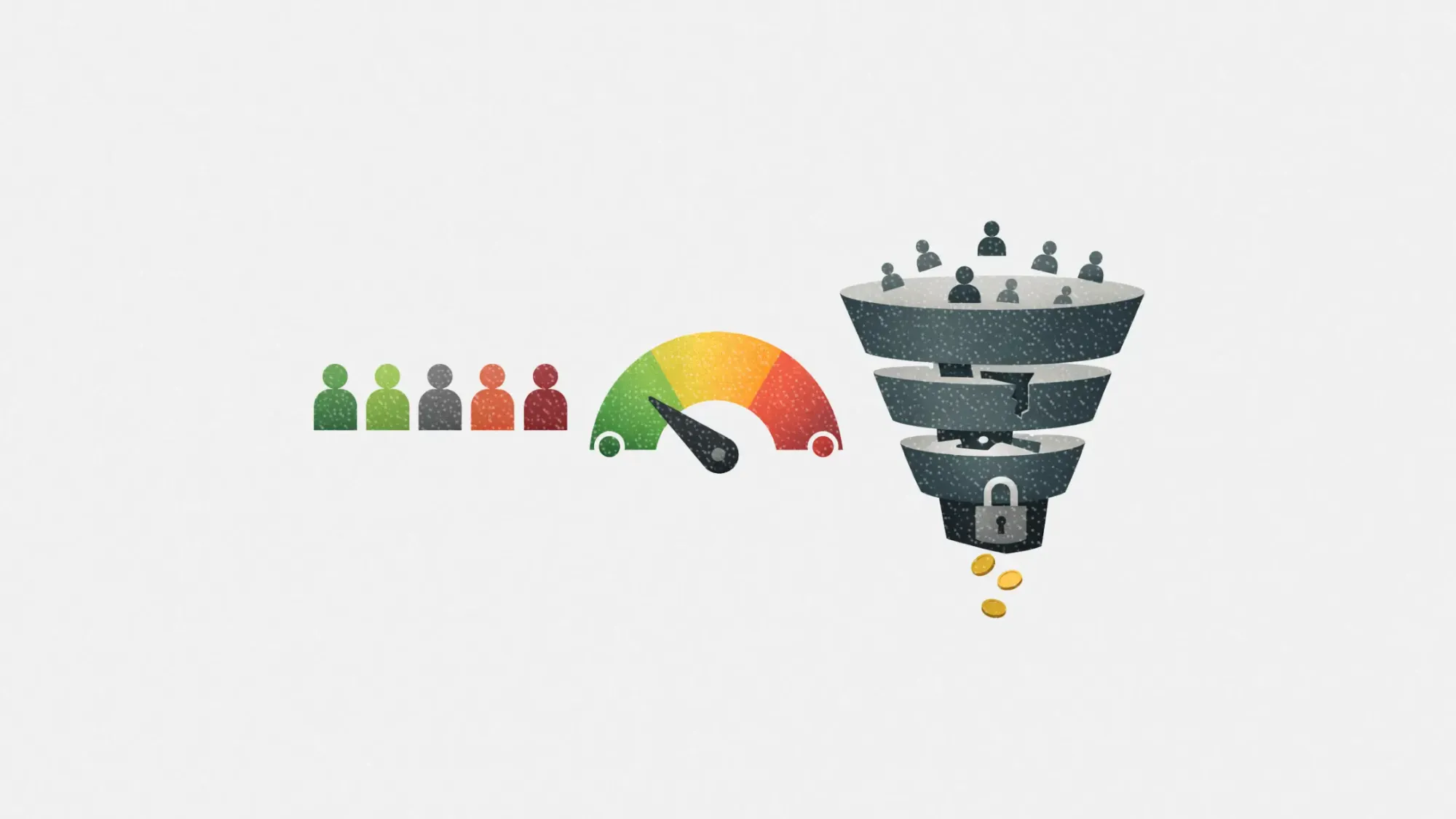
Marketers are rapidly adopting AI across content, personalization, and campaign execution. But while adoption is accelerating, performance remains uneven.
Klaviyo’s AI Consumer Personas Playbook, based on a survey of 8,000+ global consumers, points to a clearer explanation: people are not reacting to AI in the same way. Instead, they fall into distinct groups defined not just by usage, but by trust.
This creates a new reality for marketers. AI is not a universal performance multiplier. Its effectiveness depends on whether the customer believes in it.
Short on time?
Here’s a table of contents for quick access:
- Why AI adoption is a misleading success metric
- How trust levels create measurable differences in customer behavior
- Where AI-driven marketing breaks down without trust
- What marketers should measure and optimize instead
 Patrecia Meliana
Why AI adoption is a misleading success metric
At first glance, AI adoption looks like a clear success story. Consumers are increasingly using tools like ChatGPT for research, product discovery, and decision-making.
But the report shows that usage and trust do not move together.
Some consumers rely heavily on AI outputs. Others use the same tools just as frequently but treat them with caution, verifying results before acting. For example, AI Evaluators engage regularly, yet 54% are less likely than Enthusiasts to rely on AI for planning or decision-making.
That gap matters. Because from a marketing perspective, usage without trust introduces friction. It means:
- More steps before conversion
- More validation behavior
- More opportunities for drop-off
So while adoption metrics may show growth, they do not explain performance. They only describe exposure. Trust determines outcome.
 Patrecia Meliana
How trust levels create measurable differences in customer behavior
The most compelling part of the report is how clearly trust translates into behavior.
Among AI Enthusiasts, the impact is immediate. 81% say AI improves product recommendations, 74% say it improves customer support, and 72% say it improves marketing relevance. These users move quickly. They accept AI outputs and act on them.
They are also 150% more likely to find AI-generated content engaging and 27% more likely to trust longer-form responses, which makes them highly responsive to predictive, AI-driven experiences.
But move one step down the trust curve, and the behavior changes. AI Evaluators still engage, but they hesitate. With 74% expressing neutral sentiment toward AI-generated content and 42% unsure whether they can distinguish AI from human output, they introduce a layer of verification into the journey. They don’t reject AI. They just don’t fully commit to it.
That hesitation compounds further with AI Skeptics. Only 25% have purchased products recommended by AI, and just 19% actually trust those recommendations. Nearly half (49%) report feeling uncertain in AI-driven moments, and positive experience rates drop significantly compared to other groups.
At the far end of the spectrum, AI Holdouts largely opt out entirely. 96% don’t use AI when shopping, and only 1-4% believe it improves their experience. More critically, 58% say they trust brands less when AI-generated content is used.
This is not a gradual shift. It is a structural divide. The same AI-driven campaign can accelerate decisions, slow them down, or damage trust entirely, depending on where the customer sits on this spectrum.
 Patrecia Meliana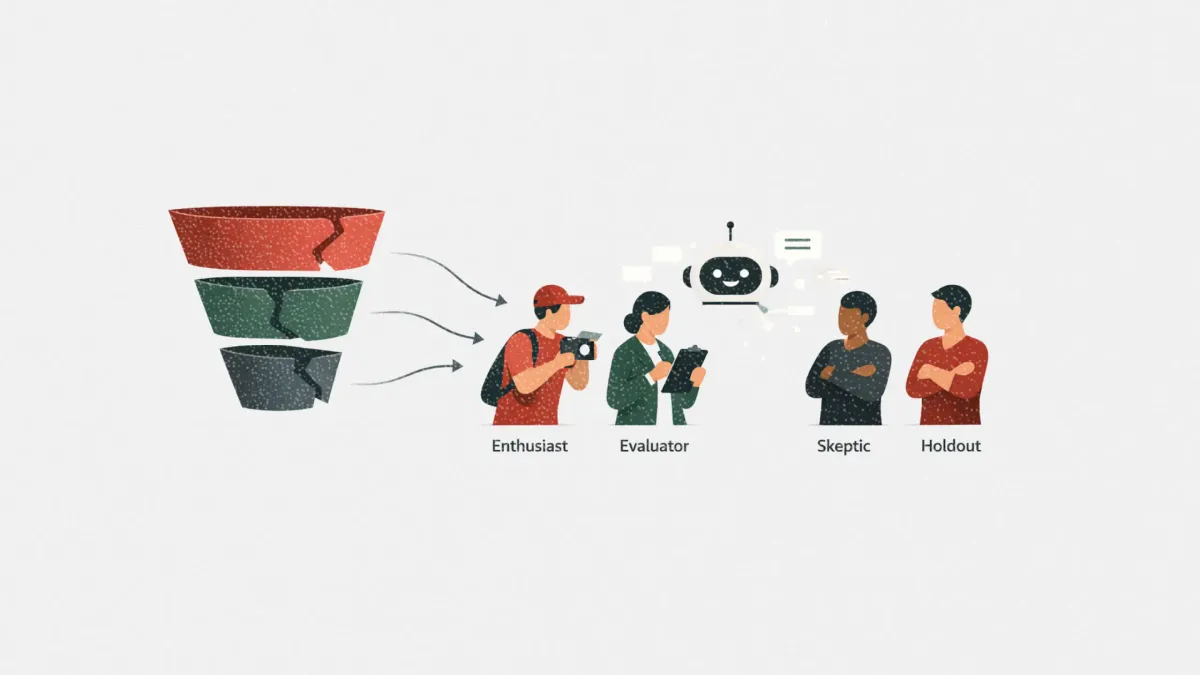
Where AI-driven marketing breaks down without trust
This is where most AI strategies start to fail.
Marketers often assume that better models, more data, or more personalization will improve results. But the report suggests the opposite. Performance improves when AI aligns with trust, not when it simply increases in sophistication.
Even among high-trust users, execution matters. The report notes that 60% of AI Enthusiasts feel brands are overly reliant on AI, and 33% encounter low-quality or “slop” content multiple times per week. That means trust is not fixed. It can erode.
For lower-trust segments, the margin for error is even smaller. Skeptics react negatively to content that feels automated. Holdouts disengage when AI becomes too visible. In these cases, AI does not just underperform. It actively works against the brand.
This reframes the problem. AI is not inherently effective or ineffective. It is conditional. It works when trust is present. It fails when it is not.
What marketers should measure and optimize instead
If trust is the gating factor, then marketing measurement needs to evolve. Instead of focusing purely on conversion rates or engagement, marketers need to understand why those outcomes differ across audiences.
Here’s how to operationalize that shift:
1. Segment performance by trust profile, not just channel
Analyze results across AI personas. An uplift among Enthusiasts can easily mask declining performance among Skeptics or Holdouts.
2. Measure friction, not just outcomes
Delayed conversions, repeated searches, and multi-touch journeys are not just inefficiencies. They are signals of hesitation and low trust.
3. Track negative signals as core performance indicators
Unsubscribes, disengagement, and reduced interaction with AI-driven features should be treated as early warnings of trust erosion, not secondary metrics.
4. Test and calibrate AI visibility
High-trust segments respond well to predictive and proactive experiences. Lower-trust audiences require more subtlety, transparency, and control.
 Atikah Amalia
5. Optimize for confidence, not volume
More AI does not mean better performance. The goal is not to scale AI indiscriminately, but to align its use with each audience’s trust threshold.
 Atikah Amalia
AI is becoming embedded across every stage of the customer journey. But its impact is not uniform. Klaviyo’s data makes that clear. From 81% positive sentiment among AI Enthusiasts to widespread distrust among Holdouts, trust directly shapes how customers respond to AI-driven marketing.
For marketers, this changes the objective. Success is no longer about how widely AI is deployed. It is about how well it aligns with customer trust.