Zendesk has completed its acquisition of Forethought, aiming to deepen “self-improving” AI agent capabilities inside its customer service platform.
The move targets a fast-shifting CX software landscape where vendors are racing to automate more of the end-to-end resolution workflow, across chat, email, and voice, while keeping governance and handoffs to humans intact.
Short on time?
Here’s a quick look at what’s inside:
- What Zendesk is adding with Forethought
- Why “self-improving” agents are becoming the CX battleground
- How this changes Zendesk’s competitive posture
- What support and CX leaders should pressure-test next
What Zendesk is adding with Forethought
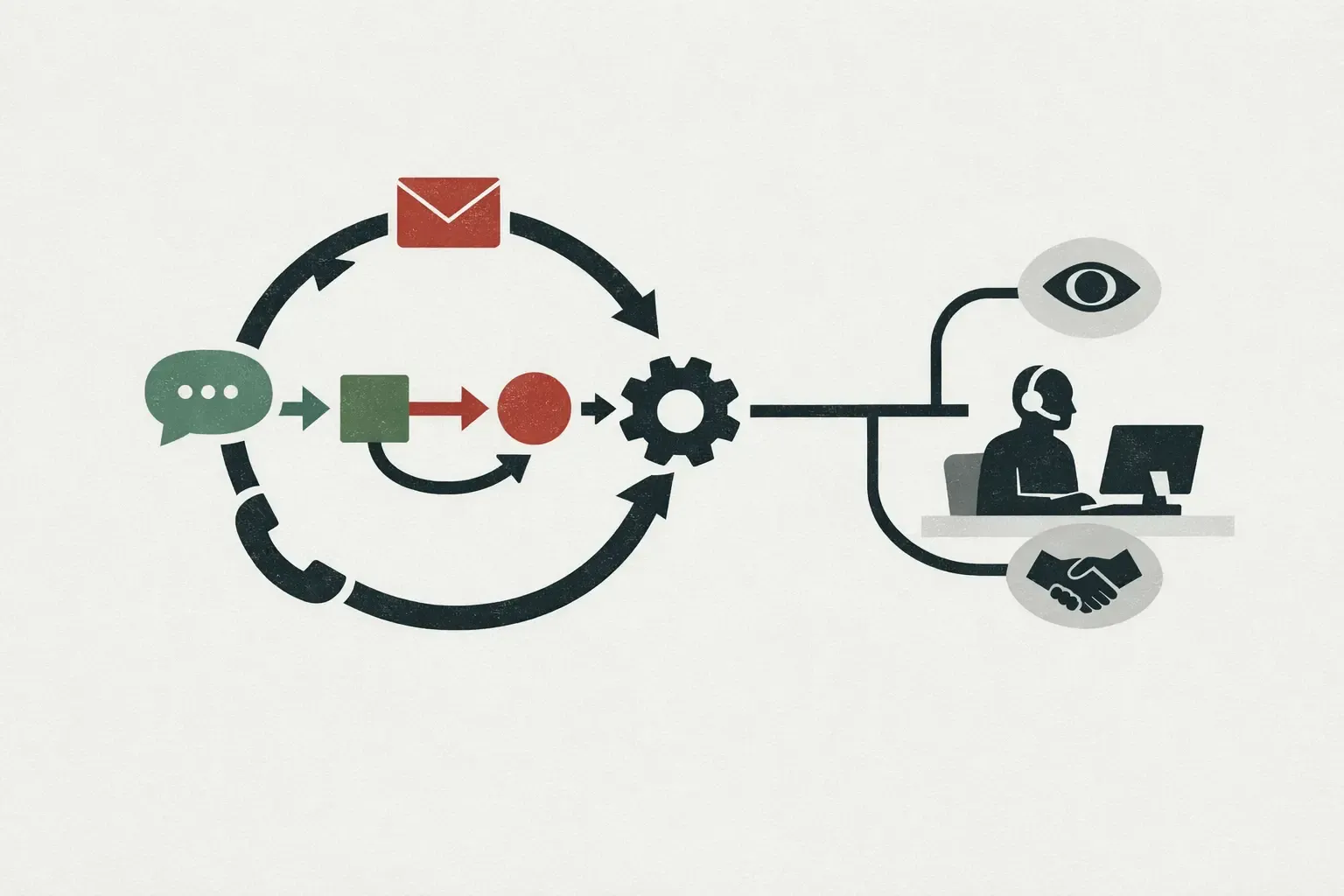
Zendesk positions the acquisition as a way to extend its “Resolution Learning Loop” into more autonomous, self-learning agents that can generate and execute workflows across channels, and improve based on outcomes from real conversations.
Key capabilities highlighted include:
- Specialized agents tailored to different service environments (B2B, B2C, and employee service).
- Autonomous workflow execution for multi-step procedures, not just single-turn Q&A.
- Native voice automation aimed at handling higher-volume, higher-complexity interactions.
- Expanded reach into enterprise systems, including scenarios where APIs are limited.
Zendesk also cites an operational performance signal: its AI agents “routinely resolve over 80% of interactions end-to-end across a broad customer base.” That sets an expectation bar for automation rates, but it also raises the question buyers should ask: what counts as “resolved,” and under what guardrails (handoff logic, approvals, QA, and auditability).
 Patrecia Meliana
Why “self-improving” agents are becoming the CX battleground
Customer service has become one of the clearest early proving grounds for agentic AI because the work is repetitive, high-volume, and measurable. The next competitive step is not only answering questions, but discovering what should be automated, generating procedures, and improving those procedures without frequent manual retraining.
Zendesk’s framing is that this shift is structural: it expects autonomous AI to handle more service interactions than humans this year. If that holds for a meaningful share of enterprises, CX leaders will increasingly buy on three criteria:
- Time to deploy and expand automation coverage across queues and channels.
- The system’s ability to learn safely from new edge cases.
- Control and observability so teams can understand why the agent did what it did.
This is also where “Jevons Paradox” dynamics can show up in service operations: if the marginal cost of handling an interaction falls, organizations may expand coverage (more hours, more languages, more channels, more proactive outreach) rather than simply shrinking headcount.
How this changes Zendesk’s competitive posture
Zendesk competes in a crowded customer service software market that includes Salesforce Service Cloud, Intercom, and Freshworks, and it also faces pressure from AI-native entrants like Sierra that are built around autonomous resolution from the start.
The strategic bet here is that acquiring Forethought accelerates Zendesk’s roadmap (Zendesk says by more than a year) and helps it compete on “workflow generation” and multi-agent orchestration, not only agent assist. In practice, that matters because many CX teams are past the experimentation phase and now want systems that can:
- Identify automation candidates from ticket history.
- Generate workflows and knowledge updates quickly.
- Maintain quality through QA and oversight loops.
A key integration challenge remains: established platforms often have to support a spectrum of maturity, from traditional ticketing workflows to more autonomous agentic setups. Vendors that manage this transition well can reduce adoption friction, but it typically requires strong migration tooling, clear admin controls, and reliable measurement of deflection versus true resolution.
What support and CX leaders should pressure-test next
For operators evaluating Zendesk’s direction post-acquisition, a useful procurement and rollout checklist includes:
- Definitions and measurement: How “resolution” is defined, and how to measure quality, repeat contact rates, and escalations.
- Guardrails: What the agent can and cannot do, especially when executing multi-step procedures (refunds, account changes, data access).
- Voice readiness: Whether voice automation is robust enough for high-stakes queues, and how it handles authentication and compliance.
- Enterprise system reach: How the platform interacts with internal tools when APIs are incomplete, and what audit trails look like.
- Change management: How workflows are reviewed, tested, and rolled out if the system is generating new procedures over time.
The acquisition signals that CX automation is shifting from “assist and deflect” toward “execute and improve,” and buyers will likely reward vendors that can prove both autonomy and governance at scale.