
B2B software discovery is undergoing a structural reset. A new Software Finder study shows that buyers are no longer starting their journey on aggregator sites.
Instead, they begin with Google or AI tools, bypassing traditional category pages entirely.
This article explores how that shift is impacting traffic, why AI visibility does not translate into growth, and what marketers should do as buyer behavior moves toward intent-driven discovery.
Short on time?
Here’s a table of contents for quick access:
- Where B2B buyers now start their software search
- The AI citation paradox and why visibility does not equal traffic
- Why legacy aggregator models are collapsing
- What intent-first content gets right
- What marketers should know about the shift
 Patrecia Meliana
Where B2B buyers now start their software search
The entry point for B2B software research has changed dramatically.
According to the Software Finder study , 68% of buyers now begin with Google or AI tools. Aggregator sites, once dominant, account for just 5.4% of starting points.
The breakdown is telling:
- Google search leads at 48%
- AI tools like ChatGPT and Perplexity follow at 19.8%
- Peer recommendations come next at 14.7%
- Aggregator sites fall far behind
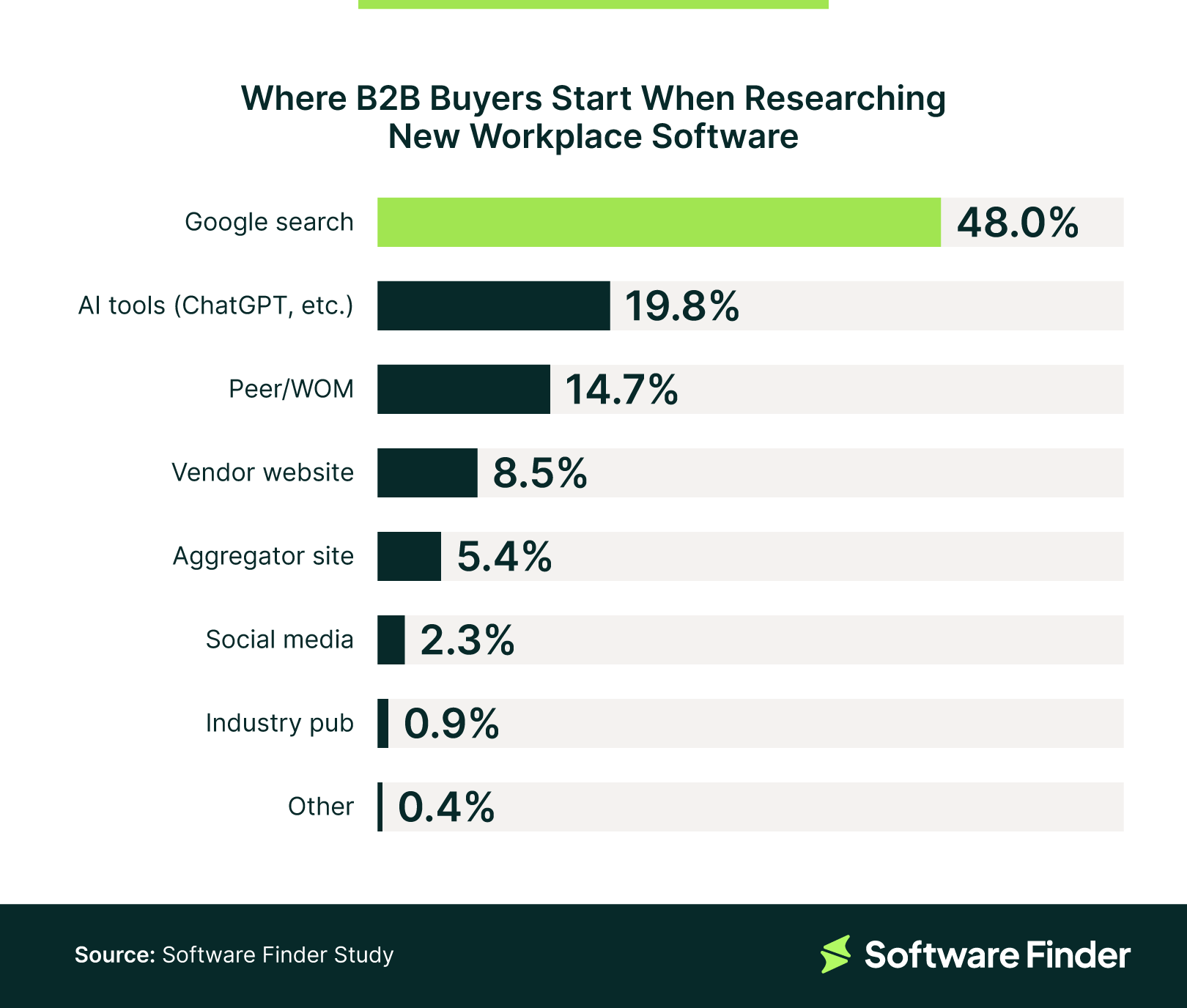
This shift is not just about channels. It reflects a deeper behavioral change. Buyers no longer browse categories. They ask specific questions and expect immediate answers.
The generational divide reinforces this trend.
- 82.5% of buyers under 40 use AI for evaluation
- 65% of buyers over 40 do the same
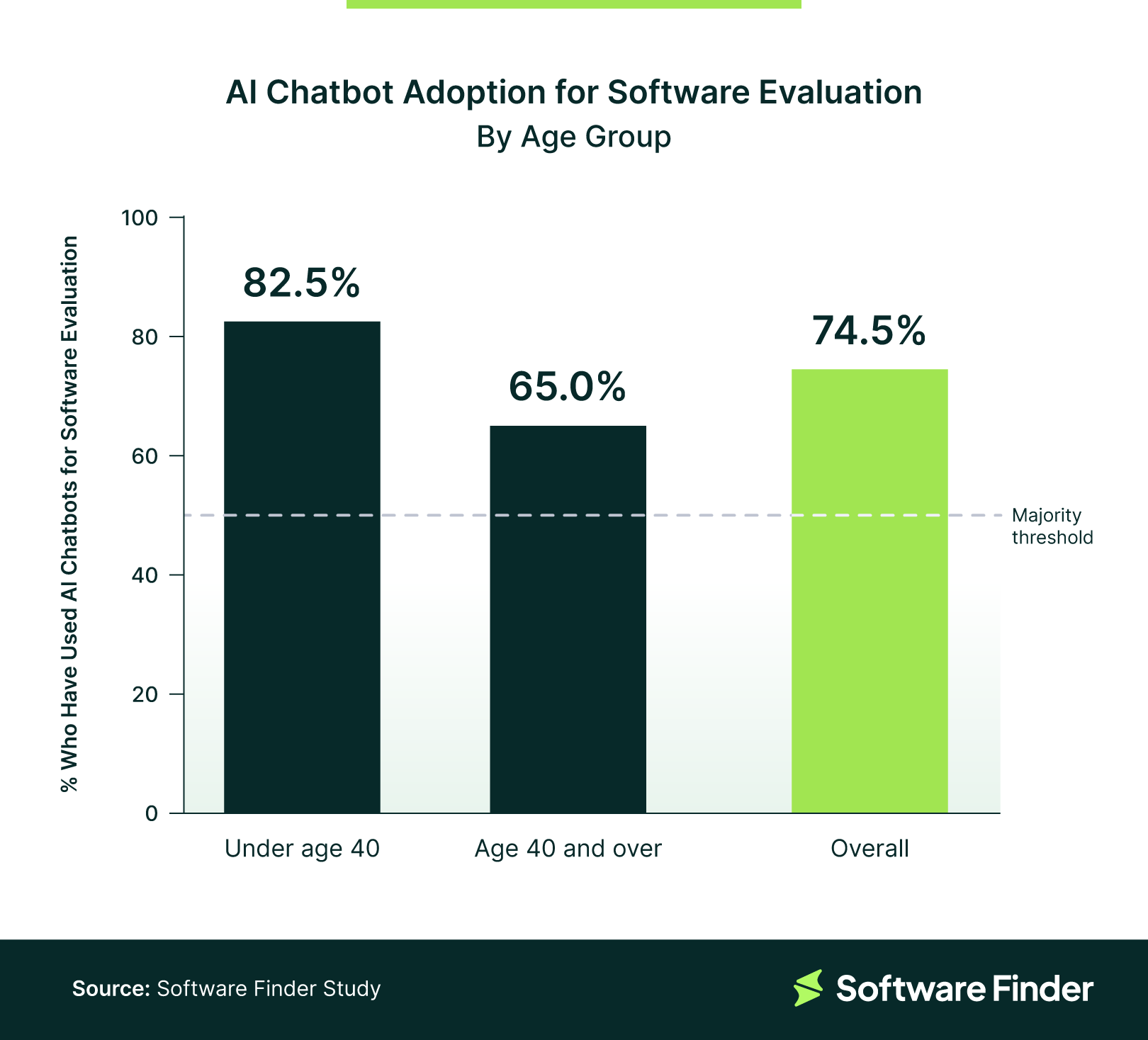
AI is not experimental anymore. It is becoming the default interface for discovery.
Patrecia Meliana
The AI citation paradox and why visibility does not equal traffic
One of the most counterintuitive findings in the report is what it calls the “AI citation paradox.”
Platforms most frequently cited by AI tools are seeing the steepest traffic declines. The data shows:
- Top AI-cited aggregator platforms lost an average of 67% of organic traffic over 48 months
- Meanwhile, less-cited or intent-focused platforms saw growth or stability
Why this happens is straightforward. AI tools act as an extraction layer. They pull structured insights from aggregator content and deliver answers directly in the interface. Users get what they need without clicking through.
The traditional flow looked like this:
Vendor data → aggregator → search → website visit
Now it looks like this:
Vendor data → aggregator → AI → answer
The aggregator still creates value, but it no longer captures attention.
Patrecia Meliana
Why legacy aggregator models are collapsing
The decline of aggregator platforms is not a temporary SEO fluctuation. It is structural. Legacy aggregators lost approximately 2.9 million monthly visits over four years, representing a 61% decline. In contrast, newer intent-first platforms grew by 37%.
Several forces are driving this:
1. Algorithm pressure
Google’s Helpful Content Updates and spam policies have consistently penalized low-differentiation, category-based content.
2. AI overview expansion
AI-generated summaries reduce click-through rates, especially for list-based queries like “best CRM software.”
3. Keyword erosion
Major platforms have lost tens of thousands of top-ranking keywords, signaling deeper visibility issues.
4. Content commoditization
Category pages are easy for AI to replicate. They offer little that requires a site visit.
The result is what the study describes as a “staircase collapse,” where each algorithm update accelerates an already declining model.
Patrecia Meliana
What intent-first content gets right
In contrast, intent-first challengers are growing because they align with how buyers now search. Instead of broad categories, they focus on specific, high-intent queries such as:
- What does a product do
- How much does it cost
- How to implement it
- How it compares to alternatives
This type of content performs better because it is harder for AI to fully synthesize without verified data.
For example:
- Pricing pages require up-to-date, accurate information
- Implementation guides depend on real-world context
- Product-specific tutorials often need depth and nuance
These are areas where users still need to visit the source. The takeaway is simple. The closer your content is to a real buying decision, the harder it is for AI to replace it.
Patrecia Meliana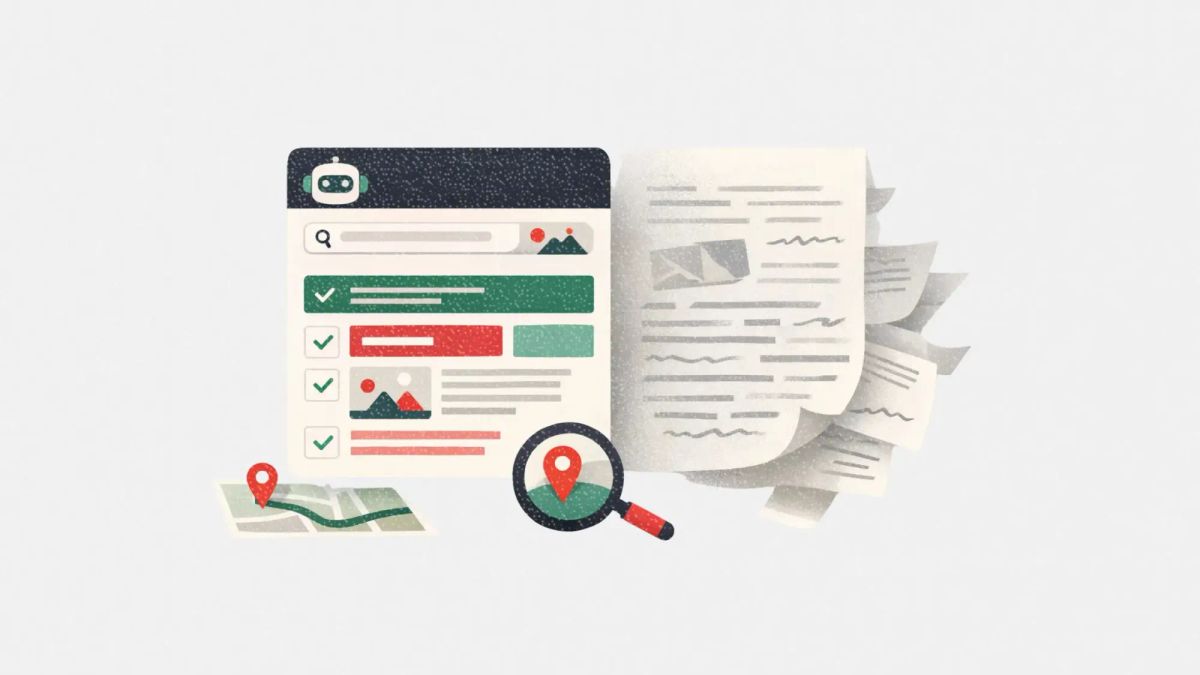
What marketers should know about the shift
This shift has immediate implications for B2B marketers and growth teams.
1. Category SEO is no longer a safe bet
Ranking for high-volume keywords is less valuable when AI answers the query directly.
2. Intent depth beats traffic volume
Content that solves specific problems will outperform broad discovery pages.
3. AI visibility is not a growth metric
Being cited by AI may indicate relevance, but it does not guarantee traffic or conversions.
4. First-party data becomes a moat
Verified pricing, customer insights, and proprietary research are harder for AI to replicate.
5. Brand matters more than ever
As intermediaries disappear, direct brand recognition becomes critical.
Patrecia Meliana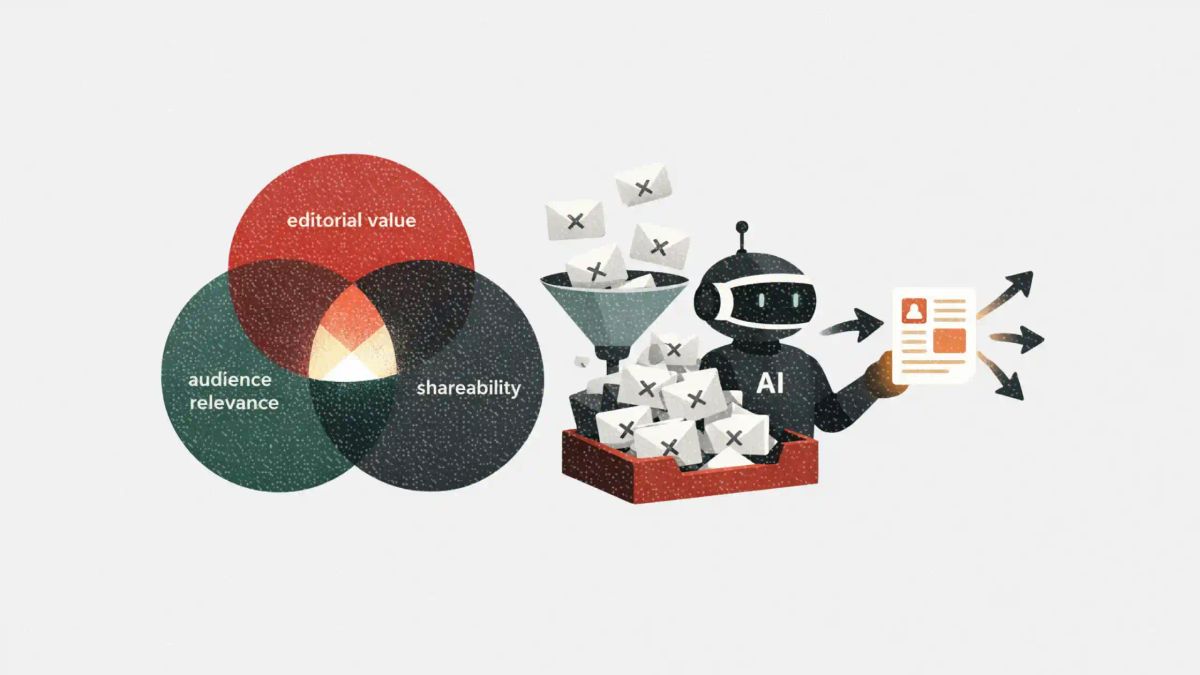
The Software Finder study makes one thing clear. B2B software discovery is no longer aggregator-led.
AI tools and search engines are reshaping how buyers find, evaluate, and compare solutions. Platforms built on category pages are losing relevance, while those aligned with buyer intent are gaining ground.
For marketers, the message is not to fight AI but to adapt to it. Build content that answers real questions, delivers unique value, and cannot be easily summarized away. Because in this new landscape, visibility is easy. Relevance is what drives results.