Treasure AI has rebranded from Treasure Data and introduced an “agentic experience platform” positioning its CDP foundation as the system of record for AI-driven segmentation, journey orchestration, and activation. A key product piece is Treasure AI Studio, a conversational workspace that translates intent into actions like building audiences and pushing campaigns.
For enterprise marketers, the announcement fits a broader shift: CDPs are no longer only about unifying data, but about making that data executable through AI interfaces, with governance and review steps built into the workflow.
Short on time?
Here’s a quick look at what’s inside:
- What changed with Treasure AI Studio and the agentic platform pitch
- What “10x value in 10 minutes” translates to in real operations
- Competitive context in the enterprise CDP market
- How marketers should evaluate agentic CDP workflows
What changed with Treasure AI Studio and the agentic platform pitch
Treasure AI is extending Treasure Data’s CDP positioning into an interface and workflow layer where marketers and data teams can request outcomes in natural language, then review and approve generated segments, journeys, and activations.
Treasure AI Studio is described as a conversational workspace available across web, mobile, desktop, and command line. It includes more than 50 pre-built “skills” that can operate on customer data, spanning areas like segmentation, journeys, pipelines, governance, and analysis. The company also says it is shifting to a usage model where customers pay to run conversations via AI Credits, and that each AI Credit unlocks 600 conversations, described as a 6x increase.
The product posture matters: it frames AI not as an add-on assistant but as a primary interface for operating the CDP and connected activation tools, while keeping a human review step before actions go live.
 ContentGrip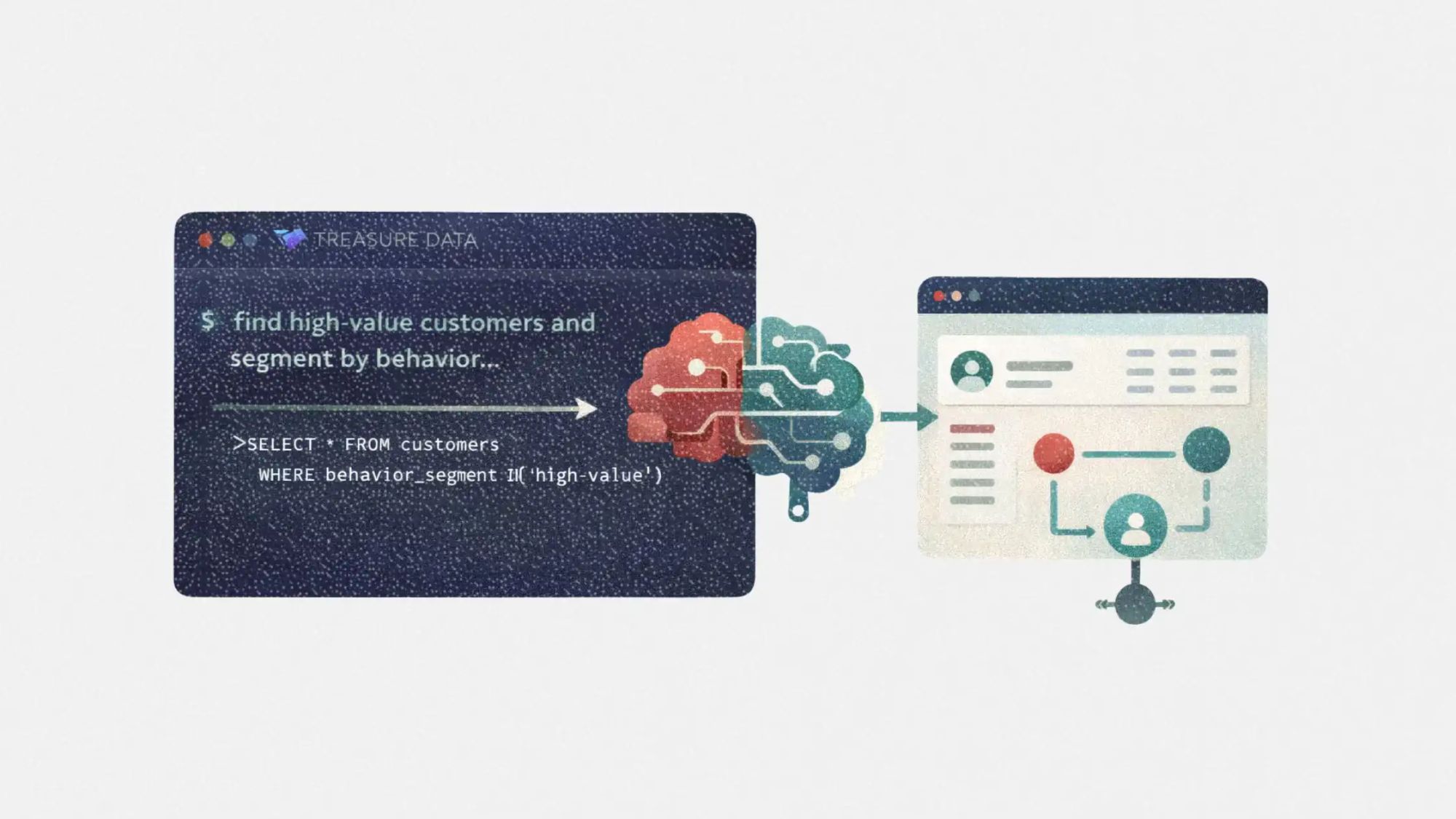
What “10x value in 10 minutes” translates to in real operations
The stated “10x” claim is marketing language, but it points to a measurable operational goal: compressing the time from question to deployable action. In practice, that can mean:
- turning a retention brief into segments and a journey definition quickly
- identifying drop-off points in onboarding and proposing testable changes
- generating audiences and pushing activations without handoffs between analysts and operators
The constraint in most enterprises is not idea generation, but governed execution: approvals, data access, compliance checks, and repeatability. Treasure AI’s emphasis on visible, reviewable output plus “hallucination prevention” and compliance suggests it is trying to address the main barrier to AI-in-the-loop marketing operations: trust and auditability.
Credibility-wise, the company cites an enterprise customer base (over 400 customers and over 15,000 users in its materials) and very large-scale data handling (more than 170 trillion records managed and 2 million events per second processed, per company materials). Those signals support the idea that its agentic workflow layer is being built on top of a mature data foundation, not a lightweight campaign tool.
Competitive context in the enterprise CDP market
Treasure AI competes in the enterprise CDP category where differentiation increasingly depends on orchestration and activation, not just data unification. Competitors cited in this landscape include Segment, Tealium, ActionIQ, and Hightouch.
The category is also pressured from two sides:
- Suites and clouds that bundle data, identity, and activation into broader ecosystems
- Composable stacks where data lives in the warehouse and activation is handled by specialized tools
Treasure AI’s strategy appears to be: keep the CDP as the governed system of record, then make execution accessible through an AI interface that can drive segments and journeys faster. The risk is that many platforms are converging on similar “AI-native” claims, so proof will come from workflow reliability, governance depth, and real adoption by marketing ops teams.
How marketers should evaluate agentic CDP workflows
Enterprise teams considering agentic CDP capabilities should pressure-test:
- Control points: where humans approve, what is automated, and what can be rolled back
- Explainability: whether generated segments and journey logic are inspectable and testable
- Data readiness: identity resolution quality, event taxonomy consistency, and permissioning
- Activation coverage: which channels can be pushed natively versus through integrations
- Cost model: usage-based AI interactions can scale unpredictably; define guardrails and monitor utilization
If the conversational layer reliably produces deployable segments and journeys while maintaining governance, it could reduce cycle times for personalization and retention programs. If outputs require heavy cleanup, the interface becomes another layer that marketing ops has to manage.