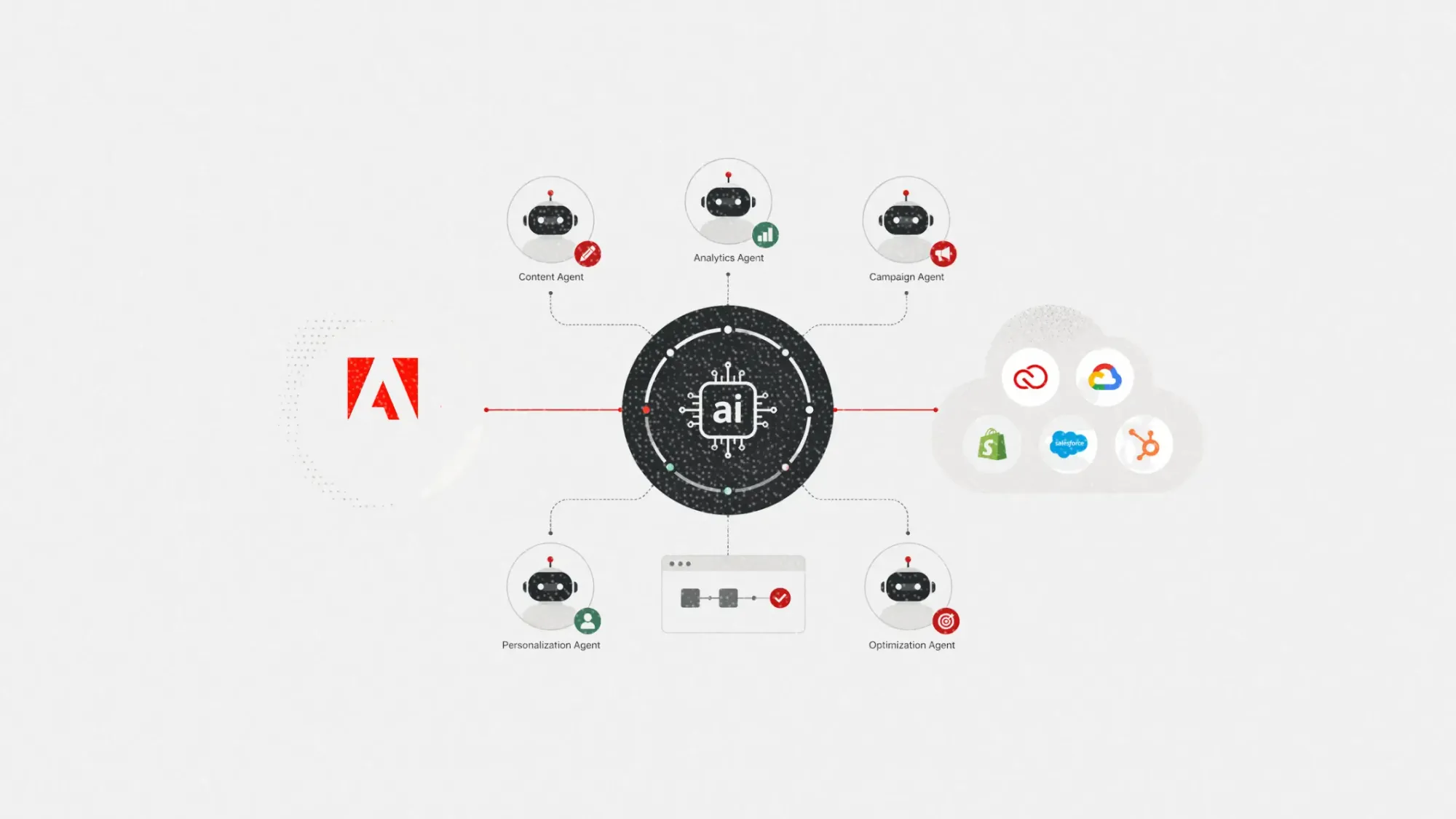
Adobe is making a decisive push into agentic AI, introducing a new platform designed to turn fragmented AI experiments into coordinated, enterprise-wide workflows. Announced at Adobe Summit 2026, the move signals a shift from isolated automation toward fully orchestrated customer experience systems.
This article explores what Adobe CX Enterprise actually does, how it fits into the broader AI ecosystem, and what it means for marketers navigating increasingly complex, multi-agent workflows.
Short on time?
Here’s a table of contents for quick access:
- What is Adobe CX Enterprise and what was announced
- How Adobe is building an agentic ecosystem across platforms
- Why this matters for customer experience orchestration
- What marketers should know about adopting agentic AI workflows
 Patrecia Meliana
What is Adobe CX Enterprise and what was announced
At Adobe Summit in Las Vegas, Adobe introduced CX Enterprise, an end-to-end agentic AI system designed to manage the full customer lifecycle, from acquisition to retention.
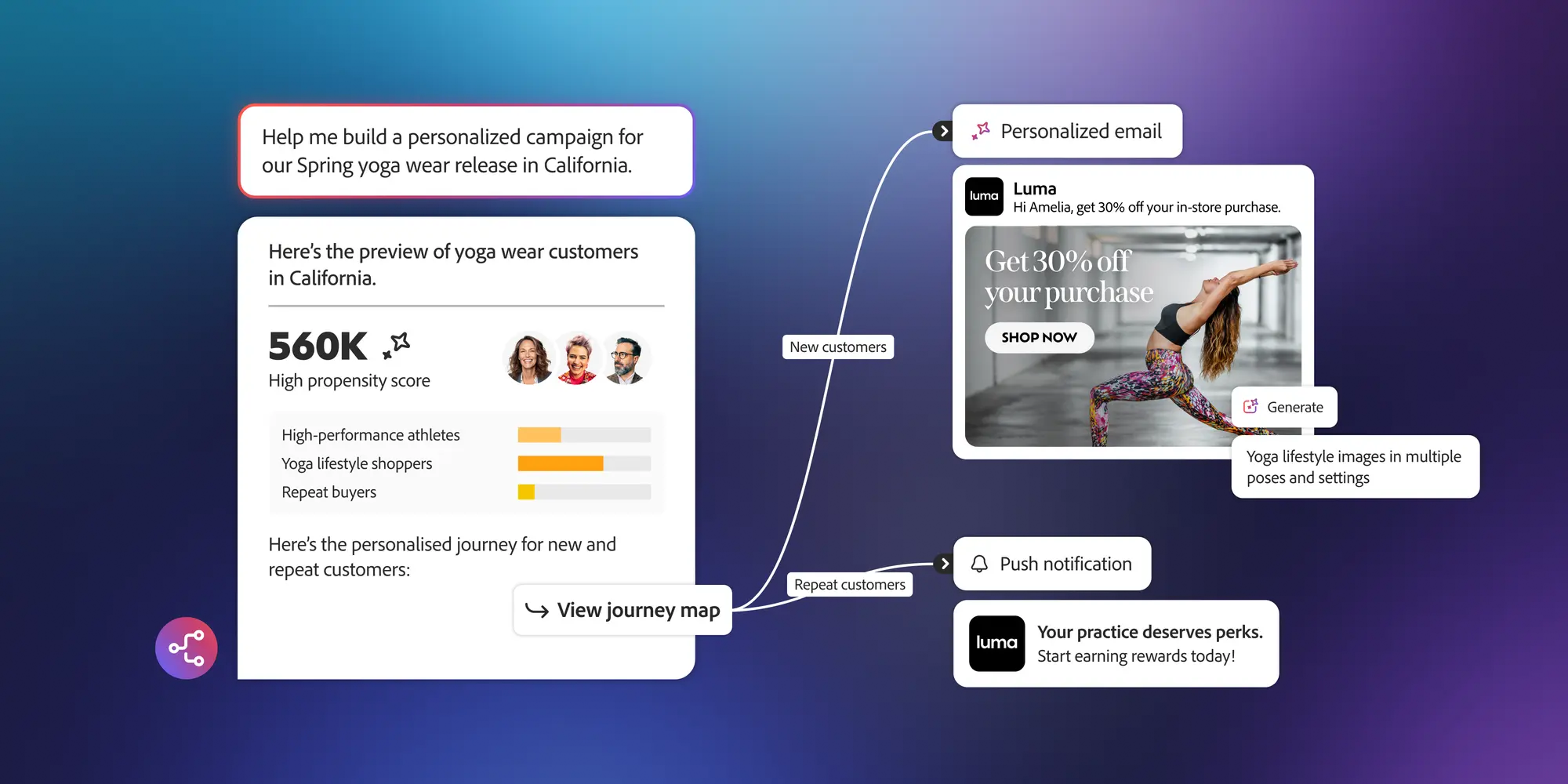
At its core, the platform combines AI agents, reusable agent skills, and Model Context Protocol endpoints within a governed intelligence layer. The goal is to enable workflows that are not just automated, but auditable and context-aware across customer data, content, and journeys.
Key components include:
- Adobe Brand Intelligence, a reasoning engine that learns and enforces brand consistency
- Adobe Engagement Intelligence, a decisioning system optimized for customer lifetime value
- Agent Orchestrator, which coordinates agents across Adobe and third-party environments
- CX Enterprise Coworker, a goal-based AI system that translates business objectives into multi-step execution plans
Adobe is also embedding its agents into external platforms like ChatGPT Enterprise, Microsoft 365 Copilot, and Anthropic Claude, extending reach beyond its native ecosystem.
Patrecia Meliana
How Adobe is building an agentic ecosystem across platforms
Adobe is not positioning CX Enterprise as a closed system. Instead, it is leaning heavily into interoperability, partnering with AWS, Google Cloud, Microsoft, OpenAI, and others to enable cross-platform orchestration.
This matters because most enterprise marketing stacks are already fragmented. Rather than forcing consolidation, Adobe is trying to become the orchestration layer across existing tools.
A few structural decisions stand out:
- Composable architecture: Businesses can integrate agent workflows into their existing stack rather than replace it
- Agent skills catalog: Reusable instructions allow teams to standardize workflows without rebuilding logic each time
- Developer access: APIs and MCP servers make it easier to embed Adobe’s capabilities into third-party environments
The inclusion of agencies like Omnicom, Publicis, and WPP as early adopters suggests Adobe is targeting not just brands, but the service layer that operationalizes marketing at scale.
Why this matters for customer experience orchestration
Customer experience orchestration is shifting from rule-based automation to dynamic, AI-driven decisioning. Adobe’s announcement reflects that transition.
Traditionally, CX platforms relied on predefined journeys and segmentation logic. With agentic AI, those journeys can now adapt in real time based on context, goals, and performance signals.
Two implications stand out:
- From workflows to systems: Instead of building campaigns step by step, teams define goals and let agents coordinate execution
- From personalization to decisioning: Engagement Intelligence focuses on next-best-action decisions tied to lifetime value, not just clicks
Adobe’s claim of powering over one trillion experiences annually through Adobe Experience Platform highlights the scale at which these changes could play out.
In practical terms, this is about moving from campaign management to outcome management.
What marketers should know about adopting agentic AI workflows
For marketers, the promise of agentic AI is appealing, but adoption will require more than plugging in new tools.
Here are the key considerations:
1. Define goals, not just campaigns
Agentic systems like CX Enterprise operate on objectives. Teams need to shift from task-based briefs to measurable business goals such as revenue lift or retention improvements.
2. Governance becomes critical
Adobe is emphasizing auditability and control for a reason. As agents take on more execution, brand safety, compliance, and data governance become non-negotiable.
3. Interoperability is now a strategy decision
With agents operating across tools like ChatGPT Enterprise or Microsoft Copilot, marketers need to think about how workflows span platforms, not just which tools they use.
4. Skills and workflows will become assets
Reusable agent skills could become as valuable as creative assets or audience segments. Teams that codify and refine these workflows will have a competitive edge.
5. Agencies will play a bigger role
With major agency networks standardizing on CX Enterprise, expect more outsourced expertise in designing and managing agentic workflows.
Patrecia Meliana
Adobe CX Enterprise is less about launching another AI feature and more about redefining how marketing work gets done. By positioning itself as the orchestration layer for agentic AI, Adobe is betting that the future of customer experience lies in coordinated systems, not standalone tools.
For marketers, the takeaway is clear: the shift to agentic workflows is already underway. The real challenge is not whether to adopt it, but how quickly teams can adapt their processes, governance, and strategy to keep up.