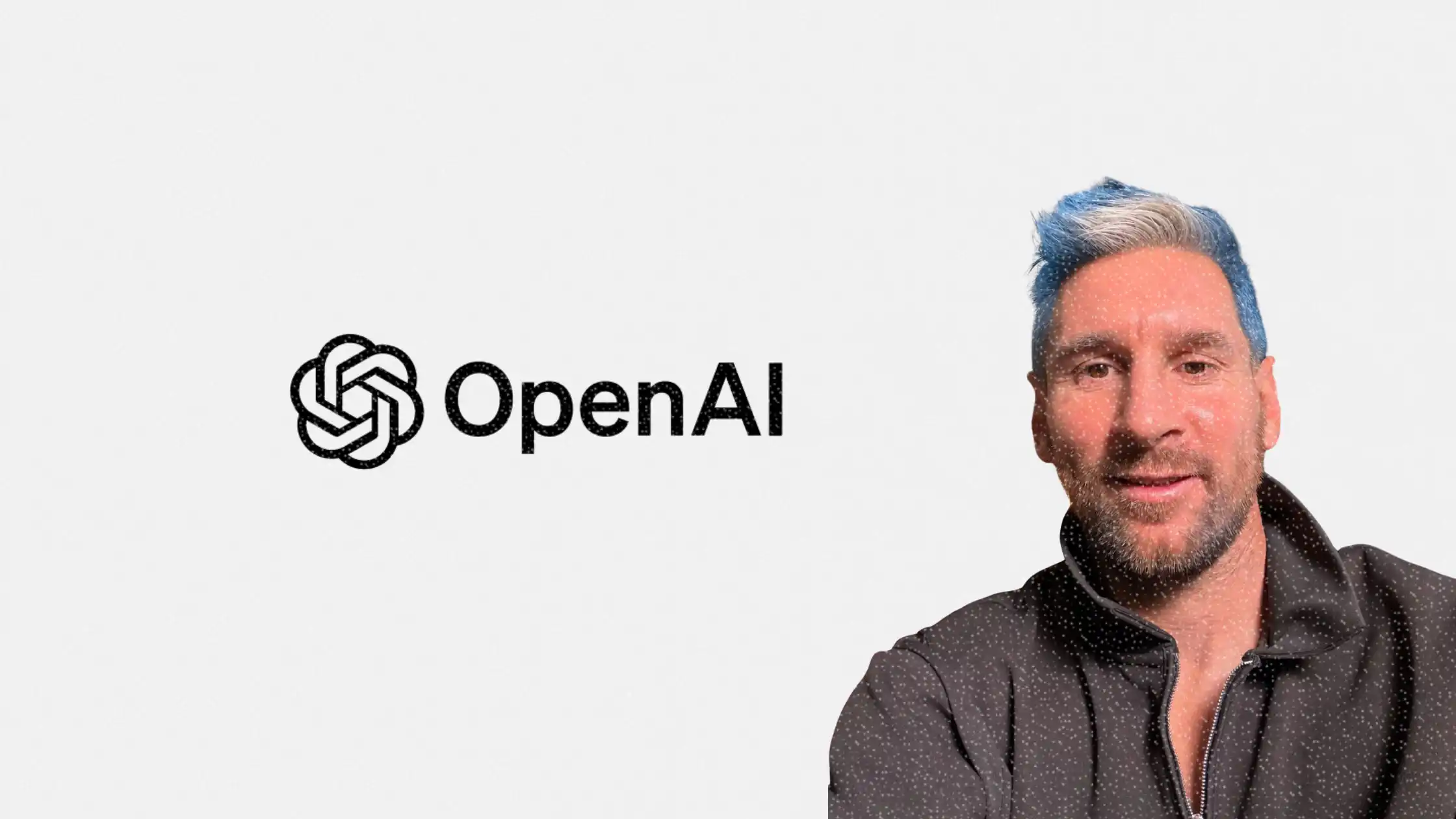
Lionel Messi has spent his career creating moments that seemed impossible. Now, OpenAI is betting that the football icon can help fans unlock a different kind of creativity through AI.
The company has announced a global collaboration with Messi built around ChatGPT Images, starting with a simple but highly relatable use case: transforming a match-day look using Argentina’s national colours.
While the campaign may appear playful on the surface, it also signals how OpenAI sees AI becoming part of mainstream fan culture, especially as the football world heads toward the FIFA World Cup 2026 cycle.
Table of contents
Jump to each section:
- What happened in OpenAI’s new partnership with Messi?
- Why OpenAI is bringing AI into football culture
- What marketers should know about AI-powered fan engagement
- What comes next for AI, sports, and brand partnerships?
What happened in OpenAI’s new partnership with Messi?
OpenAI has launched a global collaboration with Lionel Messi, marking one of the company’s most visible consumer marketing partnerships to date.
The campaign debuted with a video shared on Messi’s Instagram showing him using ChatGPT Images to generate a new hairstyle inspired by Argentina’s national team colours. The interaction was intentionally simple: a text prompt asking ChatGPT to create a natural-looking hairstyle using Argentina’s blue-and-white colour palette.
According to Messi, the idea reflects how football supporters may use AI throughout the upcoming season.
“I’ve always loved seeing how people experience football differently in each country.”
OpenAI says the same prompt used by Messi will be available within ChatGPT Images as a preset style, allowing fans to create their own versions using the colours of their favourite national teams or clubs.
The collaboration will continue across OpenAI and Messi’s social channels, exploring additional ways ChatGPT can support creativity, information discovery, and football-related experiences. The details were provided in the announcement shared by Marketing-Interactive.
Why OpenAI is bringing AI into football culture
The timing is significant. Football remains one of the largest global cultural platforms, and the 2026 World Cup cycle is expected to be the first major international football event where generative AI tools are widely available to everyday consumers.
Rather than positioning AI as a productivity tool, OpenAI is framing ChatGPT as a creative companion for fans. The focus is not on analytics dashboards or advanced technical workflows. Instead, it is on helping supporters create images, remix ideas, and share personalised expressions of fandom.
That shift reflects a broader trend across consumer AI marketing. Technology companies increasingly recognise that mainstream adoption often happens through entertainment, identity, and self-expression before it happens through business use cases.
The announcement also arrives as other technology brands deepen their football investments. Lenovo recently expanded its FIFA-related initiatives through a partnership with David Beckham, focusing on AI-powered sports experiences and operational technologies. Together, these moves suggest football is becoming a key proving ground for consumer-facing AI experiences.
What marketers should know about AI-powered fan engagement
For marketers, this partnership is less about celebrity endorsement and more about a new engagement model.
1. AI is becoming a participation tool
Traditional sports sponsorships focused on exposure. Generative AI allows brands to turn audiences into creators.
Instead of simply viewing campaign content, fans can generate their own versions, personalise assets, and share them across platforms.
2. Simplicity drives adoption
Messi’s first prompt was intentionally uncomplicated.
This reinforces an important lesson for marketers: consumer AI experiences often perform best when the outcome is immediately understandable and achievable in seconds.
3. Communities create distribution
Every AI-generated fan image becomes user-generated content.
That creates a scalable content ecosystem where audiences effectively help distribute campaign messaging through their own creations.
4. Sports marketing is entering an AI-native era
Brands planning campaigns around major sporting events should start exploring:
- AI-generated fan experiences
- Interactive creative tools
- Personalised visual content
- Community-driven creation challenges
- AI-powered storytelling formats
The companies that learn how to blend participation and creativity may gain a significant advantage as fan expectations evolve.
What comes next for AI, sports, and brand partnerships?
The broader question is not whether AI will become part of sports culture because it already is.
The real question is how brands will use AI to deepen emotional connections with audiences without making the experience feel overly technological.
OpenAI’s approach with Messi offers one possible blueprint. Rather than focusing on the technology itself, the campaign focuses on an emotion that football fans already understand: pride, identity, and support for their team.
That strategy could influence future partnerships across sports, entertainment, and creator marketing. As AI tools become more accessible, consumers will increasingly expect opportunities to personalise, remix, and contribute to the experiences they care about most.
OpenAI’s collaboration with Lionel Messi is more than a celebrity partnership. It is a signal that generative AI is moving deeper into mainstream culture through fandom, creativity, and participation.
For marketers, the campaign highlights a growing opportunity: using AI not just to automate workflows, but to help audiences create something of their own. As global football enters what may become its first truly AI-shaped era, the brands that encourage participation rather than passive consumption are likely to stand out.