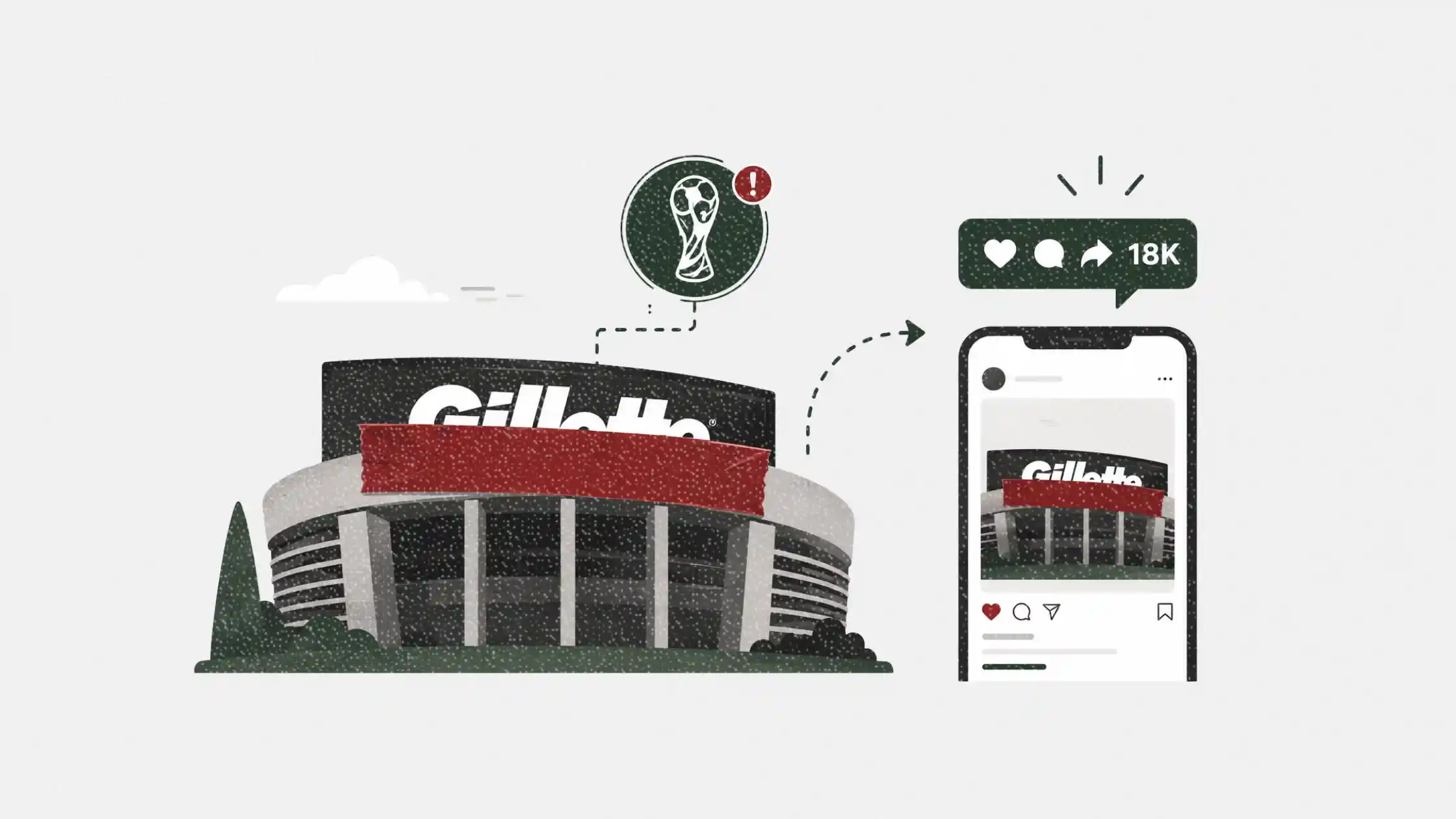
As FIFA continues enforcing strict sponsorship and venue branding rules during the 2026 World Cup, brands affected by those restrictions are finding creative ways to turn limitations into marketing opportunities. The latest example comes from Gillette, whose name has been temporarily removed from Gillette Stadium as the venue operates under the FIFA-approved name “Boston Stadium.”
Rather than quietly accepting the change, Gillette transformed the situation into social content. The brand posted an image showing its covered-up stadium signage with the caption, “At least we got to choose how we cover it,” turning an operational restriction into a moment of brand personality and audience engagement.
For marketers, the move highlights an increasingly common playbook: when regulations, sponsorship rules, or platform restrictions limit visibility, smart brands often find ways to make the limitation itself part of the story. This article explores what happened, why Gillette’s response is gaining attention, and what marketers can learn from it.
Table of contents
Jump to each section:
- What happened at Gillette Stadium during the World Cup transition
- Why Gillette turned the branding ban into content
- What marketers should know about constraint-driven marketing
- What this says about modern sponsorship marketing
What happened at Gillette Stadium during the World Cup transition
As part of FIFA’s commercial policies for the 2026 World Cup, official venue sponsors and naming-rights partners must temporarily give way to tournament branding.
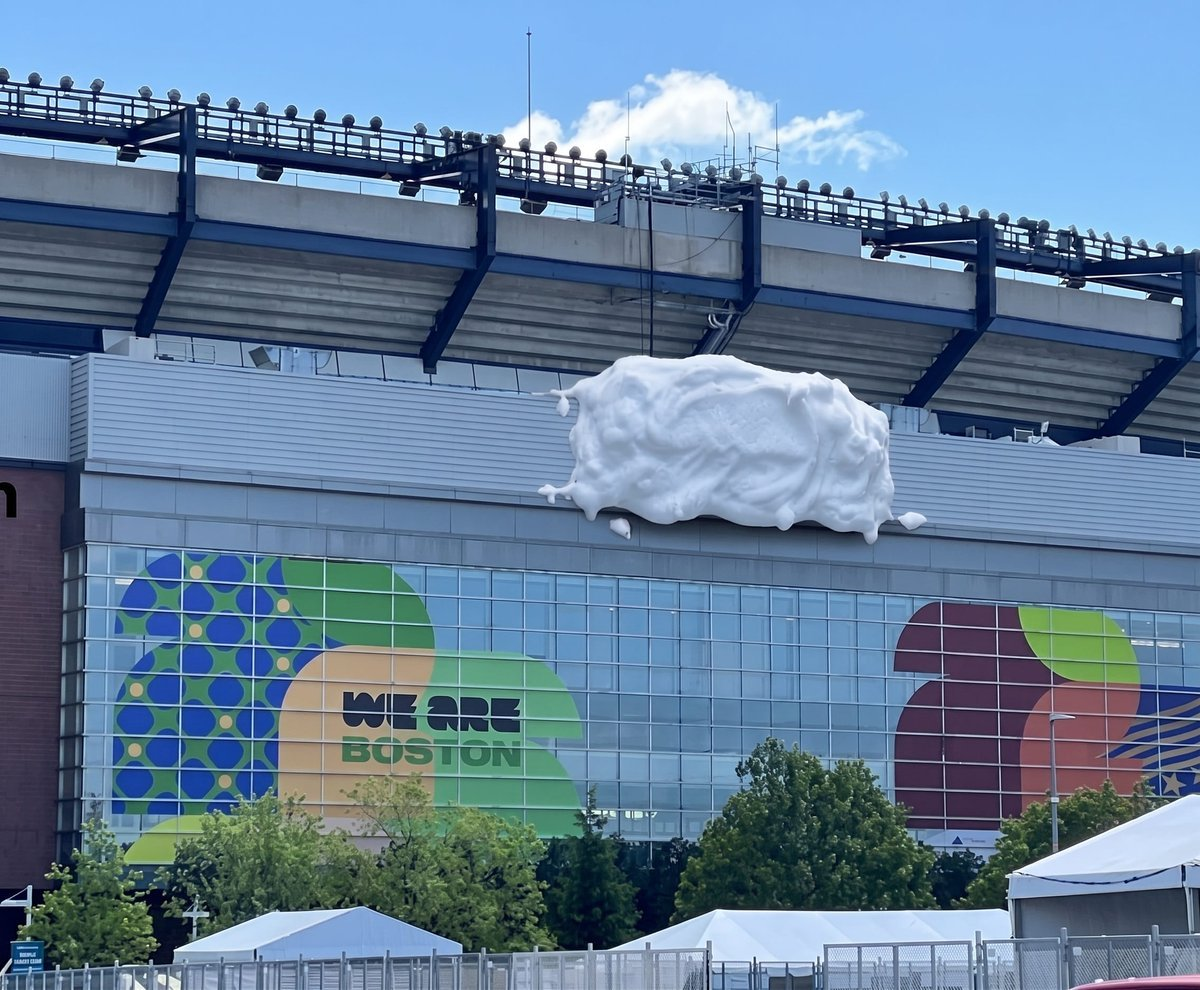
That meant Gillette Stadium, home of the New England Patriots and New England Revolution, was renamed “Boston Stadium” for the tournament. References to the Gillette name across the venue were covered, including large exterior signage, logos on stadium infrastructure, and even small branding elements attached to seats.
The capacity at “Boston Stadium” for the World Cup is 64,146.
That means someone had to put 64,146 very small pieces of blue tape over every single Gillette logo on every. single. seat.
FIFA doesn’t mess around. 😳 pic.twitter.com/FJ2y6K69uv
— Kyle Sheldon ⚽️🇺🇸 (@kylesheldon) June 16, 2026
Photos shared from the venue showed extensive use of coverings, tape, and temporary overlays designed to remove sponsor references from public view during the event.
The restrictions are not unique to Boston. Similar branding removals have occurred at World Cup venues across North America as FIFA seeks a standardized commercial environment for tournament partners.
Why Gillette turned the branding ban into content
Instead of treating the situation as a temporary inconvenience, Gillette used it as a creative opportunity.
The brand shared an image of the covered stadium signage on Instagram with the message: “At least we got to choose how we cover it.”
The post quickly generated engagement from other brands and users, with Levi’s, which recently found itself in a similar sponsorship-related situation, joining the conversation.
The approach mirrors a growing trend in brand marketing where companies acknowledge limitations publicly rather than trying to ignore them. By doing so, brands often appear more authentic, self-aware, and culturally relevant.
Rather than losing visibility because its name was hidden, Gillette arguably gained additional attention by making the cover-up itself the focus of the story.
What marketers should know about constraint-driven marketing
Gillette’s post offers several lessons for marketers navigating restrictions, platform policies, or sponsorship limitations.
1. Constraints can create content opportunities
Many brands view restrictions as obstacles. Creative teams increasingly see them as content triggers.
A limitation can become the narrative itself if it is relevant, timely, and relatable to audiences.
2. Audiences appreciate self-awareness
The post works because it acknowledges an obvious reality everyone can see.
Instead of pretending nothing changed, Gillette leaned into the situation with humor and confidence.
3. Event marketing is no longer confined to the venue
The physical branding may have disappeared temporarily, but social media allowed the brand to continue participating in the World Cup conversation.
In some cases, digital engagement can generate more attention than traditional signage.
4. Fast response matters
The best reactive marketing often comes from recognizing a moment quickly and acting before the conversation moves on.
Gillette’s response arrived while photos of the stadium transformation were already circulating online, helping the brand insert itself into an existing discussion.
What this says about modern sponsorship marketing
For years, sponsorship value was measured primarily through logo visibility and physical presence.
Today, marketers increasingly recognize that audience attention is driven by stories, interactions, and cultural moments rather than signage alone.
Gillette’s response demonstrates that even when traditional sponsorship assets are temporarily unavailable, brands can still create relevance through creativity and social engagement.
The broader takeaway is that sponsorship marketing is becoming more participatory. Brands are no longer simply buying visibility. They are competing to create the most memorable interpretation of the moment.
As more brands adopt this approach, we can expect future event sponsorships to include social-first activation plans designed specifically for situations where conventional branding opportunities are restricted.
Gillette’s playful response to FIFA’s branding restrictions shows how modern marketers can transform operational limitations into audience engagement opportunities.
The stadium may currently be known as Boston Stadium, but the conversation around the venue is still generating visibility for Gillette. In an era where attention often matters more than placement, that may be an even bigger win than having the logo visible in the first place.