The thing about Spider-Man is that he never really leaves the group chat. Even when there is no trailer drop in front of you, the franchise lives in memes, rewatch culture, and the constant online habit of treating New York City as part of the character’s identity.
Samsung and Liquid I.V. are leaning into that shared cultural shorthand ahead of Spider-Man: Brand New Day (in theaters July 31), with campaigns set in the movie’s New York backdrop and built around a familiar face to fans: Ned Leeds, played by Jacob Batalon. The companies shared details in their official press materials.
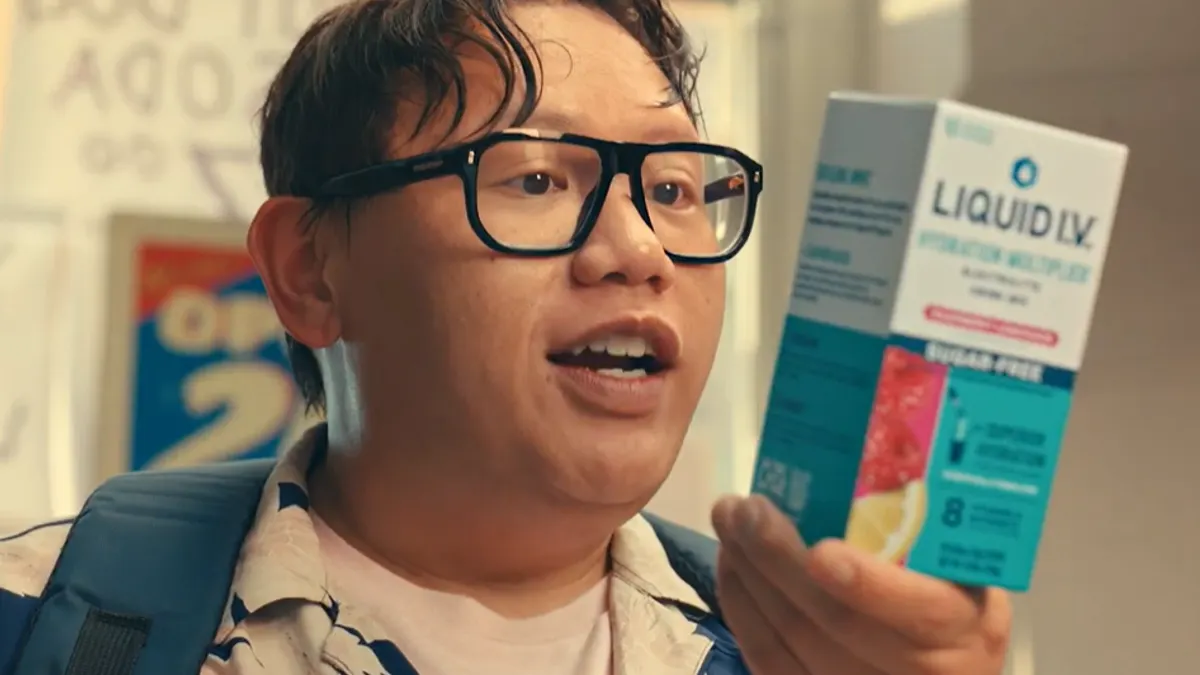
Table of contents
Jump to each section:
- Why “Brand New Day” is a marketing moment
- How Liquid I.V. turns fandom into product and experiences
- How Samsung uses story and utility to sell foldables
- What this means for marketers
Why “Brand New Day” is a marketing moment
Spider-Man marketing works when it feels like it is happening inside the world, not beside it. Fans are used to Peter Parker problems being small and specific: cracked tech, cramped apartments, rushing around the city, trying to keep up. That makes the IP unusually friendly to brands selling everyday products, as long as the tie-in does not feel forced.
Both Samsung and Liquid I.V. use Ned Leeds as the “normal person” anchor. He is a recognizable character to casual viewers, and his presence signals that the campaign is tied to the actual film context rather than a generic superhero costume cameo.
The timing also matters. The movie is tracking for a US opening between US$180 million and US$190 million, which sets the stage for heavy mainstream attention and a lot of social conversation that brands can ride without needing to manufacture the moment themselves.
How Liquid I.V. turns fandom into product and experiences
Liquid I.V. is positioned as the film’s exclusive functional hydration partner, and its creative focuses on a simple, very Spider-Man style premise: New York is chaotic, it is hot, and you are trying to get through the day.
In the spot titled “Your Friendly Neighborhood Hydration Brand,” Ned walks down the block listening to music, oblivious to hazards. Spider-Man stays mostly wordless, stepping in to save him from things like masked thugs and falling construction tools. The punchline lands when a sweltering Ned reaches a corner store, reads off Liquid I.V.’s health benefits, mixes the powder into water, and says he is “ready for a brand new day.”
On the product side, the campaign supports two limited-time co-branded offerings: Hydration Multiplier Arctic Raspberry and Sugar-Free Raspberry Lemonade. The collaboration also includes in-movie appearances and an upcoming fan experience, which signals Liquid I.V. is treating this as more than a one-off ad buy.
How Samsung uses story and utility to sell foldables
Samsung’s approach leans into “Spidey science” energy, but translates it into a very grounded phone pain point: durability. The creative shows Spider-Man frustrated with a pile of cracked smartphones that could not survive his daily risk level, until he starts building a foldable Galaxy phone that can handle him better.
The ad is partly set in Peter Parker’s apartment and splices in footage from the film. It also builds on Samsung’s Spidey Tracker, a real-world mobile web experience launched in June. In the commercial, Ned checks the tracker while Spider-Man swings by in the background, which helps the branded experience feel like it belongs in the narrative instead of sitting outside it.
Samsung also said it will extend the story at its Galaxy Unpacked event on July 22, turning the campaign into a bridge between pop culture attention and a key product moment.
What this means for marketers
These campaigns work because they treat Spider-Man less like a logo and more like a set of shared audience instincts: New York as a character, chaos as comedy, and “trying your best” as the emotional baseline.
- Number one, use the character’s everyday logic, not just the costume
Spider-Man stories are built on small relatable problems. Liquid I.V. focuses on heat and stamina. Samsung focuses on cracked phones and improvising a fix. Both choices feel “in-world,” which is what fans notice first.
- Number two, let the fan-recognizable supporting character do the talking
Ned Leeds gives the ads a human voice that does not require Spider-Man to speak. It keeps the superhero presence iconic and visual, while letting the product message land through a character audiences already accept as “real.”
- Number three, product integration is stronger when it is a plot device
Samsung makes the foldable phone part of Spider-Man’s problem-solving. Liquid I.V. makes hydration the turning point of a stressful day. The product is not just placed on a table, it changes what happens next.
- Number four, limited-time products and experiences are how fandom becomes commerce
Co-branded flavors and an upcoming fan experience create collector energy and participation, not just awareness. That is often what turns “I saw the ad” into “I want to be part of it.”
Marketing teams tend to talk about IP partnerships like distribution, but fandom does not behave like a media channel. People share what feels like it understands the character and understands them.
The bigger signal here is how brands are using blockbuster attention to earn cultural relevance through specificity. Not bigger claims, just cleaner alignment between story logic and product truth.
When that alignment is real, the campaign does not need to shout. Fans do the pattern matching for you, and the product gets to live inside the moment.
This article is created by humans with AI assistance, powered by ContentGrow. Ready to automate your content marketing?