
Being “too smart to pay dumb” is the kind of line people repeat because it sounds like a clapback and a personal rule at the same time. It taps into a very online mood: nobody wants to feel played by fine print, hidden fees, or plans that somehow cost more every year while offering the same basics.
That is the energy TextNow is betting on in its first major national brand campaign, outlined in the company’s official announcement. The campaign, “Way Too Smart To Pay Dumb,” is led by comedian and entrepreneur Katt Williams, with creative developed by Burrell Communications Group and production handled by Burrell Studios.
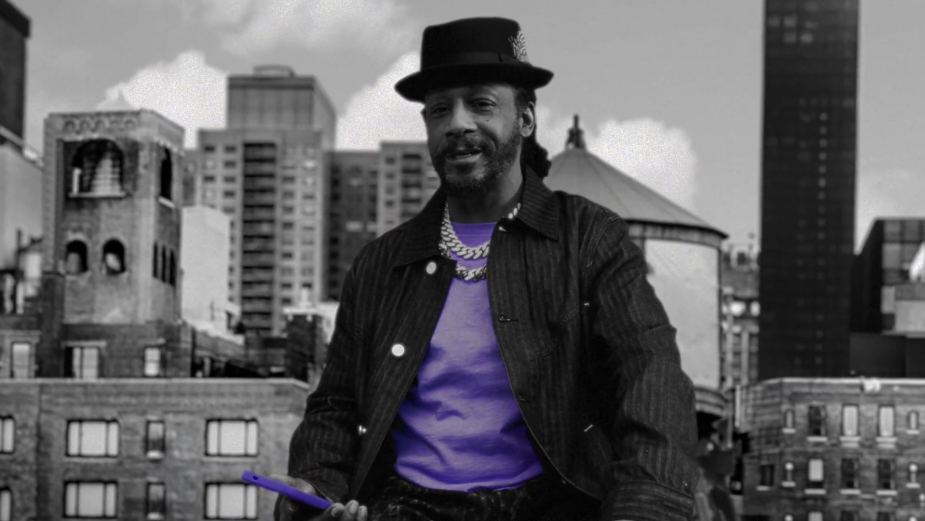
Table of contents
Jump to each section:
- Why Katt Williams fits the campaign’s “don’t play me” vibe
- What TextNow is selling, beyond the punchlines
- How the campaign frames wireless as a control issue
- What this means for marketers
Why Katt Williams fits the campaign’s “don’t play me” vibe
Katt Williams has a specific cultural role: he is known for saying the quiet part loud, and doing it with a mix of comedy, confrontation, and “I’m not here to be polite.” That makes him a natural messenger for a campaign built around calling out “foolishness,” especially in a category where consumers often feel trapped by contracts and unclear pricing.
TextNow’s founder and CEO Derek Ting positions Williams as someone who embodies self-determination, which the campaign tries to translate into a phone plan mindset: don’t let someone else set the terms for your money, your career, or your connectivity.
The hero film, “Exposin Fools,” leans into that persona. The creative uses stark black-and-white visuals with TextNow’s purple accenting, and it is soundtracked by Nipsey Hussle’s “U See Us,” explicitly tying the message to independence and ownership.
What TextNow is selling, beyond the punchlines
Under the entertainment layer, the offer is straightforward: TextNow describes itself as an app-based mobile service with nationwide 5G connectivity, instant activation via eSIM, and a pricing structure that starts at $0 per month for unlimited talk and text.
The company also highlights flexibility on data, with daily, weekly, or monthly unlimited plans, and the ability to drop back to free without commitments or cancellation fees.
A notable detail is TextNow Rewards, which the company says lets customers turn app activity and partner offers into points that can be redeemed for data passes and premium features, including options to pay with points, cash, or a combination. In a category where pricing often feels fixed and opaque, TextNow is making “choice” part of the product story.
How the campaign frames wireless as a control issue
Instead of positioning wireless as a feature race, the campaign frames it as a dignity and control conversation. The target is the feeling that traditional carriers rely on confusing contracts, hidden fees, and lock-ins that keep people overpaying.
That framing matters because it meets consumers where the frustration actually lives. People do not usually rant online about network architecture. They rant about bills that creep up, surprise charges, and customer service loops that make them feel powerless. A line like “we ain’t paying for stupid” works because it is less about telecom and more about self-respect.
TextNow also built the campaign with a wide partner bench: Currency Advisory Group led the integrated agency team, Mass Appeal supported talent outreach and negotiations to secure Williams, and DKC led communications strategy and earned media.
What this means for marketers
TextNow’s campaign is a Tier 1 signal, but it is a useful one: it shows how brands can turn price sensitivity into identity without sounding like a coupon.
- If you are challenging incumbents, sell the emotion before the math
“Smarter options” is functional, but “too smart to pay dumb” is social. It gives people language to justify switching without feeling cheap. - A strong spokesperson is not just reach, it is tone control
Williams is doing more than appearing on camera. His persona sets the rules of the conversation: blunt, suspicious of fine print, allergic to being played. - Make the villain a behavior, not a competitor
The campaign calls out confusing contracts and hidden fees instead of picking a single rival. That keeps the message broad and lets consumers project their own bad experiences onto the story. - Product flexibility needs a narrative, not a feature list
eSIM activation, $0 talk and text, and data pass flexibility could read like a spec sheet. Tying it to “control” makes the same features feel like relief. - Cultural references work best when they reinforce the core belief
Using Nipsey Hussle’s “U See Us” is not just a soundtrack choice. It underlines independence and ownership, which matches the campaign’s central promise.
Stepping back, this campaign reflects a wider consumer shift: people increasingly treat pricing as a trust test. When a category has trained customers to expect gotchas, the brand that wins is often the one that makes transparency feel like status, not sacrifice.
TextNow is trying to turn a basic value proposition (pay less, stay flexible) into a cultural stance (don’t get played). For marketers, the lesson is simple: in high-friction categories, the best creative is often the one that accurately names the frustration people already share, then gives them a confident way out.