
Perfume discourse does not usually get nicknames like “walking ATM,” but that’s exactly the kind of internet lore that’s followed Chanel’s 1957 in parts of Asia, especially across Chinese social platforms. It’s less about a scent pyramid and more about what people want the scent to mean: a little ritual for confidence, momentum, and luck.
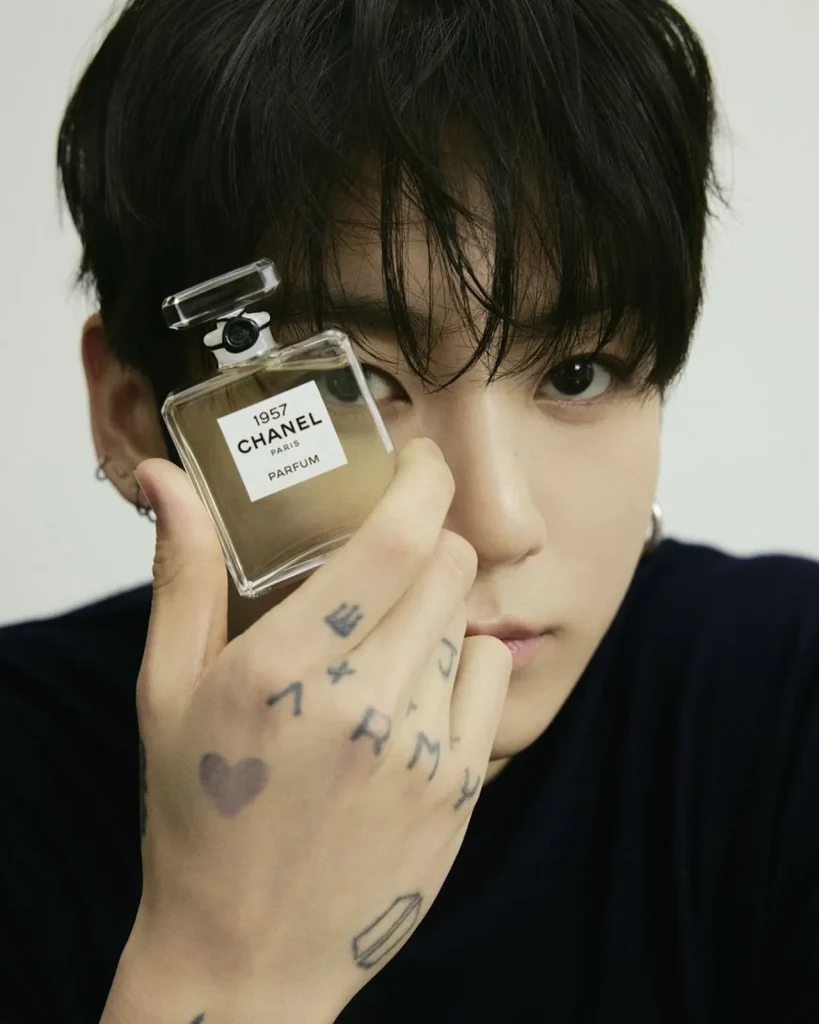
Chanel is now building on that story with Jungkook as its fragrances and beauty house ambassador, spotlighting a new 1957 L’Extrait de Parfum through campaign visuals and two short films. The company shared the campaign details in an official announcement.
Table of contents
Jump to each section:
- Why 1957 has “career-boosting” internet energy
- What Chanel is selling with the Jungkook conversation format
- What’s new about 1957 L’Extrait de Parfum
- Why male beauty ambassadors keep working
- What this means for marketers
Why 1957 has “career-boosting” internet energy
A big part of fragrance culture online is the way people turn products into identity tools and mini belief systems. “Skin scent” perfumes in particular are easy to mythologize because they are subtle, personal, and feel like they “become you,” which makes them perfect for lore.
Chanel 1957 has been wrapped in exactly that kind of story. In China, it’s picked up a reputation as a “career-boosting” scent, with users joking about raises, bonuses, and wealth signals tied to wearing it. The virality comes from the format: repeatable jokes, easy-to-share “I tried it and…” anecdotes, and the sense that you’re participating in a shared ritual, not just buying a fragrance.
That context matters because it frames 1957 as more than a luxury purchase. It becomes a social object with a role in people’s lives, especially among audiences who enjoy mixing aspiration with humor and community in their shopping decisions.
What Chanel is selling with the Jungkook conversation format
This campaign leans into a quieter kind of star power. Instead of relying only on glossy visuals, Chanel puts Jungkook in conversation with in-house perfumer-creator Olivier Polge, letting the fragrance be explained through an interview-style setup.
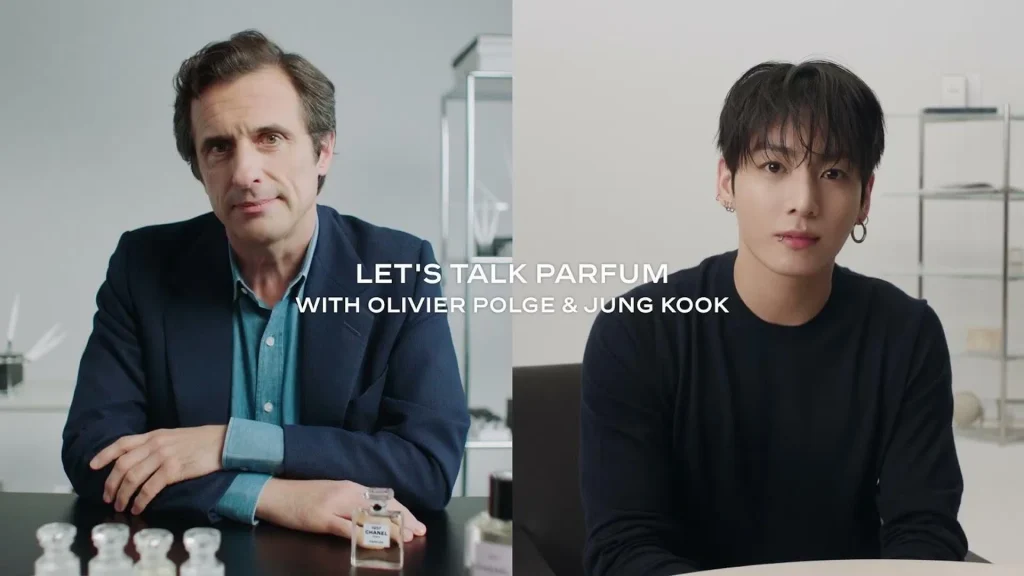
The two-film structure also gives fans two different entry points:
- A craft-focused film where Polge breaks down the composition with Jungkook present, which helps the audience feel like they are being invited “behind the counter.”
- A more personal film where Jungkook reflects on career-defining moments and connects his own timeline to Chanel’s 1957 reference point.
For fandoms, this matters because it offers proximity without overexposure. Fans get to watch their artist in a controlled, intimate narrative space that feels more like “getting to know him” than being sold to, while the brand still keeps its core codes intact.
What’s new about 1957 L’Extrait de Parfum
1957 L’Extrait de Parfum is positioned as a concentrated reinterpretation of the classic 1957, and it sits inside the Les Extraits de CHANEL collection. The original 1957 Eau de Parfum was developed by Olivier Polge in 2019 and ties back to Coco Chanel’s expansion into the United States, with references that include her birthday and the New York flagship’s 57th Street address.
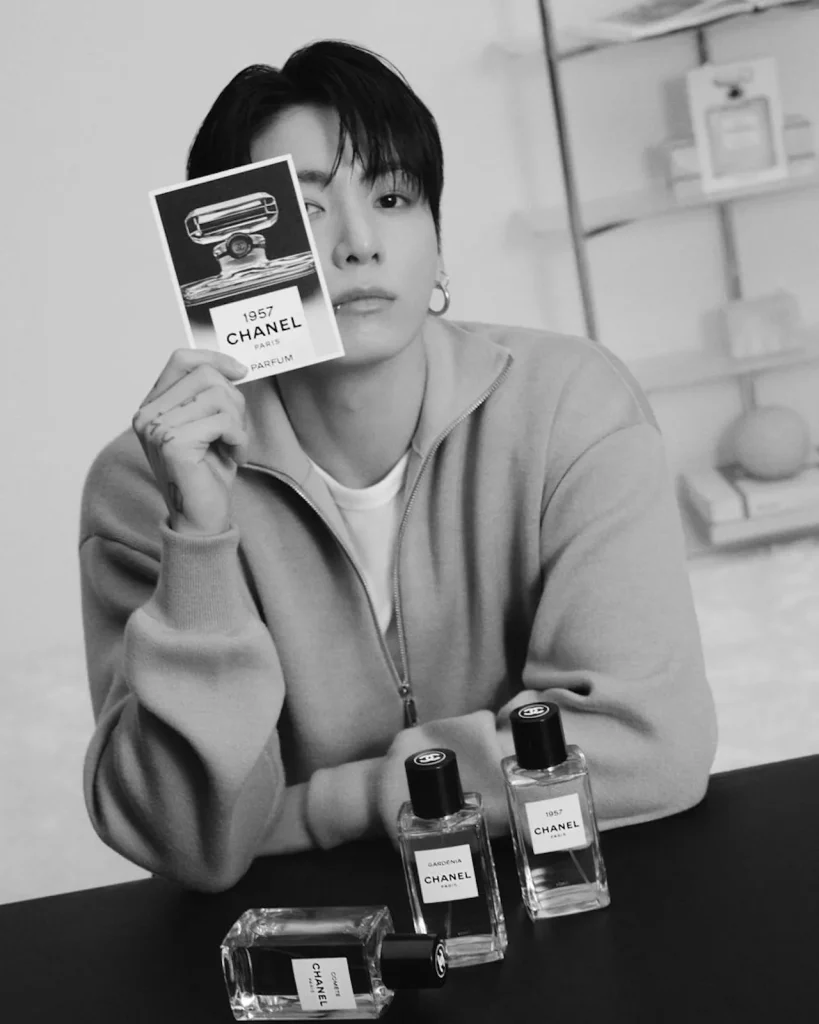
Scent-wise, the new extrait shifts into denser territory, blending musk with floral and Cuir de Russie (Russian leather) accords, plus notes including neroli, vetiver, and sandalwood. That “deeper and more concentrated” framing pairs well with the campaign’s career-and-achievement storytelling, because extrait as a category already signals intensity and significance to fragrance buyers.
Why male beauty ambassadors keep working
Chanel’s use of Jungkook also fits a broader pattern: male celebrities increasingly representing beauty and fragrance brands globally, and doing it in a way that speaks to modern fandom dynamics rather than old-school “men’s grooming” tropes.
Chanel has recent proof points in this playbook. Timothée Chalamet’s ambassador announcement generated US$7.5 million in Media Impact Value (MIV) over two weeks, per Launchmetrics. Jacob Elordi’s April 2026 appointment as the face of Bleu de Chanel generated US$4.4 million in MIV within 48 hours, also per Launchmetrics, with the announcement post alone generating US$196K in MIV and outperforming a typical Chanel Instagram post in Q1 2026.
Those numbers matter less as bragging rights and more as a signal of where attention is reliably concentrated: celebrity fandoms that treat brand moments as shareable culture, not just advertising.
What this means for marketers
Jungkook’s Chanel campaign is a reminder that luxury marketing works best when it understands what people are doing with products socially, not just what the product is.
- Internet lore can be a distribution engine
The “career-boosting” narrative around 1957 shows how users can turn a product into a repeatable meme-like idea. Brands cannot manufacture belief, but they can recognize when a product has become a social ritual and avoid messaging that breaks the spell. - Conversation beats commercial when the category is emotional
Putting Jungkook with Olivier Polge is a simple format shift that changes the viewer’s role from “target” to “listener.” It creates a softer kind of authority: craft, taste, and story instead of hard persuasion. - Fandom attention rewards intimacy, not just spectacle
The campaign’s personal reflection angle is a fan-friendly move because it offers character and meaning, not only visuals. That matters in celebrity-led campaigns where audiences are trained to look for authenticity cues. - Product design and cultural meaning should reinforce each other
A “skin scent” that blends with the wearer naturally matches narratives about individuality, luck, and personal momentum. When product experience and cultural story align, the marketing feels less like a layer on top and more like a translation of what users already feel. - Measurement should reflect community behavior, not just reach
Launchmetrics MIV examples highlight how ambassador moments can spike fast. The deeper question for teams is what kind of participation the campaign triggers: conversation, re-sharing, and interpretation, not only impressions.
The bigger signal here is how beauty marketing keeps moving toward community-native storytelling. People are not only buying an extrait. They are buying a meaning they can wear, talk about, and sometimes joke about with friends.
When a campaign respects that behavior, it can sit inside culture without sounding like it’s trying too hard. That is especially true when the face of the campaign comes with a fandom that already knows how to turn moments into timelines, edits, and ongoing conversation.