
Ann Taylor is trying to make “workwear” feel like a life category again, not a corporate costume. The pitch is less about dressing for a job title and more about dressing for a day that includes meetings, errands, a quick coffee, and whatever else ends up happening.
Ann Taylor’s new “This Is Ann” push is its first major integrated campaign since 2017, and the brand laid out the details in an official campaign announcement. The creative follows a busy mom moving through different moments in one day, using the fall 2026 collection as the wardrobe that flexes with her schedule.
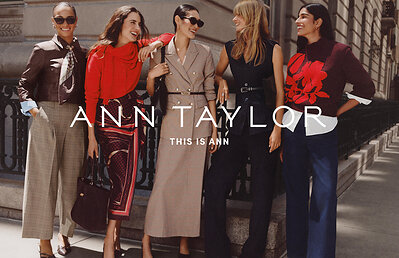
Table of contents
Jump to each section:
- Why Ann Taylor is framing this as a “reintroduction”
- What the fall 2026 campaign actually includes
- How Substack and “owned content” fit into the comeback
- What this means for marketers
Why Ann Taylor is framing this as a “reintroduction”
Ann Taylor is treating the campaign like a reset: not just a seasonal fashion story, but a statement about who the brand is for now. The “multidimensional” framing is doing a specific job here, pushing back on the idea that career dressing equals a single, narrow archetype.
There is also a practical reason this reads like a comeback. The brand last ran a campaign at this scale in 2017, and it spent the early 2020s dealing with plunging sales and the bankruptcy of its then-parent, Ascena Retail Group. This campaign positions the present-day brand as newly relevant without needing to pretend the last few years did not happen.
What the fall 2026 campaign actually includes
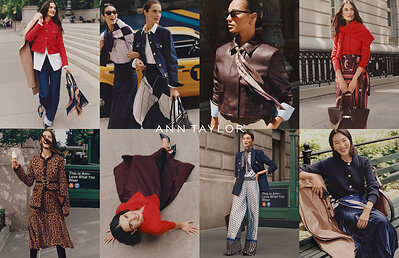
“This Is Ann” was developed in-house and shot in New York City, including locations around the Upper West Side and Central Park. It was helmed by photographer and director Dan Martensen and videographer Garrett Hardy Davis.
The creative centers on outfits for multiple contexts, from heading into work to grabbing casual coffee with a friend. In product terms, the campaign spotlights a fall assortment that includes sharply cut blazers, silk scarves, and tailored separates.
On the physical retail and experience side, Ann Taylor is also planning a New York Fashion Week pop-up activation on Sept. 8 in Manhattan, described as a SoHo experiential space with campaign imagery and an editorial-style newsstand stocked with items like magalogs, postcards, and custom-wrapped issues of The Daily Front Row.
Looking past fall, the brand plans to launch a brand ambassador program in early 2027, focused on “authentic voices” from women who already love and wear the brand, with an emphasis on social media.
How Substack and “owned content” fit into the comeback
Ann Taylor debuted a Substack called The Desk in February, publishing career and style advice. The choice of Substack is notable because it is not just “a newsletter.” It is a platform where brands can build a habit, a voice, and a recurring relationship without needing to win every algorithmic fight on social.
The Desk also acts like a searchable archive of guidance and brand perspective, which matters in a moment when AI chatbots increasingly scrape forums and editorial-style pages to answer user questions. In that environment, having structured, helpful content tied to the brand’s domain of authority (career and style) becomes a visibility strategy as much as a community play.
The campaign also builds on Ann Taylor’s existing Style 101 digital video series, which features fashion experts giving wardrobe advice.
What this means for marketers
Ann Taylor’s fall push is not positioned as a novelty. It is positioned as a re-definition of the customer, told through day-in-the-life creative, and supported by channels that can sustain attention after the ads stop.
- A “comeback” campaign works better when it names the stereotype it is rejecting
The campaign’s core message is not only “new season, new product.” It is “working women are not one-dimensional.” That makes the creative feel like a point of view, not a catalog. - Substack is being used as a relationship layer, not a promo layer
By publishing career and style advice via The Desk, the brand is building a repeatable reason to show up in someone’s inbox that is not tied to a discount or a drop. That is how brands earn attention when social feeds are crowded. - NYFW pop-ups are about modern retail theater, not just industry credibility
The SoHo activation is described with editorial objects (newsstand, postcards, magalogs). Those details are designed to be picked up, photographed, and shared, even by people who do not walk out with a bag. - Brand ambassador programs are becoming the “always-on” bridge after big bursts
Ann Taylor’s plan to launch an ambassador program in early 2027 suggests it wants continuity after a seasonal campaign. For marketers, that is a reminder that integrated campaigns increasingly need a second act that keeps the story alive on social.
Underneath all of this is a useful pattern: heritage brands do not just need “new creative.” They need a new explanation for why the brand fits how people actually live now.
When the campaign frames clothing as a tool for shifting roles across a day, it aligns with how modern audiences narrate their lives, especially online, where identity is shown in scenes and moments rather than titles. The marketing lesson is not “be everywhere.” It is “build a world people can recognize themselves in,” then support it with channels that can hold attention longer than a trend cycle.