
Limited-edition gaming collabs usually live or die on aesthetics: does it look good on a desk setup, and does it feel like something a fan would actually keep around. The interesting part here is that the “fan signal” is not just a printed graphic. It’s baked into the way the products look when they’re powered on.
Anker is teaming up with Riot Games on a limited-edition Valorant collection featuring a desktop USB-C hub and a 100W laptop charger, both with smart displays that show Valorant-themed interfaces and character art. The company also outlined details on its product page for the Valorant edition hub.
Table of contents
Jump to each section:
- Why this Valorant collab feels more like fandom merch than tech skin
- What Anker is actually selling: smart displays as identity and utility
- The collector layer: limited gift box mechanics and return rules
- What marketers should know about fandom-first product collabs
Why this Valorant collab feels more like fandom merch than tech skin
Anker’s limited-edition Valorant hub and charger lean into something fans recognise instantly: character identity. Instead of stopping at a logo, both products use built-in displays to show Valorant-themed UIs and character visuals, with multiple “Agent” designs available on the hub and chibi-style characters on the charger.
That matters because Valorant fandom is deeply character-driven. People do not just “play a shooter.” They main an Agent, they quote voice lines, they debate balance changes, and they treat cosmetics as status signals. A desk accessory that literally shows an Agent on-screen behaves more like a small piece of fandom merch you use every day, not a one-time novelty buy.
What Anker is actually selling: smart displays as identity and utility
Under the Valorant layer, these are still functional power and connectivity products.
The desktop hub keeps a 10-in-1 setup with support for data transfer up to 10Gbps, DisplayPort 2.1, SD and microSD card readers, and built-in cable management. Anker’s product page also describes ports including HDMI, DisplayPort, Ethernet, and multiple USB-A and USB-C options, plus a built-in display that can show port status and other device information.

The 100W charger is positioned around convenience as well as theme. It can automatically detect the connected device and select an appropriate charging mode. The display remains functional beyond the artwork, with uses like checking time, viewing charging information, and running a focus timer.
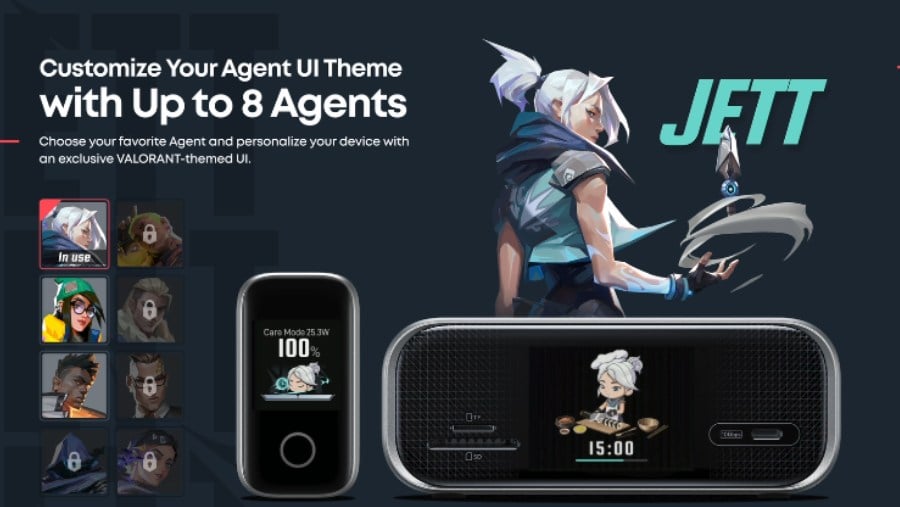
From a brand perspective, the key move is turning the display into a living surface. It gives the collaboration room to evolve through over-the-air updates, rather than being locked to a single printed design.
The collector layer: limited gift box mechanics and return rules
Anker is also adding a “collector bundle” incentive: a Valorant gift box for the first 1,000 customers who buy either the Valorant desktop hub or the charger after sales begin. The box includes themed items like a Wingman plush keychain, an earbud pouch inspired by the in-game Spike, a tote bag with character sketches, and chibi stickers.
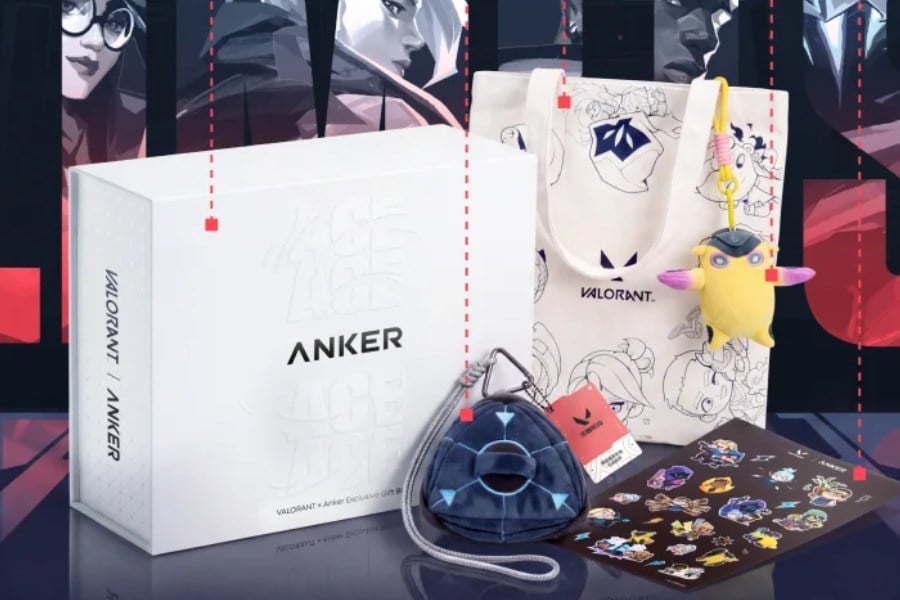
Notably, the offer is designed to discourage casual returns. If a buyer returns the hub or charger, the gift box and its contents must also be returned. If the buyer keeps the merchandise, Anker says it will deduct the retail value of the gift box from the refund.
On timing, early access sign-ups are open and close on September 21 at 11:59 PM PDT, with sales beginning on September 22. Pricing for the Valorant editions has not been disclosed yet. Separately, Anker has already shared pricing for the regular versions: the desktop hub is listed around $85, and the 100W charger is listed at €59.99.
What marketers should know about fandom-first product collabs
A good fandom collab does not ask fans to care. It shows that the brand understands what fans already care about, then builds the product around that behaviour.
- Make the fandom visible in everyday use, not just on the box
Putting Valorant Agents on the smart display means the product “performs” fandom every time it is plugged in. That is a different emotional payoff than a static logo. - Build in updates so the collab can stay alive
Shipping with Jett as the default and adding Phoenix and Killjoy via an October update reframes the product as something that can keep changing. That creates a reason to keep checking back. - Collector mechanics work best when they feel like a real “drop”
Limiting the gift box to the first 1,000 buyers turns a hardware purchase into a scarcity moment. The items inside are also recognisably “fandom objects,” not generic freebies. - Return policies can be part of the drop strategy
Requiring the gift box to be returned with the product, or deducting its value, is a clear attempt to prevent the merch from becoming the main thing people buy and resell. - Let utility carry the purchase for non-superfans
Keeping practical features front-and-centre (smart display info, cable management, port variety, 100W charging) helps the product make sense even for buyers who simply like Valorant’s aesthetic.
The broader signal is that gaming collaborations are moving toward products that behave like “ambient identity” on a desk or in a room. Fans are not just collecting posters and skins. They are building setups that reflect what they play and who they main, and brands that can make functional hardware feel like part of that identity get a more durable kind of attention than a one-off branded shell.
If this format works, it also hints at where more collabs can go next: not just co-branded hardware, but hardware that can keep refreshing the fandom layer through software, new visuals, and small rituals that fit into daily routines.
This article is created by humans with AI assistance, powered by ContentGrow. Ready to automate your content marketing?