Four’N Twenty is turning one of footy’s smallest annoyances into something fans can wear.
Ahead of Australia’s AFL and NRL Grand Finals, the pie brand has launched the Pie Scarf, a limited-edition scarf with two built-in pockets designed to carry hot pies hands-free through crowded stadium concourses.
The idea is deliberately ridiculous, but it starts from a real game-day problem. Fans already juggle food, drinks, phones and sauce on the way back to their seats. Four’N Twenty and agencies TBWAAustralia and Eleven turned that friction into the product.
For marketers, that is what makes the stunt useful to study. The scarf is not just branded merchandise. It is a physical solution to a behavior that already belongs to the culture around the brand.
Table of contents
Jump to each section:
- Why the Pie Scarf works as fan merch
- How utility gives the novelty staying power
- Why creator seeding fits the product idea
- What marketers can learn from the Pie Scarf
Why the Pie Scarf works as fan merch
The Pie Scarf works because the product makes sense inside a ritual Four’N Twenty already understands.
Campaign Brief says the scarf was unveiled just before the AFL and NRL Grand Finals, when stadium food, crowded concourses and fan routines are already highly visible. The design, made with Coburg-based supplier Geccu, includes two pockets sized to hold Four’N Twenty pies while leaving the wearer’s hands free.
That makes the campaign feel less like a random merchandise drop and more like an exaggerated extension of match-day behavior.
Four’N Twenty has been tied to Australian football culture for years. In a 2022 AFL announcement, the league described the brand as the official pie of the AFL and framed eating a pie at the stadium as part of the return-to-footy experience. That historical context matters because the Pie Scarf is building on an existing association rather than trying to create one from scratch.
The product also avoids the usual problem with branded merch: it has a job beyond carrying a logo.
How utility gives the novelty staying power
The campaign sits in the useful space between practical and absurd.
A normal scarf can keep someone warm. A normal food tray can carry a pie. The Pie Scarf combines those two functions in a way nobody strictly needs, which is exactly why the object becomes talkable.
That tension is important. Pure novelty can earn a quick laugh but disappear as soon as the joke is understood. Pure utility can solve a problem without creating much cultural energy. The Pie Scarf does both enough to make the idea legible in one glance.
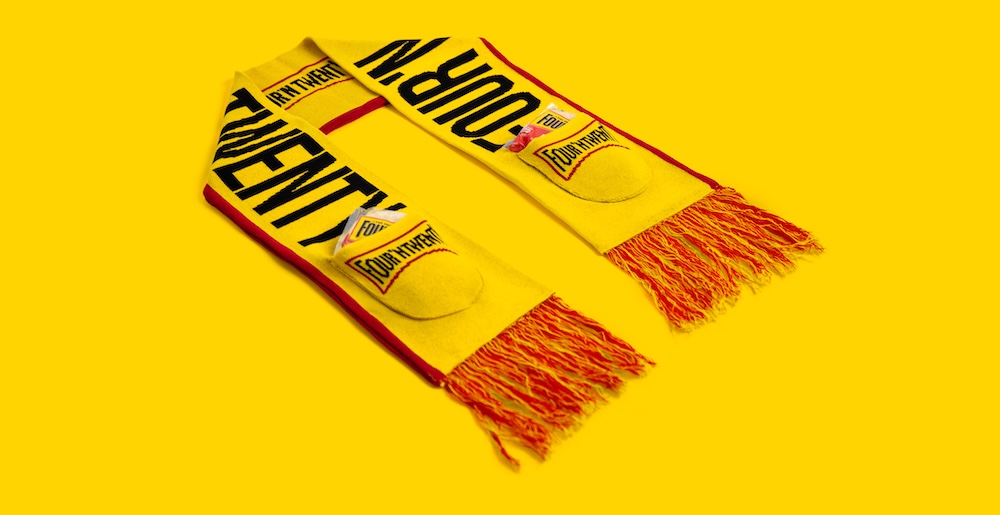
The physical object also gives the campaign more surfaces to travel across. It can appear in stadium photos, creator content, media coverage and future merchandise drops without needing the brand to repeat the same advertising message each time.
Four’N Twenty says the idea came from the familiar challenge of carrying pies, drinks, phones and sauce through packed venues. The campaign turns that mundane friction into a prop that fans can wear, photograph and potentially collect.
That is a more useful way to think about stunt products. The strongest ones are not strange for the sake of being strange. They exaggerate a real behavior until it becomes media.
Why creator seeding fits the product idea
Four’N Twenty introduced the scarf through comedian Brett Blake, then seeded a limited run to media, creators and footy fans.
That distribution choice matches the object.
A conventional product launch might need a polished hero film to explain what the item does. The Pie Scarf barely needs explanation. Seeing someone wear it with two pies in the pockets communicates the joke immediately.
Creators therefore do not have to carry a complicated campaign message. The product itself supplies the visual premise.
That also makes seeding more credible than sending out a generic branded gift. The item is unusual enough to create a reason to show it, but connected closely enough to game day that the content can still feel relevant to the event.
The campaign extends that interest beyond the first drop by inviting fans to register for future Pie Scarf releases through the brand’s merchandise store. There is no verified public data yet on registrations, reach or sell-through, so it is too early to say how much demand the stunt has created.
What is visible is the structure: a culturally familiar problem becomes a physical object, the object becomes creator-friendly content, and the content can point people toward the next release.
What marketers can learn from the Pie Scarf
Four’N Twenty’s campaign offers a simple framework for turning a brand ritual into something people can physically participate in.
- Start with friction inside an existing behavior. The idea begins with carrying food through a stadium, not with a request to invent merchandise.
- Make the solution useful enough to be believable. The pie pockets solve a real problem, even if the solution is intentionally over-engineered.
- Let the product carry the media idea. The scarf is visually self-explanatory, which makes creator and earned-media distribution easier.
- Use timing to increase cultural relevance. Launching before the grand finals puts the product inside a moment when footy rituals are already top of mind.
- Extend the stunt into a repeatable mechanic. Registration for future drops gives Four’N Twenty a way to turn one novelty item into an ongoing merchandise platform.
The broader lesson is not that every brand needs to make bizarre apparel.
It is that brands with a strong place inside a community can often find their best campaign ideas by looking closely at what people already do around the product.
Four’N Twenty found a tiny piece of stadium friction and turned it into something useful, ridiculous and easy to share. That is what makes the Pie Scarf feel less like a promotional giveaway and more like a piece of footy culture the brand can own.