Coca-Cola Japan is giving V fans a reason to keep receipts long after the commercial has finished playing. The current promotion turns a celebrity campaign into a repeated shopping ritual: buy eligible Coke products, upload the receipt through LINE, collect digital entry seals, then use those entries for V-linked prizes.
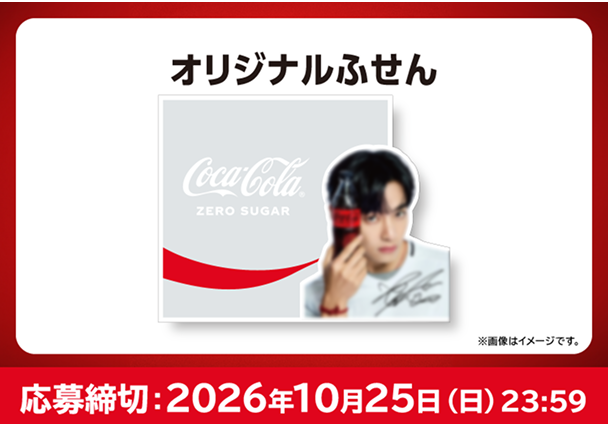
The official campaign microsite makes the mechanic unusually concrete. Phase two, which runs from September 28 through October 25, offers 15,000 winners an original V sticky-note prize. Across the full promotion, another 15,000 winners receive the phase-one fan and 5,000 winners receive 1,000 points in a selectable digital-reward program.
Table of contents
Jump to each section:
- Why the V campaign works beyond the ad
- How the receipt loop turns fandom into repeat shopping
- Why collectibles matter more than a standard discount
- What marketers should know about fandom-led retail rewards
Why the V campaign works beyond the ad
For fans, the appeal is not only seeing V in a Coca-Cola Zero commercial. The promotion creates a small ownership layer around the campaign. A TV or digital ad disappears after the media flight. A fan, sticky-note set, postcard or other campaign object can stay on a desk, shelf or bag.
That matters because V already moves across music, fashion, beauty and consumer-brand partnerships. His audience is used to seeing different brands borrow parts of his image, but the strongest collaborations give people something to do rather than only something to watch.
Coca-Cola’s Japan campaign extends that participation into retail. Eligible purchases across convenience stores, supermarkets, drugstores, discount stores and ecommerce can generate digital seals after a receipt or purchase statement is uploaded. Five seals can be used for the V merchandise draws, while one seal can enter the digital-points draw.
The result is a celebrity campaign with a built-in reason to return.
How the receipt loop turns fandom into repeat shopping
The campaign does not ask consumers to make one qualifying purchase and leave. It makes every eligible bottle potentially useful toward another entry.
That is a meaningful distinction. A conventional giveaway often sits beside a product. Coca-Cola’s mechanic ties the reward directly to accumulated purchase evidence. Receipts are uploaded, validated and converted into digital participation rights inside a LINE-based flow.
15,000 phase-two winners can receive the original V sticky-note reward through the five-seal draw on Coca-Cola Japan’s official campaign microsite.
The same system also keeps lower-commitment participation open. Consumers can use one seal to enter for 1,000 digital points, with 5,000 winners across PayPay, Rakuten, d POINT and V Point options.
That mix gives the promotion two different motivations. Fans can build toward V-specific merchandise, while shoppers who care less about collectibles still have a practical reward to chase.
Why collectibles matter more than a standard discount
Discounts reduce the cost of a purchase. Collectibles can change what the purchase means.
For a fandom audience, a branded object tied to a favorite artist can function as memorabilia rather than a price incentive. That creates a different kind of value. The reward does not have to be expensive if it feels specific to the collaboration.
Coca-Cola is also using scarcity carefully. The campaign publishes exact winner counts, so fans know the merchandise is limited without the brand needing to frame it as luxury.
The structure also extends campaign life. The V commercial is one moment. The receipt period runs for weeks. Prize notifications and fulfillment continue after the purchase window closes. The campaign therefore has several points when a consumer can encounter it again.
That is a useful contrast with celebrity advertising that peaks at launch and then depends entirely on media spend to stay visible.
What marketers should know about fandom-led retail rewards
The bigger lesson is not simply that K-pop fans like merchandise. It is that fandom can give a retail promotion a stronger emotional reason to repeat a behavior.
- Make the reward belong to the collaboration.A generic coupon could have run without V. The original merchandise only makes sense because V is part of the campaign. That connection is what gives the reward cultural value.
- Give different levels of fandom different ways in.Five-seal merchandise draws reward higher participation, while the one-seal points draw keeps the promotion useful to ordinary shoppers. The campaign does not force every buyer to behave like a collector.
- Turn media attention into a behavior the brand can observe.Celebrity reach can be difficult to connect to purchase activity. Receipt uploads create a clearer participation trail because the promotion asks consumers to prove an eligible purchase before receiving entries.
- Stretch the campaign beyond launch day.The second phase begins weeks after the initial promotion started. That gives Coca-Cola another reason to reintroduce the partnership rather than treating the celebrity reveal as the entire story.
Celebrity marketing works best when the celebrity is not only borrowed attention. Coca-Cola Japan’s V promotion shows one way to convert that attention into a repeatable consumer ritual, with the collectible acting as the bridge between fandom and the shelf.