
Walk past a shop that used to be your regular stop and it is easy to picture the old sign, the queue or the meal you always ordered. Even after a business moves, the place can keep its old identity in people’s memories. Halloween gives that strange feeling a ghost-story twist: what if the restaurant that disappeared could somehow contact you again?
That is the joke behind McDonald’s Sweden and agency NORD Stockholm’s Paranormal Deals campaign. Instead of dressing a current restaurant in spooky decorations, the brand is returning to addresses where its restaurants used to operate. People who approach selected former sites can encounter special offers through the McDonald’s app, as though an old restaurant were sending a message from beyond the grave.
Table of contents
Jump to each section:
- Old restaurants become Halloween ghosts
- Why a vanished restaurant can still feel familiar
- The app gives the haunting a practical purpose
- What marketers can learn from haunted locations
Old restaurants become Halloween ghosts
A familiar street corner is the entire setup. Someone walks near a former McDonald’s restaurant location in Sweden, and a special offer appears in the chain’s app. The promotion is framed as coming from the McDonald’s that no longer occupies that spot. The ghost is not a character in a costume; it is the memory of a place that used to serve burgers.
The Paranormal Deals creative was developed with NORD Stockholm for selected former restaurant addresses. The location-based element uses geofencing, which lets an app respond when an eligible device enters a designated geographical area. The disclosed campaign does not establish how many old sites participate, which offers appear at each one, or how many users receive them.
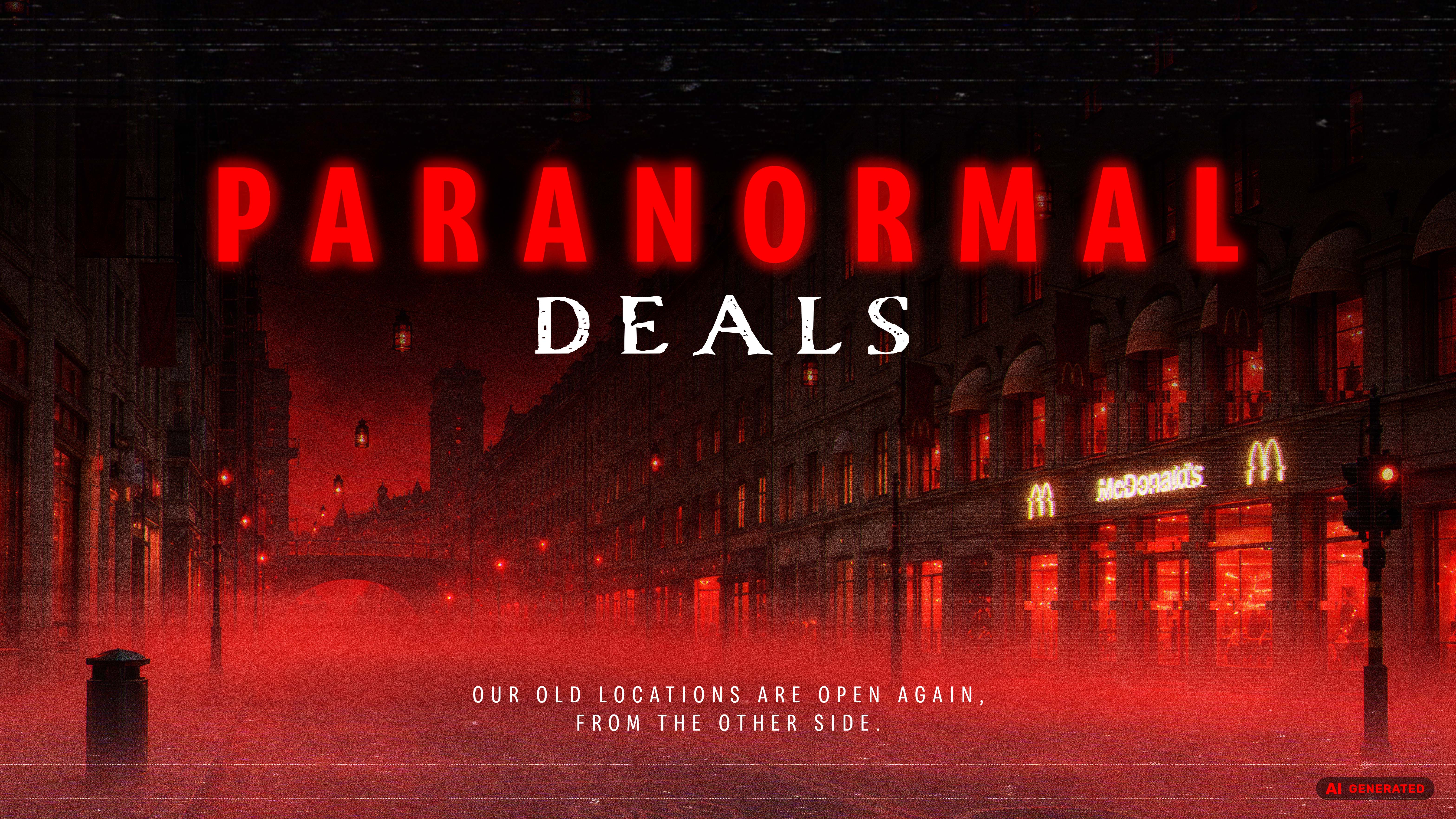
The story reaches beyond the phone. The campaign includes online video, radio, cinema, social media and digital out-of-home advertising, with clues pointing people toward where offers might be found. That gives the concept two stages: first someone hears about the strange return of an old restaurant, then a visit to the right area can reveal an offer.
The team does not claim that every former McDonald’s address in Sweden is part of the promotion. The experience is limited to selected locations, and the specific eligibility and offer terms were not detailed in the public campaign account.
Why a vanished restaurant can still feel familiar
An old restaurant address is a surprisingly personal piece of brand history. People often remember where they ate with school friends, grabbed food after work or stopped on a long drive. Those are ordinary memories, not necessarily the kind a brand would feature in a glossy advertisement.
Michaela Bognäs, Nordic media lead at McDonald’s Sweden, describes the premise in simple terms: “Most people probably have a McDonald’s restaurant they remember particularly fondly.” The campaign builds on that possibility without claiming that everyone feels attached to a specific location. A former restaurant becomes the place where a bit of shared brand memory is made visible again.
Halloween provides the emotional shorthand. A message that appears to come from an old restaurant makes more sense as a playful haunting than as an everyday discount notification. The creative depends on people understanding the joke, but not on elaborate horror effects or borrowed characters from a movie franchise.
The idea also has history inside the brand. In an unrelated 2023 McDonald’s Sweden promotion called Deals Stuck in Time, the chain and NORD DDB invited people to look for historic McDonald’s outdoor advertisements through Google Street View and use those old prices as promotional deals. That campaign searched the digital record of places. Paranormal Deals turns actual former restaurant addresses into the point of contact.
The distinction is useful: one project asked people to travel backward through archived images; the other asks them to visit a location today. Both draw on the way cities hold traces of a brand long after signs or advertisements disappear. They are separate campaigns, not phases of the same promotion.
The app gives the haunting a practical purpose
A Halloween ghost story could live entirely as a short film. Here, the payoff requires a second action. The street corner and the app work together, with the promotional offer connected to a particular place instead of being available as a general coupon shown to everyone in the same way.
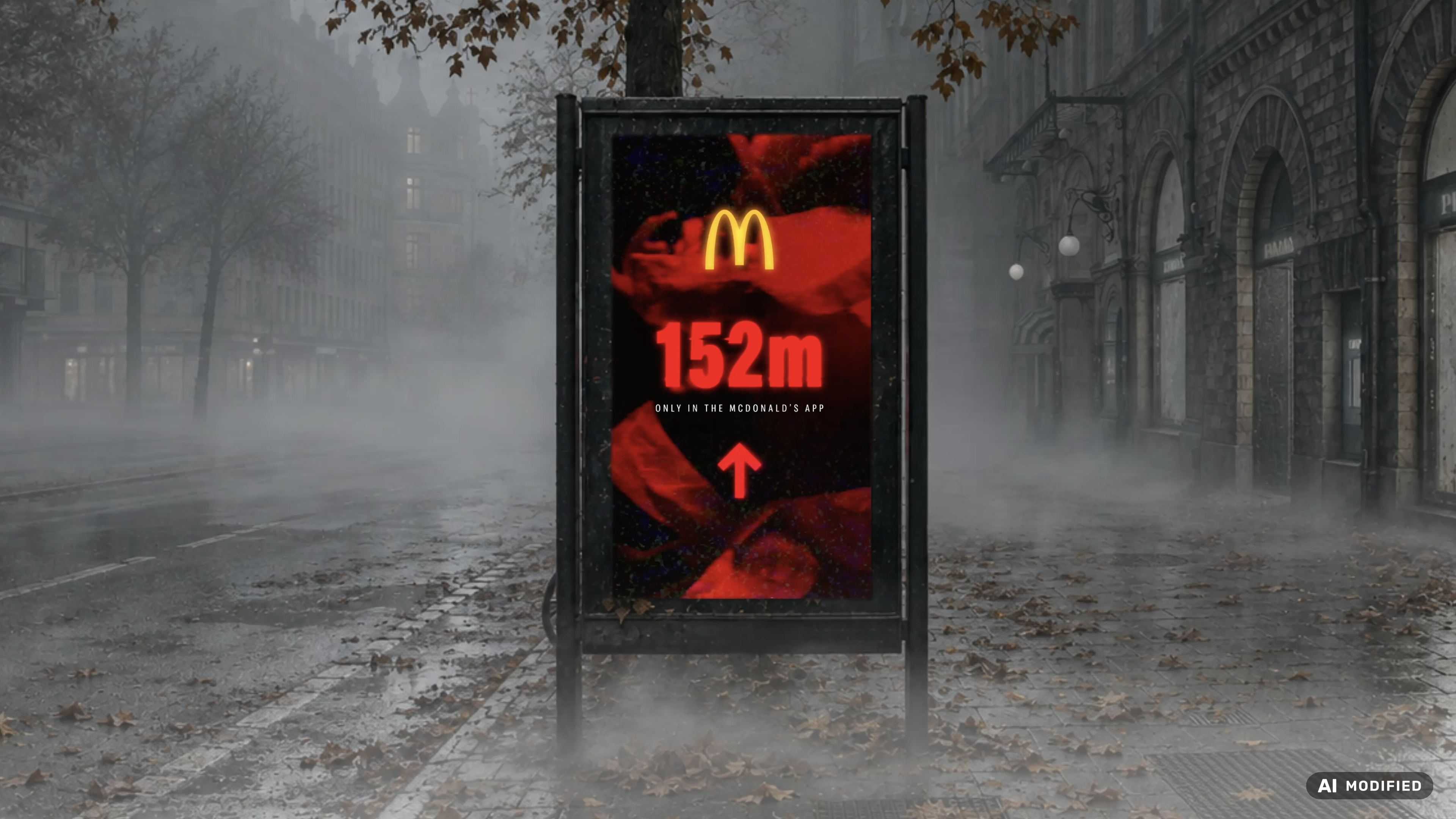
This structure may encourage people to notice parts of their city they already know. It also creates a reason for people who are curious about the promotion to open an owned channel, rather than stopping at an outdoor ad or a video view. Those are strategic possibilities inherent in the design, not reported measures of what consumers actually did.
There is also a practical limit. Geofenced promotions depend on a person being in the right area and using a compatible app experience. A national brand can share the story widely, but only people near participating addresses can encounter its location-triggered part.
That makes the broader media plan important. Radio, cinema, online video and outdoor clues can explain the concept to people who will never pass a qualifying location, while those nearby have a more concrete way to participate. The creative can travel farther than the offer itself.
What marketers can learn from haunted locations
Paranormal Deals is a useful example of seasonal advertising that starts with a truth about everyday places. The Halloween treatment is memorable because it grows out of something McDonald’s genuinely has: former restaurants that may still exist in local memory.
- Use a real asset that competitors cannot borrow easily. Another restaurant can produce a ghost-themed discount. It cannot claim McDonald’s specific history at former McDonald’s addresses. The physical footprint, even after changing, provides the distinctive material for the story.
- Give the audience a reason to move from the story to the service. The spooky message is entertaining, but the app-based offer turns the idea into a possible shopping action. The campaign does not have to pretend that watching a film is the same thing as redeeming a discount.
- Match the cultural moment to the mechanism. Halloween makes an unexpected message from a vanished restaurant feel purposeful. The same location trigger outside the season might need a different explanation to make sense.
- Be clear about who can actually take part. A campaign may circulate widely even when a location-specific reward is only relevant in a few places. Brands should distinguish creative reach from redemption eligibility and measure both separately.
The Swedish idea also sits alongside a different McDonald’s Halloween effort in the UK, where the chain turned its familiar sauces into a limited-edition face-paint concept. Both campaigns use ordinary pieces of the McDonald’s experience as Halloween material, but they invite different behaviors: making a costume in one case, rediscovering a location in the other.
For marketers, the stronger pattern is not that every business should launch a haunted scavenger hunt. It is that a brand’s own history can be more interesting than a generic holiday template. The address of a departed restaurant, once just a closed chapter in a property list, becomes a setting people can recognize.
Whether Paranormal Deals produces meaningful incremental visits or orders is not yet publicly demonstrated. Its creative contribution is clearer: it gives a vanished storefront a brief fictional afterlife, then lets an actual place and an existing app carry the joke.
