Years of accumulated in-game currency can lose its relevance when players move to a new version of a game. Vivo, a Brazilian telecommunications company, saw an opening to give that virtual wealth a real-world use while introducing a financial product.
On November 19, 2026, Vivo and Africa Creative announced The Last Mission, a campaign that let participating players exchange in-game currency for real money through Vivo Pay.
ContentGrip asked Vivo’s Renato Winnig how the campaign made a financial product part of an activity players already enjoyed.
Table of contents
- How The Last Mission turned gaming into product trial
- Designing a mission that can handle real money
- Creators demonstrated the experience
- Measuring the jump from attention to action
How The Last Mission turned gaming into product trial
According to the campaign announcement, players could locate a Vivo Pay character on the game map and transfer virtual credits. A conversion rate developed for the campaign turned those credits into Brazilian reais, deposited in their Vivo Pay accounts.
The campaign announcement describes a limited activation backed by ten influencers, in-game media, digital channels and social activity. The campaign film accompanies the activation.
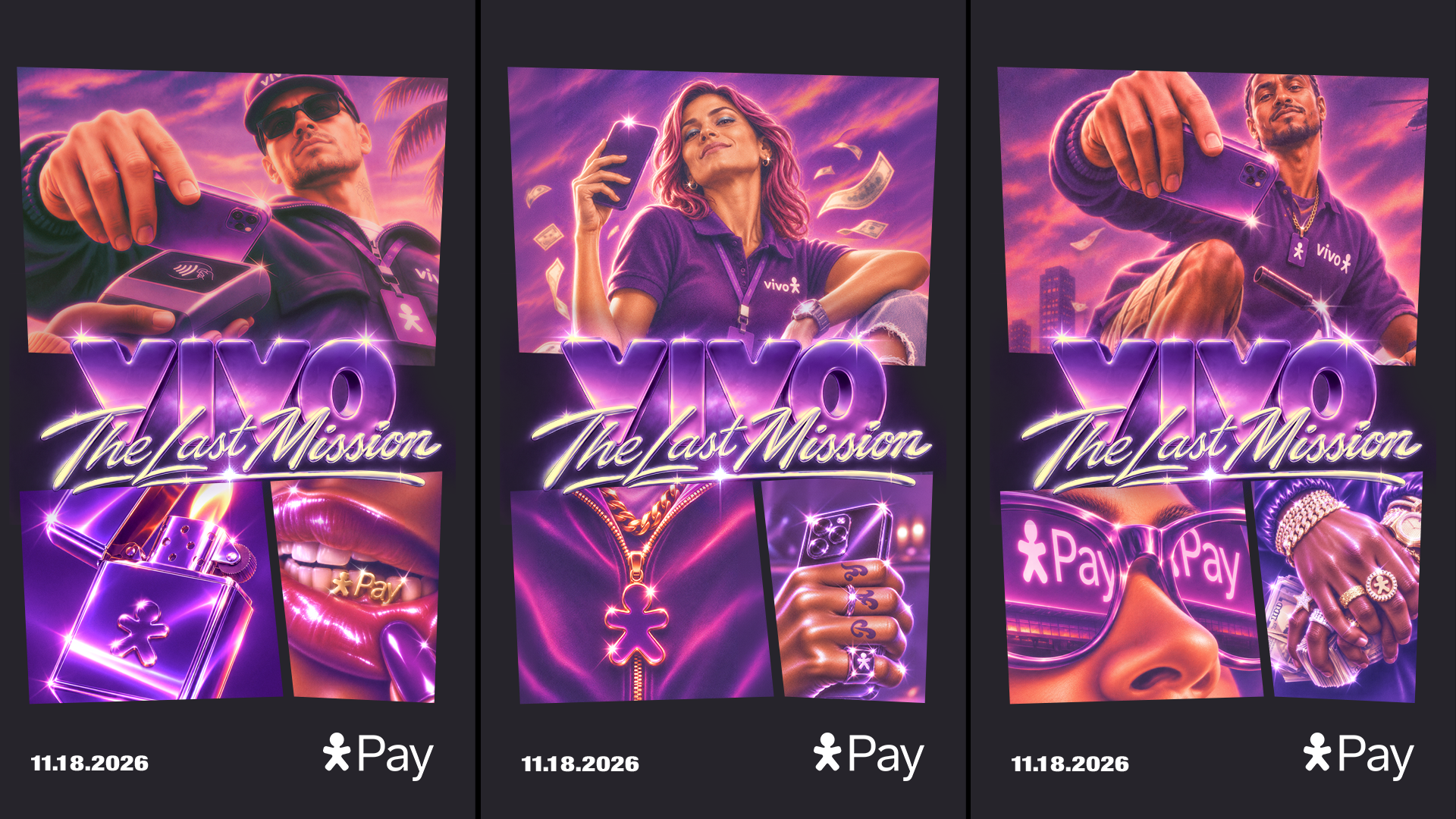
Renato, who works in brand communications at Vivo, explains that the idea came from observing how players spend years accumulating in-game currency, only for the arrival of a new version to threaten its relevance. The team also saw a connection between the fact that players use their mobile phones within the game to carry out financial transactions and the financial service it wanted to introduce.
Renato says, “The connection with the product happened very naturally.”
The transaction itself gave participants a reason to learn about Vivo Pay. That design is particularly useful for a product whose value may be hard to communicate through a conventional sponsorship. A related purchase-linked gaming approach can run in the opposite direction, with real-world purchases unlocking gameplay.
Designing a mission that can handle real money
A financial activation brings practical constraints that a branded game experience might otherwise avoid. Participants need to qualify, their balances need to be checked, and the redemption process needs to work.
Renato says the team paid attention to participant verification, balance eligibility and fraud prevention because Vivo Pay is subject to financial-sector regulations. It also assessed how to set a conversion rate that could attract players while keeping the promotion financially sustainable.
Renato says the team assembled specialists from different departments in a war room to respond to issues in real time. Before launch, tests helped preserve the players’ natural journey, and the team worked to simplify the user journey, including receiving the funds into a Vivo Pay account.
Renato adds:
“The challenge was to introduce Vivo Pay and explain its benefits without turning the experience into an overly commercial interaction.”
The exact exchange rate, payout limits and detailed platform arrangements were not disclosed in the interview. For marketers considering a similar mechanic, the lesson is to involve the teams that operate the product early enough to make the creative promise workable.
Creators demonstrated the experience
According to Renato, creators also took part in the mission, exchanged their virtual currency and showed their audiences how Vivo Pay worked. They could explain the mechanics during livestreams and in conversations with other players, each communicating in their own voice within campaign guidelines.
That participation gave creators something concrete to demonstrate. Viewers could see the steps involved rather than relying solely on a creator’s description of a financial product.
Renato recalls one livestream where a player who wasn’t part of the campaign’s creator group spontaneously discussed Vivo products and shared his own experience as a customer. It is an example of the kind of conversation the team sought to encourage, rather than a measure of account adoption.
For brand teams, this offers a useful distinction when assigning creators a role: a demonstration that helps an audience understand a product may serve a different purpose from a promotional post designed mainly to reach people.
Measuring the jump from attention to action
Vivo’s stated objectives include raising awareness of Vivo Pay and encouraging people to experiment with it. Renato says the team is tracking participation, engagement, conversations generated and Vivo Pay activations.
Renato says:
“Although the campaign’s final results are still being consolidated, early indicators show a positive response from the community and an increase in conversations around the product.”
No numerical participation or account-activation results were provided. Those outcomes will matter when assessing whether the experience translated into meaningful product use.
A useful measurement approach for similar campaigns would be to separate people exposed to the activation, players completing the mission, successful redemptions and subsequent product activity. Each step answers a different question about how effectively the experience moves an audience toward use.
The Last Mission shows how a marketer can give an audience a practical reason to engage with a product inside an existing cultural experience. Establishing how many people continue using it after the campaign would answer the next commercial question.