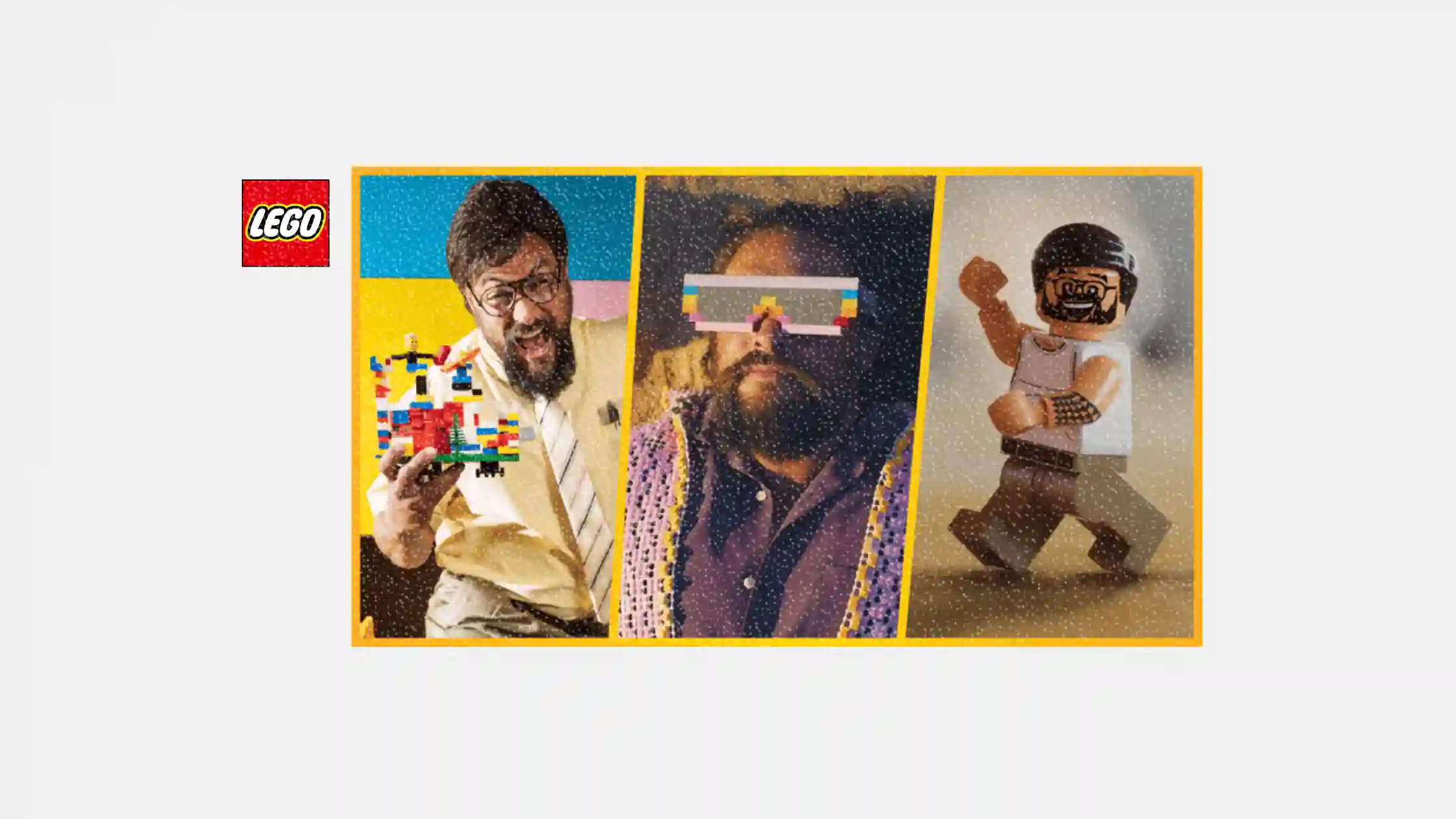
As brands compete for attention in increasingly crowded media environments, LEGO is taking an unexpected route: comedy. Ahead of World Play Day on June 11, the LEGO Group has launched a global campaign starring Jason Momoa, positioning play as an essential life skill rather than just a childhood pastime.
Created by Our LEGO Agency and Chaos x Magic, the campaign’s hero film turns a corporate boardroom presentation into an absurd comedy sketch, with Momoa delivering a passionate and chaotic pitch on why the world needs more play. The campaign arrives as LEGO seeks to address what it describes as a growing “play deficit” among families worldwide.
Table of contents
Jump to each section:
- How Jason Momoa became LEGO’s latest Playmaker
- Why LEGO is using comedy to tackle the global play deficit
- What marketers should know about LEGO’s creative strategy
- The bigger lesson for brand storytelling and audience engagement
- Why play remains a powerful marketing message
 Patrecia Meliana
How Jason Momoa became LEGO’s latest Playmaker
The LEGO Group has recruited actor Jason Momoa as its newest LEGO Playmaker for a global campaign designed to promote World Play Day on June 11.
Directed by Emmy Award-winning filmmaker Rhys Thomas and produced by Stink UK, the hero film places Momoa inside a fully brick-built LEGO boardroom, where he interrupts a corporate meeting to deliver a wildly energetic presentation about the value of play.
The PSA-style short blends parody, motivational speaking, and LEGO’s signature creativity. Throughout the film, Momoa argues that simple moments of play can help develop resilience, collaboration, problem solving, confidence, and creativity, which he humorously labels the “5 Ps.”
The campaign’s central message is straightforward: play is not optional. It is a critical part of learning, connection, and personal development.
Why LEGO is using comedy to tackle the global play deficit
According to research commissioned by the LEGO Group, many families are finding it increasingly difficult to prioritize play.
The study found:
- Three in five parents believe their children play less than they did at the same age.
- Nine percent of families say they never play together.
- Work demands, screen time, and household responsibilities are among the biggest barriers to play.
- More than 90% of parents acknowledge that play helps children develop essential life skills.
The campaign represents a notable creative shift for LEGO. The company describes it as its first major brand campaign developed entirely through a comedy-first approach.
Rhys Thomas, known for his work on Saturday Night Live and Documentary Now!, leaned into the contrast between serious corporate communication and childlike enthusiasm. The result is a campaign that feels more like entertainment than traditional advertising.
For marketers, that distinction matters.
What marketers should know about LEGO’s creative strategy
Several strategic lessons stand out from this campaign.
1. Entertainment is outperforming interruption
Consumers are increasingly resistant to traditional advertising formats. LEGO avoids that challenge by creating content designed to entertain first and market second.
Instead of presenting statistics or educational messaging directly, the brand packages its message inside a humorous narrative that audiences are more likely to watch and share.
2. Celebrity partnerships work best when they fit the brand
Jason Momoa’s adventurous and playful public persona aligns naturally with LEGO’s message.
Rather than relying solely on celebrity recognition, the campaign builds around characteristics audiences already associate with Momoa: energy, creativity, humor, and authenticity.
3. Purpose-led campaigns need emotional delivery
Many brands struggle when purpose-driven messaging feels overly serious or corporate.
LEGO demonstrates that social or developmental themes can be communicated through humor without losing credibility. In fact, comedy often makes important messages more memorable.
4. Brand storytelling beats feature marketing
The campaign never focuses on product specifications or construction sets.
Instead, LEGO sells an idea: the value of imagination and creativity. This allows the brand to connect emotionally while reinforcing its long-term positioning.
The bigger lesson for brand storytelling and audience engagement
LEGO’s campaign reflects a broader trend across marketing and advertising.
Brands are increasingly shifting from transactional messaging toward experience-driven storytelling. Audiences are responding more positively to campaigns that entertain, educate, or inspire rather than simply promote products.
The campaign also highlights how brands can use cultural moments such as World Play Day to build relevance without appearing opportunistic. The event provides a natural context for LEGO’s message while reinforcing the company’s core mission.
For marketers developing awareness campaigns, the takeaway is clear: the strongest campaigns often start with a human insight rather than a product feature.
 Patrecia Meliana
Why play remains a powerful marketing message
LEGO’s latest campaign is more than a celebrity-led comedy sketch. It is an example of how brands can tackle meaningful issues through creativity, humor, and strong storytelling.
By pairing Jason Momoa’s larger-than-life personality with research about declining play among families, LEGO has created a campaign that feels both entertaining and purposeful.
As marketers face growing challenges around attention, engagement, and audience fatigue, LEGO’s approach offers a useful reminder: sometimes the most effective marketing strategy is simply creating something people genuinely enjoy watching.